Legend & origins
The keepers of the true mountain
Jewish tradition centres on Jerusalem. Samaritan tradition says the chosen place was always Mount Gerizim, the mountain above Shechem, which is now Nablus. They call themselves Shamerim, the keepers. What they keep is the original Torah, on the original mountain, under the original priesthood. Every part of that claim has been disputed for two thousand years.
Their version of the split goes like this. The sanctuary stood at Gerizim when Israel entered the land, and a wayward priesthood later carried the worship off to Shiloh and then to Jerusalem. The Jewish version, written in the Book of Kings, says the Samaritans descend from foreign settlers planted in the north by Assyria. Neither account was written by a neutral party.
Modern work has moved closer to the Samaritan side. Genetic studies published since the 1990s find deep shared ancestry with Jewish populations rather than an Assyrian transplant. The current scholarly picture puts the hardening of the schism somewhere between the fifth and second centuries BC, with the decisive event the Hasmonean ruler John Hyrcanus destroying the temple on Gerizim around 110 BC — probably, since the dating rests on thin sources.
They were once a nation of some size. Estimates for Byzantine Palestine reach a million, which is the sort of ancient figure that deserves suspicion, and there were Samaritan synagogues as far away as Thessaloniki. The revolts of the fifth and sixth centuries were put down hard. After that came a long grind of conversion, and by the British census of 1919 there were 141 Samaritans left.
Going from 141 to about 900 in a century makes them, proportionally, one of the fastest-growing religious communities anywhere. The statistic gets quoted a lot; it is what recovery from near-extinction looks like.
What sets them apart
Exodus, performed annually
The Samaritans still perform the central rites of the Torah literally, publicly and in full. Nothing else quite like it has survived. Scholars who want to know what Israelite religion looked like before the Bible was finished tend to end up on Gerizim in the spring.
Passover with the knife
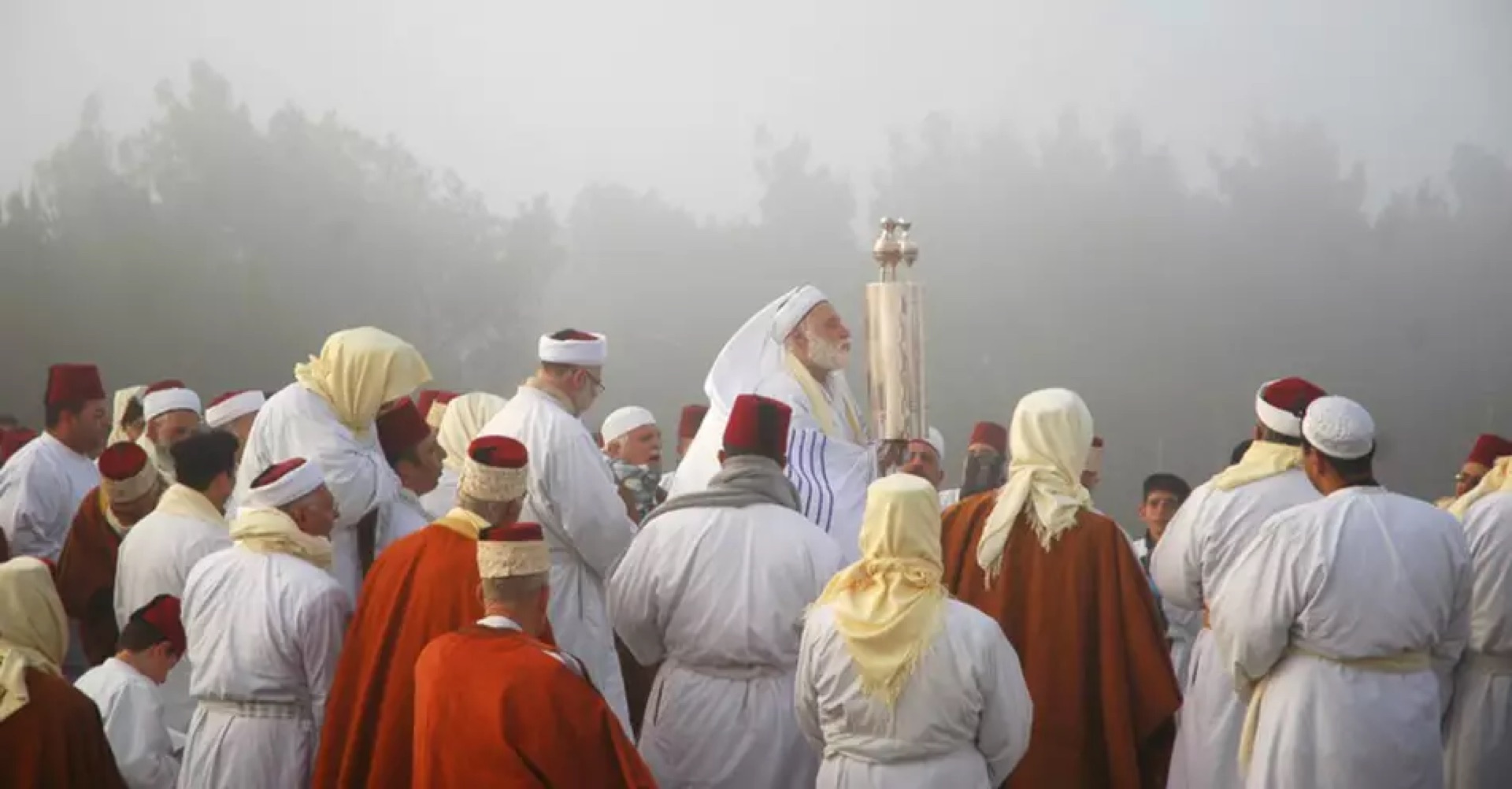
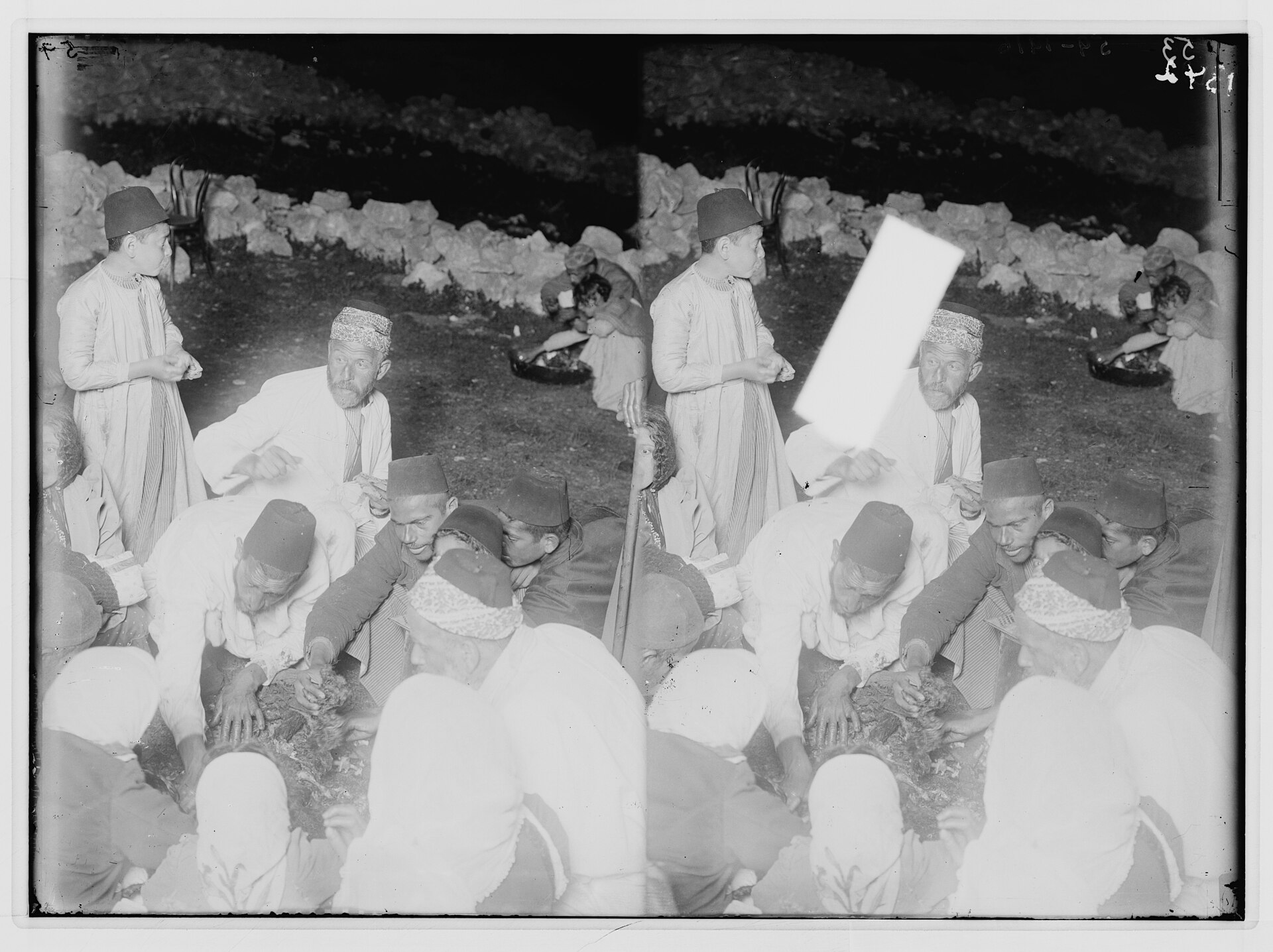
On the fourteenth of Nisan the whole community gathers on Gerizim. Sheep are slaughtered at sundown, roasted in pits and eaten before midnight, standing, in the manner Exodus prescribes. It is the only continuous performance of the biblical Passover sacrifice left anywhere. Visitors are allowed, and there are a great many of them.
The oldest alphabet still in use
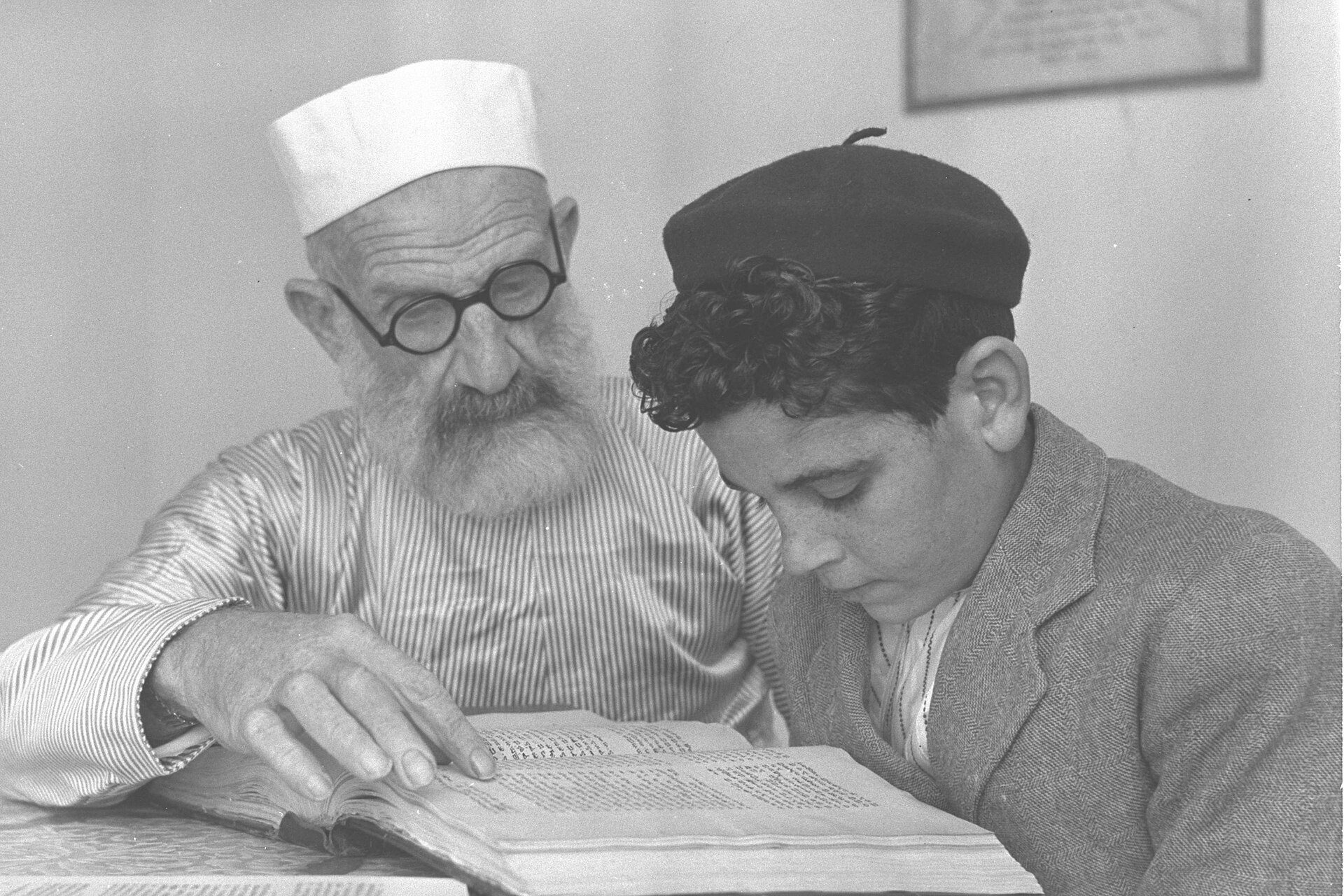
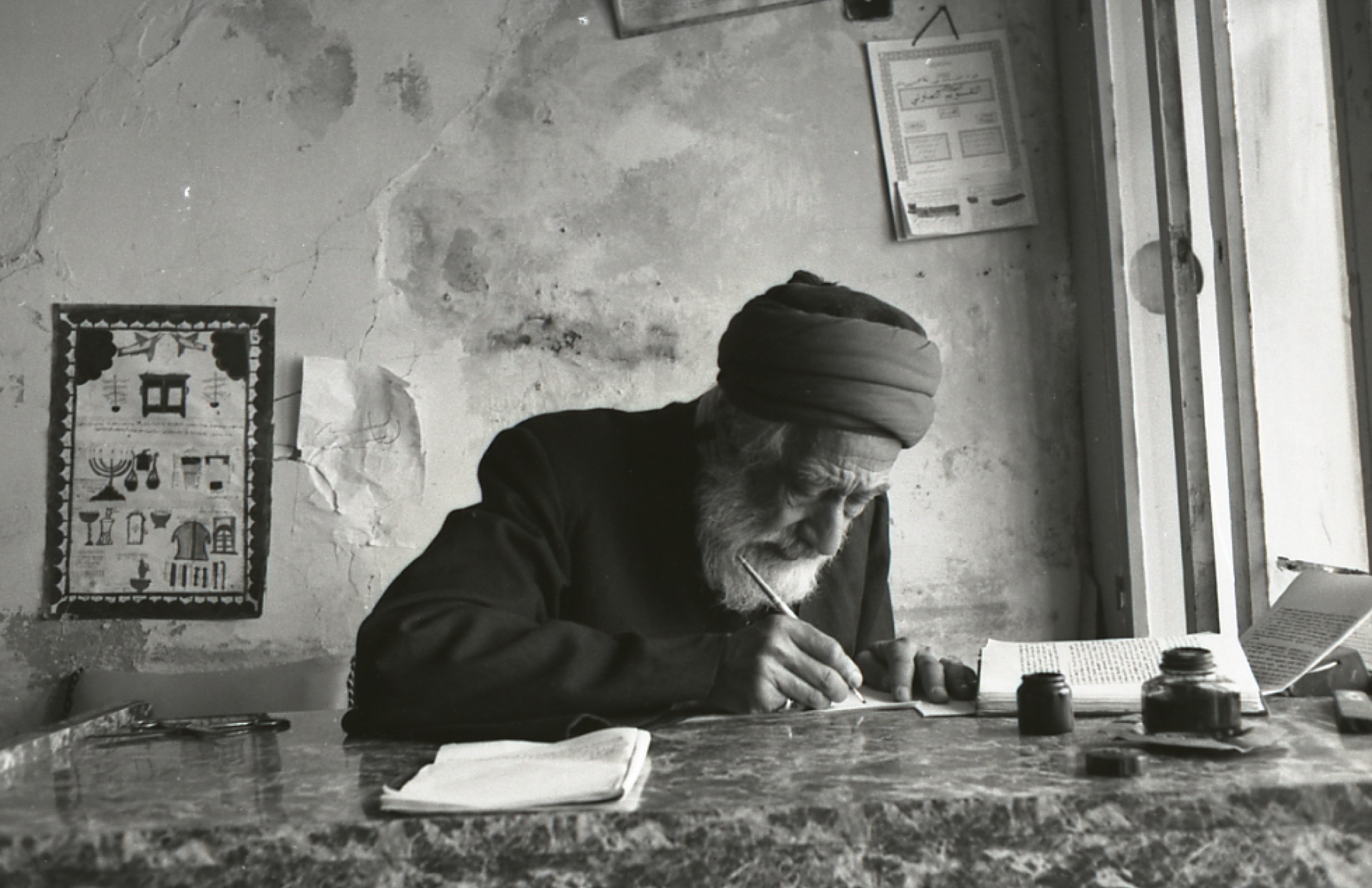
Samaritan script comes straight down from palaeo-Hebrew, the letters used in the First Temple period. Jews switched to the square Aramaic script after the exile in Babylon. The Samaritans did not, which is why their Torah looks unfamiliar to a Hebrew reader today.
Priests instead of rabbis
Authority runs through the high priest rather than through scholars arguing about the text, so the law is inherited rather than debated. The direct line from Aaron's son Eleazar died out in 1624. The office passed to the descendants of his brother Itamar, and it has stayed there since.
Two sets of papers
Most Samaritans on Gerizim hold Palestinian and Israeli documents at the same time, and vote in both systems. The community keeps carefully out of the conflict around it, and has done so consistently enough that both sides treat it as neutral. That arrangement has held for decades.
Today
Nine hundred people, two addresses, one bridge
Half the nation lives at Kiryat Luza, a village on the summit of Gerizim above Nablus, inside the West Bank: they pray in Hebrew with an Arabic accent, and their high priest is received by Palestinian presidents. The other half lives in Holon, a suburb south of Tel Aviv, serving in the Israeli army and speaking modern Hebrew. Every Passover — and again at Shavuot and Sukkot — the two halves meet on the mountain, which means most of the community crosses one of the harder borders in the region several times a year.
The arithmetic of survival is delicate. A community of 900 rebuilt from 141 carries the genetic consequences, and there is a documented cluster of inherited conditions. The response has been screening before marriage, arranged with Israeli hospitals, and it appears to be working.
The other response is more surprising. A community that historically accepted nobody at all now takes in brides from outside, including from Ukraine and Russia, who convert in. The number is a few dozen since the 1990s. Most of them have been reported in the community's own newspaper, A.B. The Samaritan News, which has been coming out since 1969.
A nation of nine hundred is not small. It is concentrated.Samaritan self-description, often repeated at Gerizim
Geography
Where they live
Based on work by Dr. M. Izady, Atlas of the Islamic World and Vicinity (New York: Columbia Univ, 2006–present) @ gulf2000.columbia.edu/maps.shtml
Through time
Timeline
- 8th–5th c. BCThe schism forms. Northern Israelites around Shechem and returning Judeans diverge over the true sanctuary.
- c. 110 BCGerizim's temple destroyed. The Hasmonean John Hyrcanus razes the sanctuary; the rift with Judaism becomes final.
- 484–572 ADThe Samaritan revolts. Byzantine suppression kills or converts hundreds of thousands; the nation begins its long shrinking.
- 1919141 souls. The British census finds the community at its historical minimum.
- 1954Holon founded. A second Samaritan quarter grows near Tel Aviv; the community now spans the Green Line.
- Today≈900 and growing. High birth rates and screened marriages rebuild the nation — one Passover at a time.
The whole nation, counted
Individuals — the entire people
The Samaritans are the only community in this atlas with no diaspora at all: every member lives at one of two addresses. From 141 people in 1919 to ≈900 today.
What they gave the region
The good Samaritan, and the oldest text
The community's name became a byword for kindness because of one parable, and the parable only works because Samaritans were despised at the time. Most people who use the phrase have no idea the people still exist.
Scholarship owes them something more concrete. The Samaritan Pentateuch is one of the oldest independent witnesses to the text of the Torah. It differs from the Jewish Masoretic text in roughly six thousand places. Most of those differences are trivial. Some are not, and a number of them turned out to agree with the Dead Sea Scrolls, which was not what anyone expected in 1947. Their priestly tradition also preserves pronunciations and rites that scholars use to reconstruct older Israelite practice.
On the ground they are the only community holding both Israeli and Palestinian papers and trusted, more or less, by both. Once a year they cross the border for Passover as though it were not there.
Looking forward
Growth at the edge of arithmetic
The demographic risk has receded. From 141 to about 900, with no diaspora to manage, this is a community whose numbers are going the right way. Screening has loosened the genetic bottleneck. A younger generation runs museums, hosts researchers and streams the Passover sacrifice.
The risks now are political. Gerizim sits in a volatile part of the West Bank, and the careful neutrality that has protected the community gets harder to hold each decade. Nablus has had a difficult few years.
The Samaritans read it on a longer clock: they have watched Assyria, Rome and Byzantium from the same mountain, and five empires since.
The emblem
The seven lamps
The seven-branched lampstand of the Tabernacle, drawn the way the Samaritans' own visual tradition draws it. It appears in the mosaics of their ancient synagogues on and around Gerizim. For the keepers it burns for a sanctuary that stood, as they insist it did, on their mountain.
Sources10
- Reinhard Pummer, The Samaritans: a profile (Eerdmans), 2016.
- Shen P. et al., Reconstruction of Patrilineages and Matrilineages of Samaritans, Human Mutation 24, 2004.
- Alan D. Crown (ed.), The Samaritans (Mohr Siebeck), 1989.
- Hagith Sivan, Palestine in late antiquity (Oxford University Press), 2008.
- The Israelite Samaritan Information Institute, israelite-samaritans.com. israelite-samaritans.com
- Encyclopaedia Britannica, Samaritan. britannica.com
- Yitzhak Magen, Mount Gerizim excavations (Israel Antiquities Authority), 2008.
- Batsheva Bonne-Tamir and Avinoam Adam (eds.), Genetic diversity among Jews: diseases and markers at the DNA level (Oxford University Press), 1992.
- Monika Schreiber, The comfort of kin: Samaritan community, kinship, and marriage (Brill), 2014.
- Emanuel Tov, Textual criticism of the Hebrew Bible (Fortress Press), 2012.