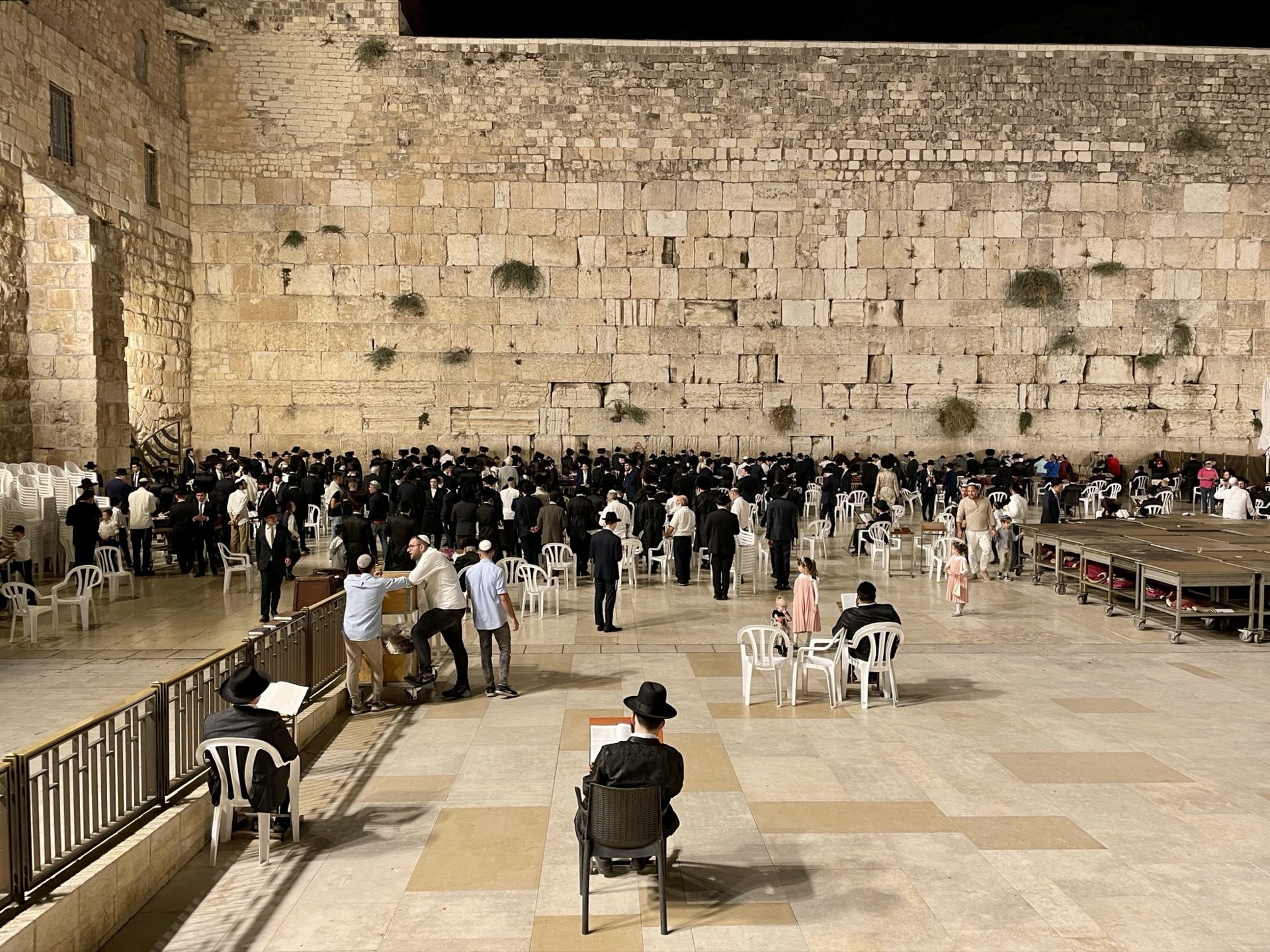
Legend & origins
By the rivers of Babylon
The Middle Eastern diaspora begins with a river and a harp. Psalm 137 remembers the exiles sitting down by the rivers of Babylon and weeping there. They did more than weep. Within a few generations Babylon had become the second heart of Judaism, and it stayed so for about 1,500 years.
It was in the academies of Sura and Pumbedita, near the Euphrates, that the Babylonian Talmud was compiled. The Talmud is the vast record of rabbinic argument about how the law should be applied, and this is the version that still structures Jewish practice everywhere. The academies were called yeshivot, and their heads carried the title Gaon, which turns up in Jewish institutional language to this day.
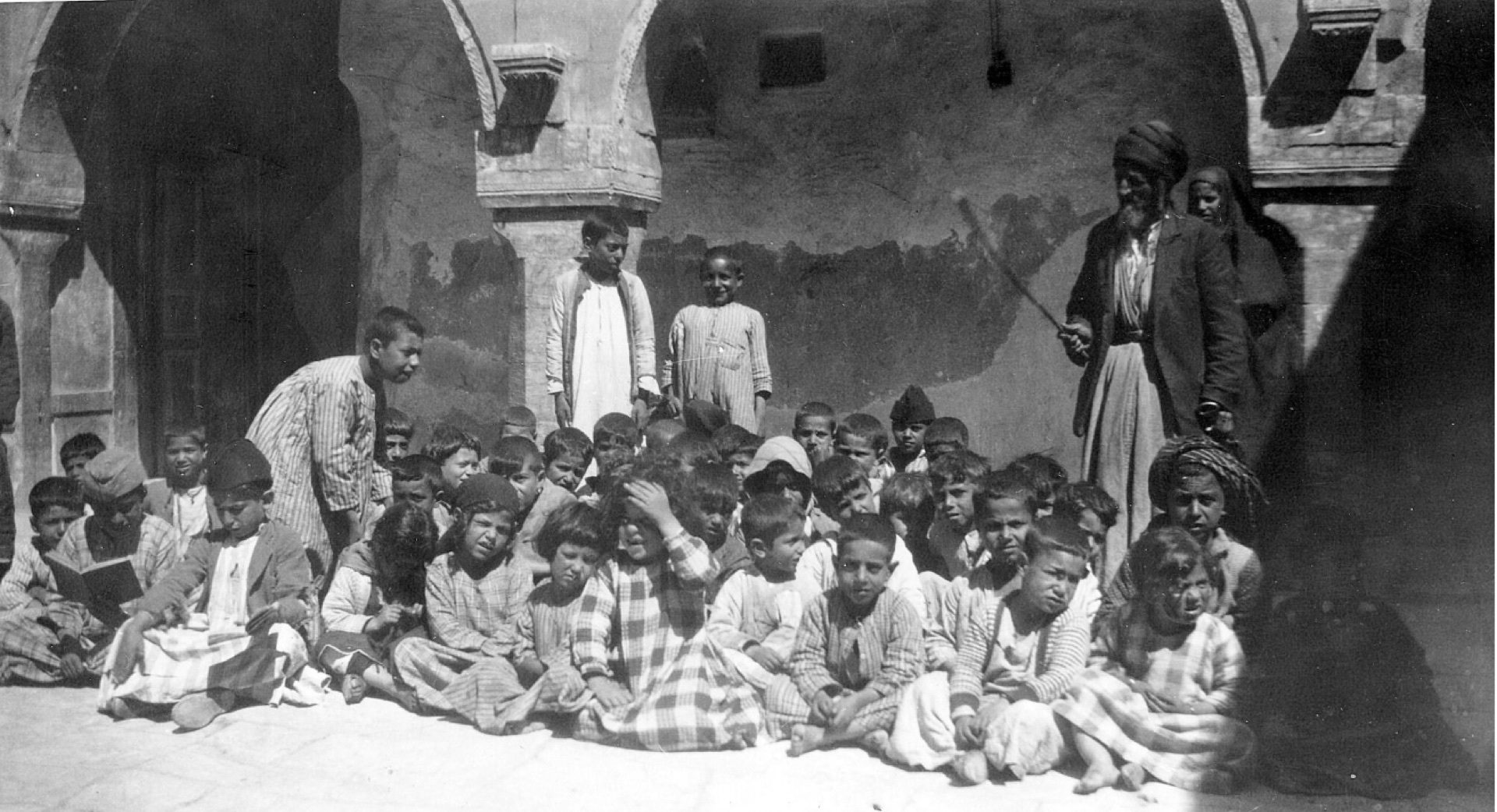
Every corner of the region then grew its own Jewish civilisation. Yemen produced poets and silversmiths. Its liturgy preserves what scholars think is the oldest surviving Hebrew pronunciation. Morocco produced sages whose tombs still draw pilgrims. Baghdad was roughly a third Jewish around 1900. That figure surprises people now.
Istanbul and Salonika filled with Sephardim after 1492. Sephardim means the Jews expelled from Spain. They rebuilt Spain in exile and kept speaking Ladino, their old Spanish, for four more centuries. Isfahan and Shiraz had been Jewish since CyrusCyrus Cyrus the Great (d. 530 BC), founder of the Persian empire, who permitted the exiles in Babylon to return to Jerusalem.Encyclopaedia Britannica. View source ↗ freed the Babylonian captives. None of these communities thought of itself as a branch of any of the others.
The twentieth century ended almost all of it. Between 1948 and the 1970s some 850,000 Jews left the Arab world, under pressures whose proportions historians still argue about: pogroms, state expulsions, property confiscations and the pull of the new state. Baghdad's Farhud, a pogrom in 1941, killed nearly 200 people. Operation Magic Carpet flew Yemen's Jews out almost entirely in 1949 and 1950; Operation Ezra and Nehemiah emptied Iraq by 1952; most of Iran's community followed after 1979. Twenty-six centuries of Jewish life in the region relocated inside one generation, and mostly to one country.
What sets them apart
Continuity as a civilisation
What sets the region's Jewish story apart is depth in layers. Liturgies, dialects and legal traditions that grew in Middle Eastern soil for about as long as there has been writing there.
The Babylonian inheritance
The Talmud Bavli, compiled by the Euphrates, is still the working basis of Jewish law. It beat out the shorter, never quite finished Jerusalem version — an outcome that shaped Judaism everywhere.
Mizrahi liturgies
Mizrahi means eastern, and it covers the Jews of the Middle East and North Africa as opposed to the European Ashkenazim. Yemenite, Iraqi, Moroccan and Persian rites each keep distinct melodies, pronunciations and poetry. The piyyut, which is liturgical poetry set to music, has had a full revival and is now unexpectedly popular in Israel.
Saints and pilgrimages
A hillula is a festive pilgrimage to a sage's tomb, Moroccan in style, with singing and food rather than mourning. The custom transplanted to Israel wholesale, and Baba Sali's tomb at Netivot draws hundreds of thousands each year.
The remnant communities
Istanbul's synagogues. Tehran's kosher butchers. Djerba's Ghriba pilgrimage in Tunisia. The numbers are tiny and the threads are unbroken.
1948 — today
The gathering and its remainders
A necessary distinction first. Within Israel, Jews are the majority, some 7.3 million people, so they fall outside what this atlas means by a minority. Everywhere else in the region the Jewish story is a minority story, and those communities are what this page is about.
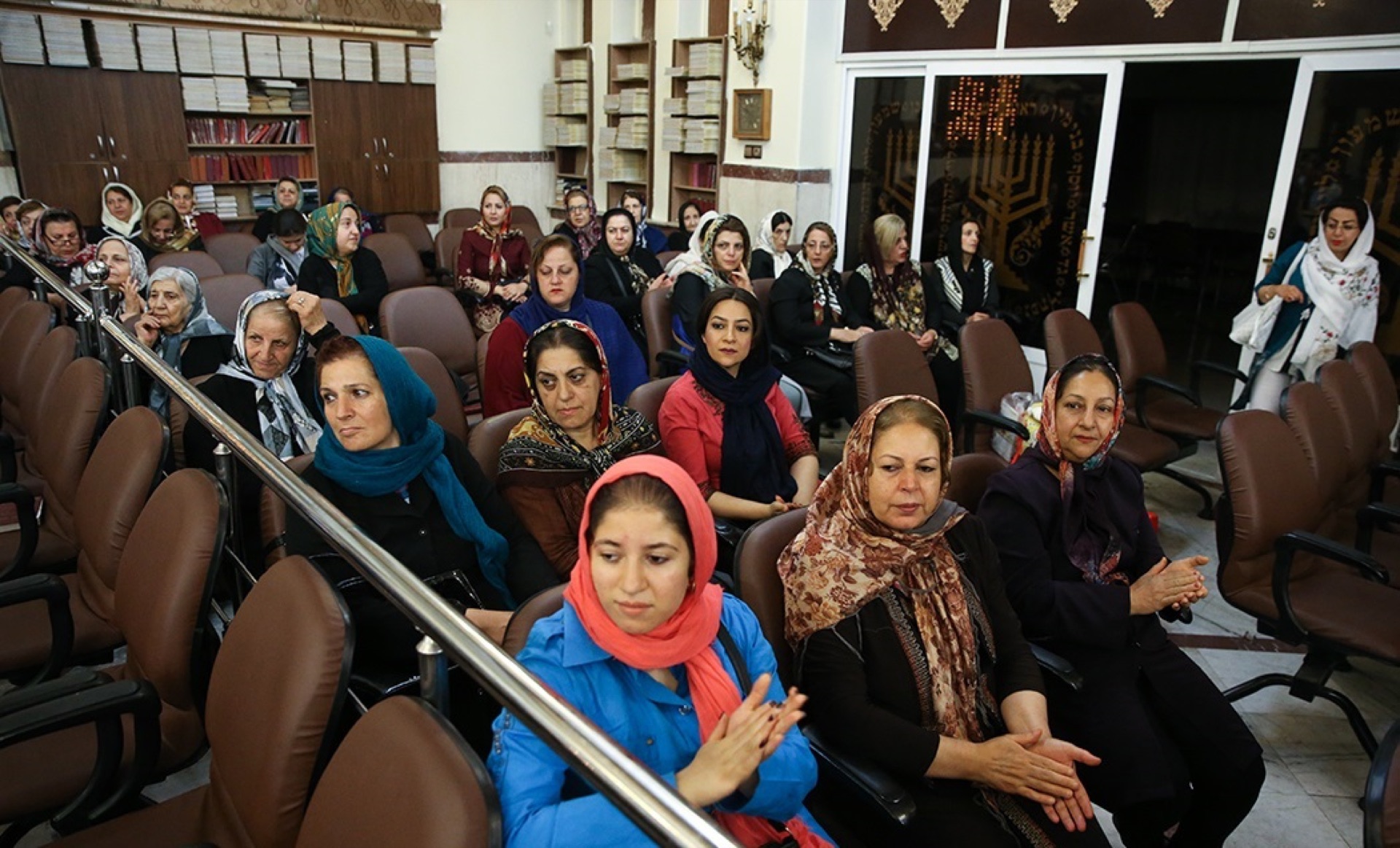
Iran holds the oldest of them. There are synagogues, kosher butchers and schools in Tehran, Shiraz and Isfahan. One seat in parliament is reserved for a Jewish member. The population figures are contested in the usual way. Iran's own census counts under 10,000 and community figures run higher. Either way it is a guarded life, lived between constitutional recognition and constant suspicion.
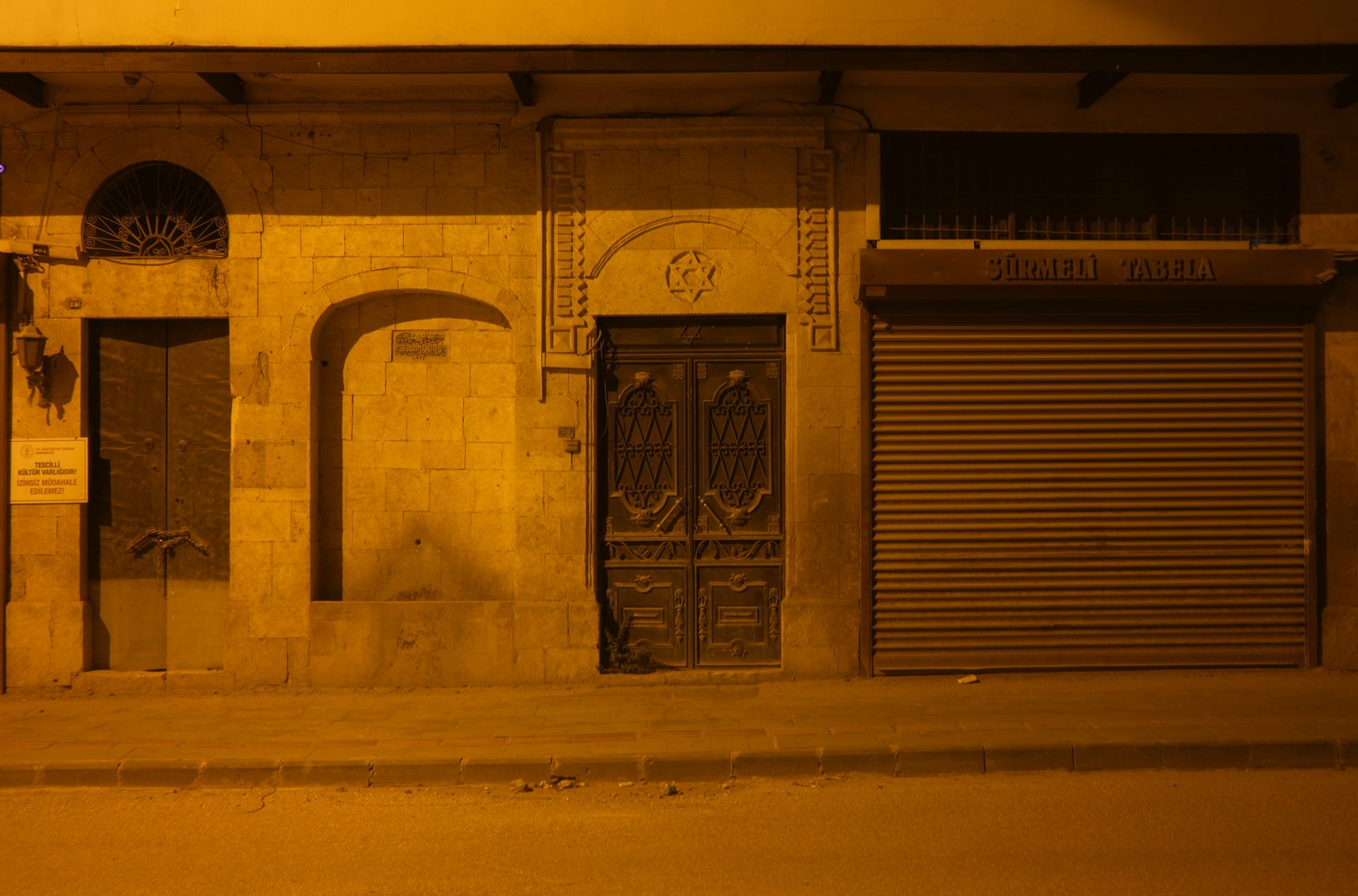
Turkey's Sephardim sustain the last Ladino newspaper from Istanbul. Morocco, alone in the Arab world, treats its Jewish heritage as national patrimony, with museums, restored synagogues and royal patronage, for a community now under 2,000 people. Djerba's islanders keep the Ghriba pilgrimage going through attack after attack, most recently in 2023.
Since 2020 several Gulf states have begun openly hosting Jewish communal life for the first time in half a century. How durable that proves depends on politics far outside the communities themselves.
If I forget thee, O Jerusalem, let my right hand forget her cunning.Psalm 137 — sung first by the exiles of Babylon
Geography
Where they live
Based on work by Dr. M. Izady, Atlas of the Islamic World and Vicinity (New York: Columbia Univ, 2006–present) @ gulf2000.columbia.edu/maps.shtml
Through time
Timeline
- 586 BCThe Babylonian exile. Jerusalem falls; by the rivers of Babylon the diaspora's institutions are invented.
- c. 500 ADThe Talmud sealed. Sura and Pumbedita complete the text that structures Jewish law to this day.
- 1492Sepharad relocates. Spain's expelled Jews rebuild in Istanbul, Salonika, Safed and North Africa under Ottoman protection.
- 1941The Farhud. Baghdad's pogrom kills nearly 200 — the beginning of the end of Iraqi Jewry.
- 1948–72The great departure. ≈850,000 Jews leave the Arab world; Yemen, Iraq and Libya empty almost entirely.
- 1979Iran's revolution. Most of Persian Jewry emigrates; a guarded remnant remains with a reserved MP.
- Today≈7.3 million and the remnants. Israel holds the region's Jews; Iran, Turkey, Morocco and Djerba keep the old addresses alive.
After the gathering
Estimated population
The two hollow bars are not minority populations: Israel, where Jews are about three quarters of the country, and the worldwide diaspora. They are drawn here only to show the scale against which the solid bars are counted. Those are what is left of communities once numbered in hundreds of thousands. Remnant figures are community estimates; the diaspora is led by the United States (≈6 million).
What they gave the region
The region's co-author
Jewish contributions are woven into the region deeply enough that unpicking them is not really possible. Baghdad's finance, and its chalghi music, where the Kuwaity brothers wrote a large part of what Iraqis think of as the national songbook. Yemen's silverwork. Morocco's cuisine and its saints' festivals. The first printing press in the Ottoman Empire, set up by Sephardi refugees soon after the expulsion.
Judeo-Arabic, meaning Arabic written in Hebrew letters, carried some of the most important philosophy of the medieval world. MaimonidesMaimonides Moses Maimonides (1135–1204), physician and jurist, the most influential Jewish thinker of the medieval world. He wrote his philosophy in Judeo-Arabic.Encyclopaedia Britannica. View source ↗ wrote in it. The region's languages are salted with each other's words partly because Jewish traders spoke them all.
In Israel, the Mizrahi majority carried these worlds forward. The food, the music and the humour of the region now flourish inside the state that gathered the exiles, which is an outcome nobody planned.
Looking forward
Remnants, and a cautious reopening
Outside Israel the arithmetic is stark. Communities of thousands where there were once hundreds of thousands, held together by stubbornness and, increasingly, by heritage diplomacy. Morocco restoring synagogues, Egypt renovating the Eliyahu Hanavi synagogue in Alexandria, and the Gulf's new congregations since the Abraham Accords.
Iran's community will remain the one to watch. It is among the region's largest outside Israel, the oldest by a long way, and the most exposed to every turn of geopolitics.
Whether these remnants are an epilogue or a seed depends on the region's politics far more than on its Jews. The communities themselves have made their intention plain by staying. Djerba still holds the Ghriba, Tehran still fills the Yusef Abad synagogue, and the old addresses remain occupied.
The emblem
The Magen David
The six-pointed star, the Magen David or shield of David, started as ornament in medieval manuscripts and became a community seal in Prague in 1354. From there it grew into the universal Jewish emblem. In this atlas it stands for the region's oldest continuous minority, and its most transformed.
Sources10
- Encyclopaedia Britannica, Talmud and Midrash. britannica.com
- Jacob Neusner, A history of the Jews in Babylonia (Brill), 1965.
- United States Holocaust Memorial Museum, The Farhud. encyclopedia.ushmm.org
- Esther Benbassa and Aron Rodrigue, Sephardi Jewry: a history of the Judeo-Spanish community, 14th to 20th centuries (University of California Press), 2000.
- Norman A. Stillman, The Jews of Arab lands in modern times (Jewish Publication Society), 1991.
- Israel Central Bureau of Statistics, Statistical abstract of Israel: population by religion and population group. cbs.gov.il
- JIMENA, Jews Indigenous to the Middle East and North Africa – community histories. jimena.org
- Lior B. Sternfeld, Between Iran and Zion: Jewish histories of twentieth-century Iran (Stanford University Press), 2018.
- Aomar Boum, Memories of absence: how Muslims remember Jews in Morocco (Stanford University Press), 2013.
- U.S. Department of State, International Religious Freedom Reports.