Legend & origins
The hermit of the Orontes and the holy valley
The church is named after Maroun, a fourth-century hermit of the Syrian hills whose austerities drew crowds while he was alive and disciples once he was dead. When theological war and then conquest scoured the plains, his monks carried the tradition west into the gorges of Mount Lebanon.
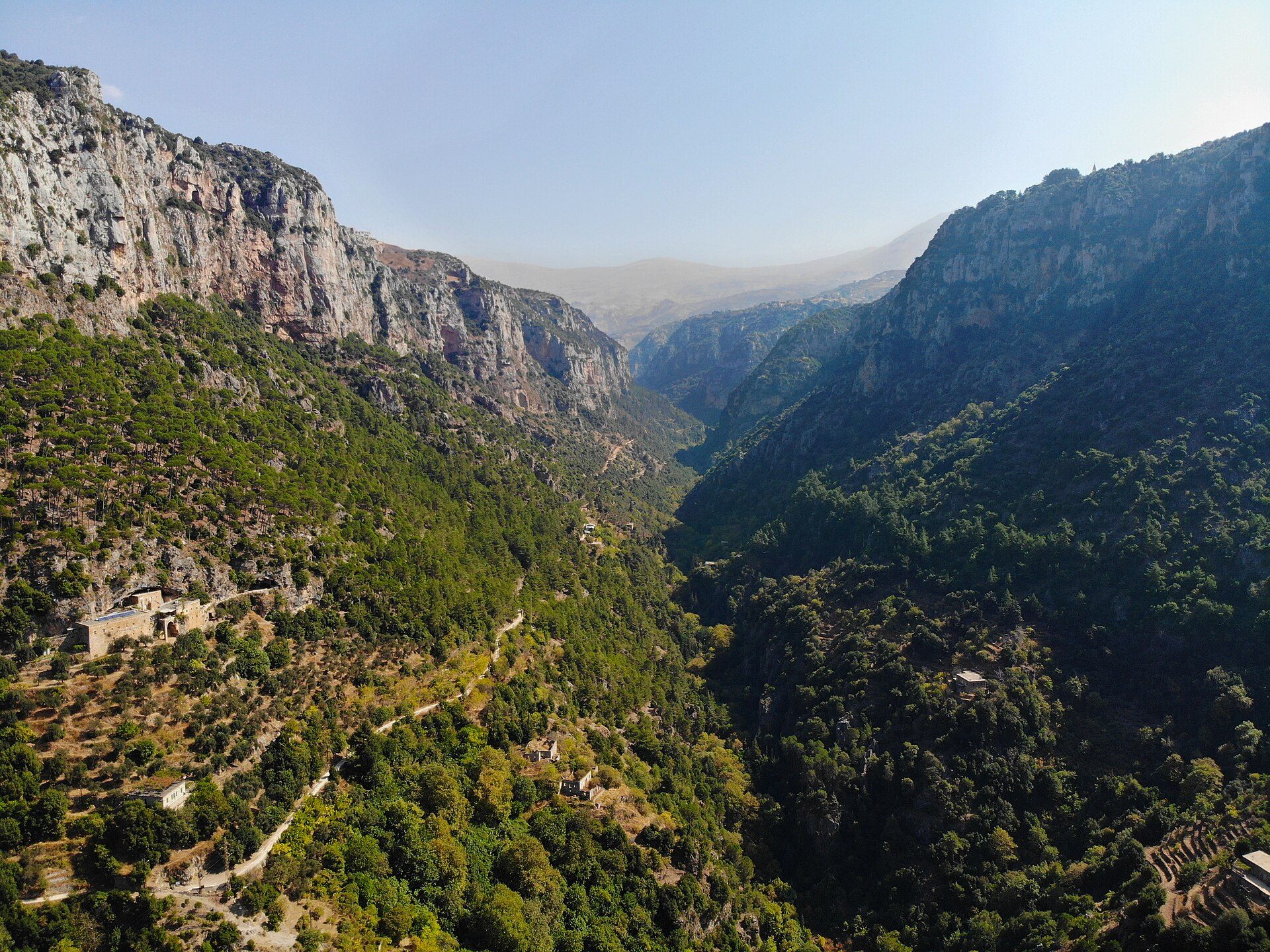
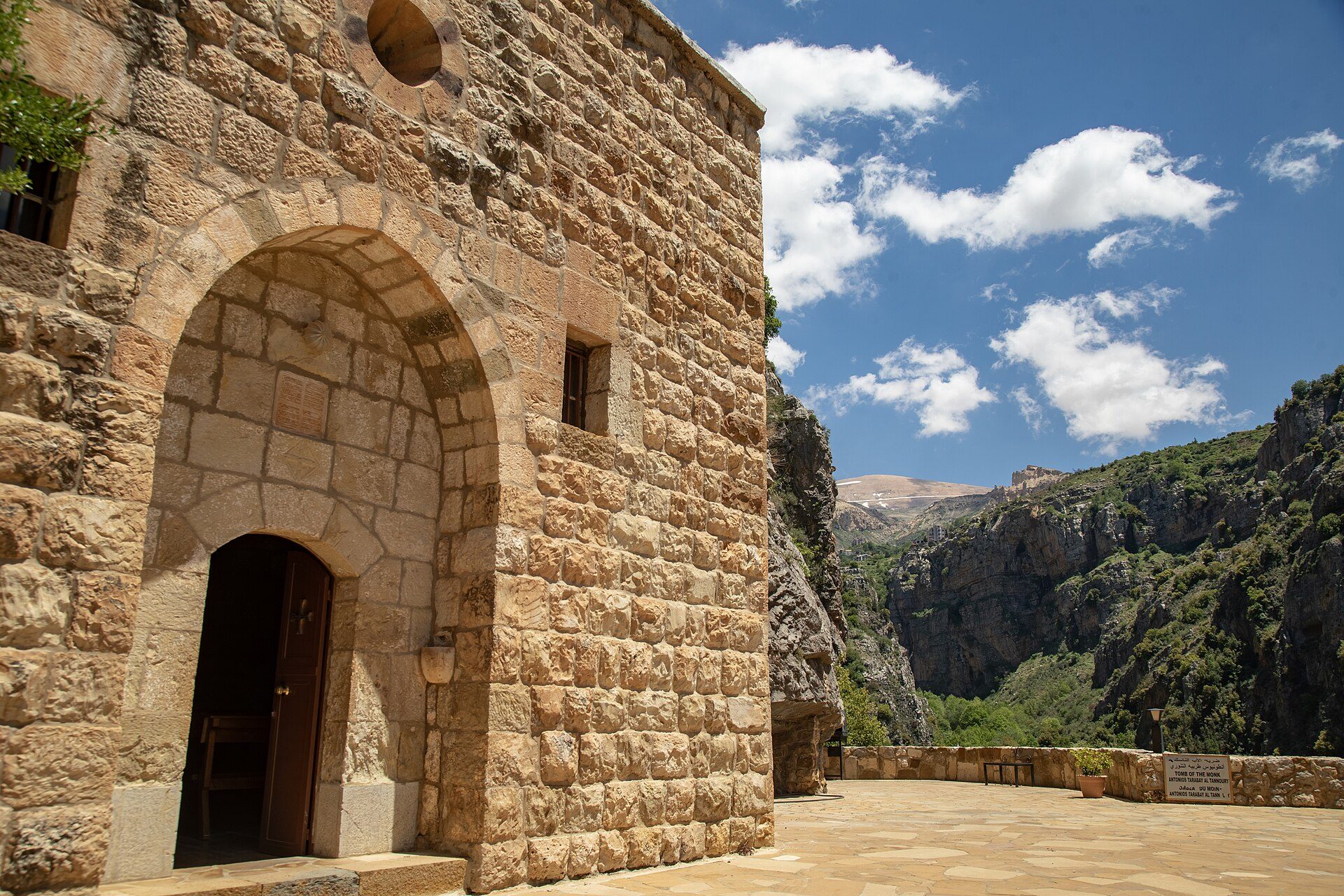
The refuge they picked is the Qadisha, the Holy Valley: a canyon roughly a thousand metres deep, full of cave chapels and rock monasteries cut into the cliff faces.
There the community hardened into something unusual: a church that was also a mountain society, with its own patriarch enthroned down in the valley and a fighting tradition to go with the peasant clans. From the Crusades onward the Maronites tied themselves to Rome — Maronites hold that theirs is the only Eastern church never formally out of communion with it — and later to France, whose protection eventually turned into the Mandate that drew Lebanon's borders.
Greater Lebanon in 1920 was to a real extent a Maronite project. The state was cut to include the mountain and its coast, the National Pact reserved the presidency for a Maronite, and the community gave the country its banks, its universities and its poets. It also gave it a good deal of the tragedy. The civil war of 1975 to 1990 saw Maronite militias fight Palestinians, Muslims, Syria and, repeatedly, each other. That ended the Christian ascendancy without ending the community's central position — a distinction that matters more in Lebanese politics than it sounds.
What sets them apart
A church that behaves like a nation
Maronite identity welds monastery, mountain and politics together so tightly that Lebanon is hard to imagine without it.
The patriarch of the mountain
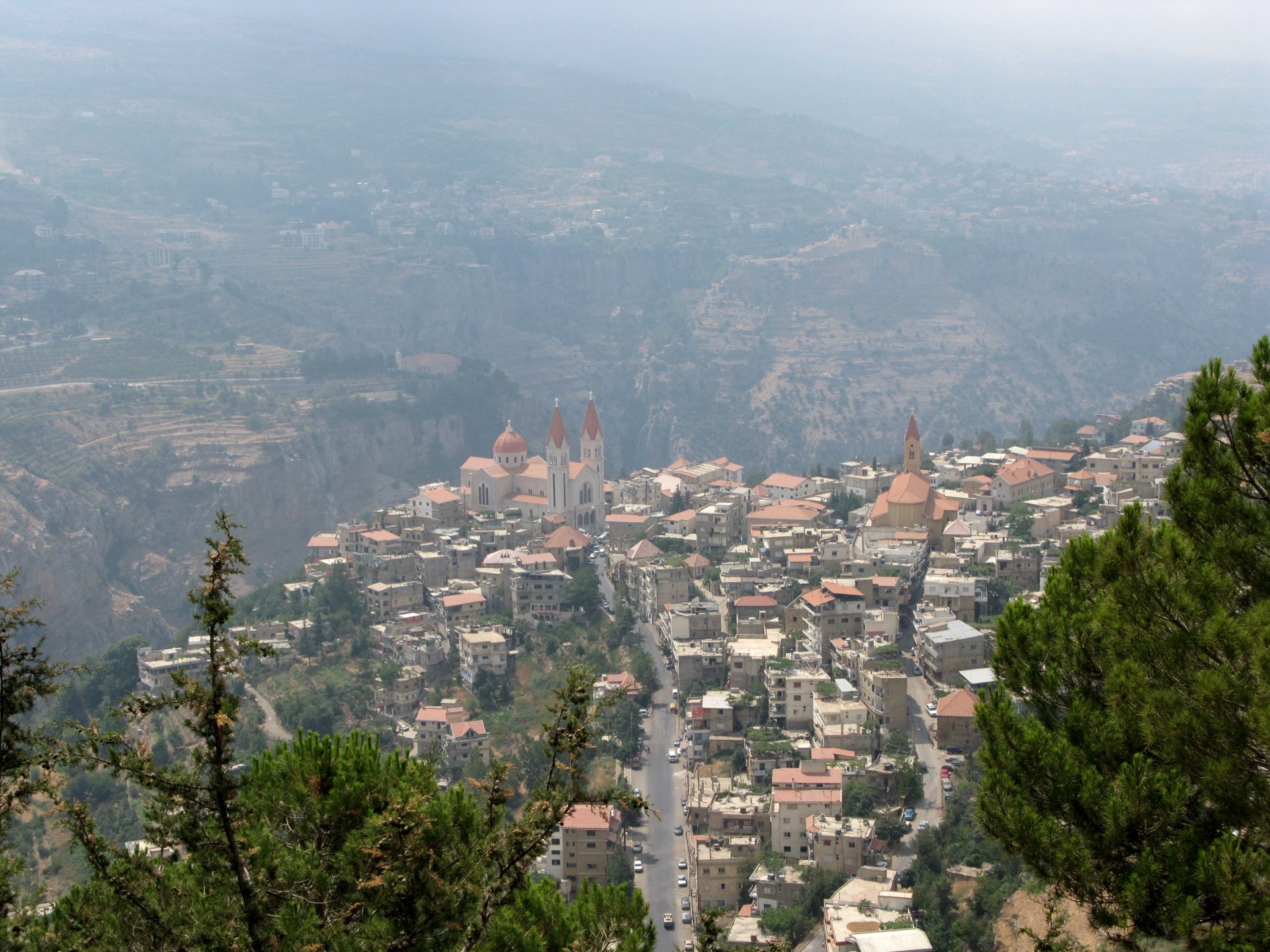
His title is Patriarch of Antioch and all the East. He sits at Bkerke, a hilltop seat above the bay of Jounieh, and for centuries he sat down in the Qadisha itself. He is the closest thing Lebanese Christianity has to a national leader.
Syriac in the liturgy
The core of the Maronite mass still uses Syriac, the Aramaic dialect the church started in. It is a weekly reminder that this Arabic-speaking community began east of the mountain.
Saints of the cliff face
Charbel Makhlouf was a nineteenth-century hermit at Annaya whose tomb now draws millions of pilgrims, plenty of them not Christian at all. It is the valley's oldest pattern: holiness sought in solitude and rock.
The cedar
The tree of the Psalms and of Solomon's temple beams became the emblem of the church and then of the republic. It is a Maronite symbol that ended up on the national flag.
1920 — today
The presidency and the emigration
The Maronite century has been one long diminuendo. The National Pact of 1943 fixed the presidency in Maronite hands — the army command and, later, the central bank governorship followed by convention — on the strength of a census taken in 1932 — the last census Lebanon has ever dared to take.
War, lower birth rates and above all emigration have inverted the demography since. Maronites are now perhaps a fifth of Lebanon's residents. The diaspora is several times the size of the homeland, and Brazil alone claims more Lebanese Christians than Lebanon does. Those diaspora figures are notoriously loose: treat them as an order of magnitude.
The architecture holds anyway. The president still has to be Maronite, Bkerke still speaks on national questions, and the community's vote still decides which way the country leans — most recently in contests between its own rival generals. The quieter struggle is keeping the mountain villages inhabited and the schools full, in a state that has defaulted on almost everything.
My mountain is my monastery.Attributed to the hermits of the Qadisha
Geography
Where they live
Based on work by Dr. M. Izady, Atlas of the Islamic World and Vicinity (New York: Columbia Univ, 2006–present) @ gulf2000.columbia.edu/maps.shtml
Through time
Timeline
- 4th–5th c.Maroun and his disciples. The hermit's movement grows along the Orontes; the monastery of St Maroun anchors it.
- 7th–10th c.Into the mountain. Conquest and persecution push the community into Mount Lebanon; the patriarchate takes root in Mount Lebanon.
- 1182–1215Union with Rome. Contact through the Crusades formalises the communion never since broken.
- 1584The Maronite College in Rome. Scholars like the Assemanis carry Syriac learning into European orientalism.
- 1860Massacre and intervention. Druze–Maronite war brings French troops and the autonomous Mutasarrifate of Mount Lebanon.
- 1920–43Greater Lebanon. France draws the borders; the National Pact gives Maronites the presidency.
- 1975–90The civil war. The Christian ascendancy falls at Taif; the community splits between its generals.
- TodayA fifth of the country, half its imagination. Emigration outpaces the mountain, but the presidency, Bkerke and the cedar remain Maronite.
The mountain and the sea beyond
Estimated population
No census since 1932: Lebanese figures are convention, not count. The diaspora — Brazil, Argentina, USA, Australia, France — is several times the homeland community.
What they gave the region
Lebanon itself, and letters
The Maronite gift has a name on the map, which is Lebanon. The universities, the banking and publishing traditions are hard to separate from the church of the mountain; the same goes for the improbable pluralism of the place. The oldest continuously running press in the region started at the Qozhaya monastery in the Qadisha, or so the monastery claims.
Gibran Khalil Gibran, from Bsharri on the rim of the valley, wrote what is probably the most translated book of prose poetry of the twentieth century. The Rahbani brothers and FairuzFairuz Fairuz (b. 1934), the Lebanese singer widely held to be the most celebrated Arab voice of the twentieth century.Encyclopaedia Britannica. View source ↗ — Greek Orthodox, not Maronite — put the Mountain's village lyricism at the centre of Arabic music, where it has stayed.
There is also the Maronite College in Rome, founded in 1584, through which the community became early modern Europe's teacher of the Orient. The Assemani scholars catalogued the Vatican's eastern manuscripts and carried Syriac learning west.
Looking forward
Keeping the mountain inhabited
The Maronite future is a race between emigration and attachment. The collapse of the state after 2019 emptied another generation towards Paris, Montreal and the Gulf. Meanwhile the presidency stays Maronite by pact, Bkerke stays the loudest moral voice in the country, and diaspora money keeps coming back into village restorations and monasteries.
Two things are worth watching. One is whether Lebanon's next settlement keeps the community's constitutional weight as its share of residents falls. The other is the Qadisha, which is being revived as heritage and pilgrimage country.
Whether that gives the young a reason to stay is another matter. Hermits have moved back into the caves, apparently. A handful of them.
The emblem
The cross of the cedar line
A cross rising over a bough of cedar. The church of the mountain and the tree that is its oldest neighbour. Maronite iconography comes back to this pairing constantly, faith and forest, both of them survivors of the same slopes.
Sources9
- Matti Moosa, The Maronites in history (Syracuse University Press), 1986.
- UNESCO World Heritage Centre, Ouadi Qadisha (the Holy Valley) and the Forest of the Cedars of God. whc.unesco.org
- Encyclopaedia Britannica, Maronite church. britannica.com
- Ussama Makdisi, The culture of sectarianism: community, history, and violence in nineteenth-century Ottoman Lebanon (University of California Press), 2000.
- Theodor Hanf, Coexistence in wartime Lebanon: decline of a state and rise of a nation (I.B. Tauris), 1993.
- Rania Maktabi, The Lebanese Census of 1932 Revisited, British Journal of Middle Eastern Studies 26/2, 1999.
- Minority Rights Group, Maronites in Lebanon – community profile. minorityrights.org
- Christopher Reed Stone, Popular culture and nationalism in Lebanon: the Fairouz and Rahbani nation (Routledge), 2008.
- Bernard Heyberger, Les chretiens du Proche-Orient au temps de la Reforme catholique (Ecole francaise de Rome), 1994.