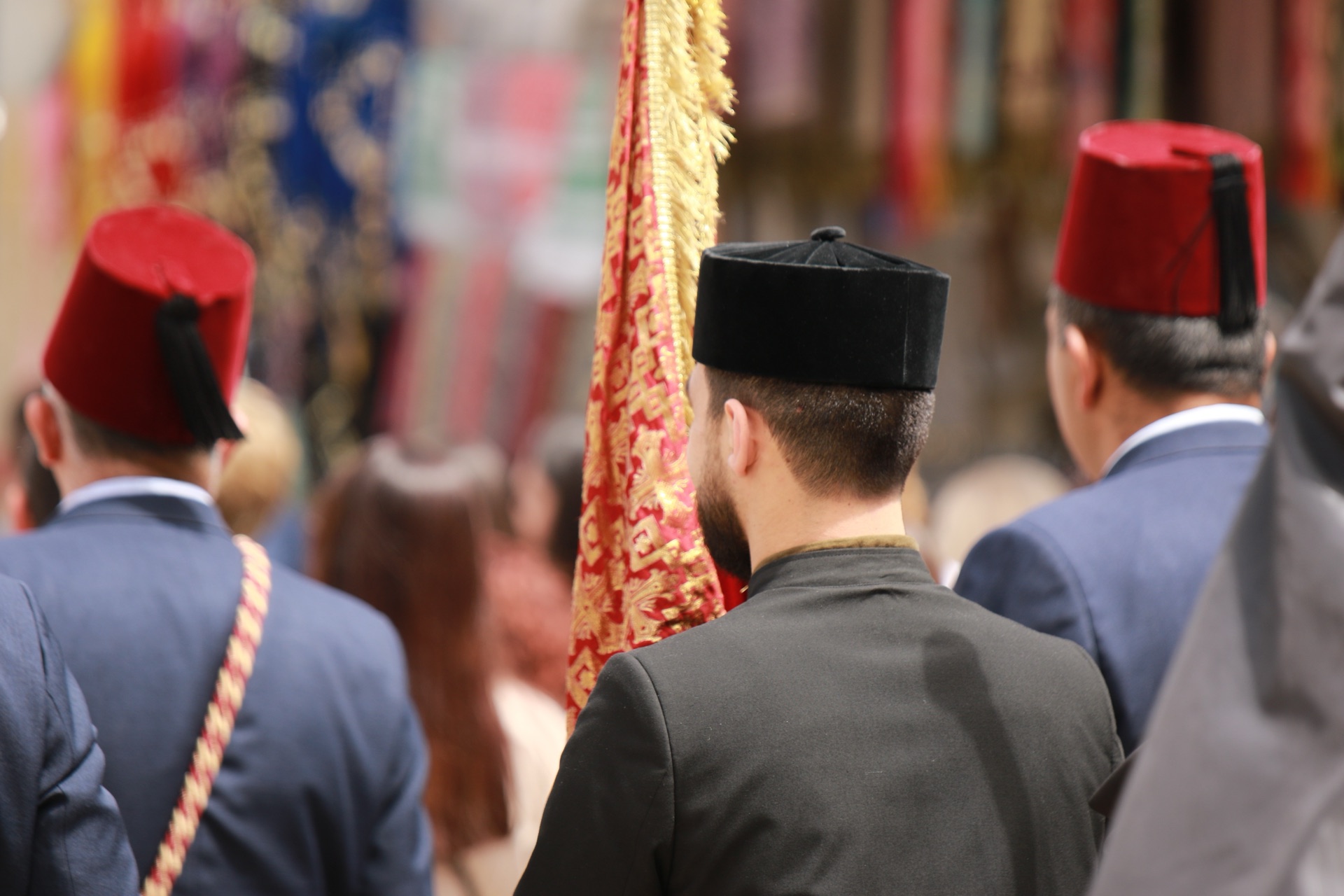
Legend & origins
Hayk's arrow and Ararat's ark
Armenian legend starts with an arrow. The giant Hayk refused to serve a tyrant in Babylon, marched his household north into the mountains, and killed the tyrant Bel with one shot. Armenians still call themselves Hay and their country Hayastan. Above it stands Ararat, where the ark is supposed to have come to rest.
In 301 AD, so the tradition goes, Gregory the Illuminator converted King Tiridates III and Armenia became the first state to adopt Christianity. Historians argue about the date and a fair number prefer 314. Either way the effect was the same. Faith and nationhood got welded together and have never come apart since.
A century later a monk called Mesrop Mashtots invented the Armenian alphabet, specifically so that scripture could be put into it. The letters are treated with a reverence that other nations reserve for flags, and calligraphy is still a national art.
Before any of the twentieth century, though, Armenians were the connective tissue of the region. Merchants of New Julfa financed Safavid Persia. The Balyan family built palaces for Ottoman sultans. There were Armenian printers in Aleppo and Armenian photographers in Istanbul, and a quarter in more or less every city from Smyrna to Isfahan. What 1915 destroyed was not only a homeland in eastern Anatolia: it was a commercial and professional world spread through other people's cities.

What sets them apart
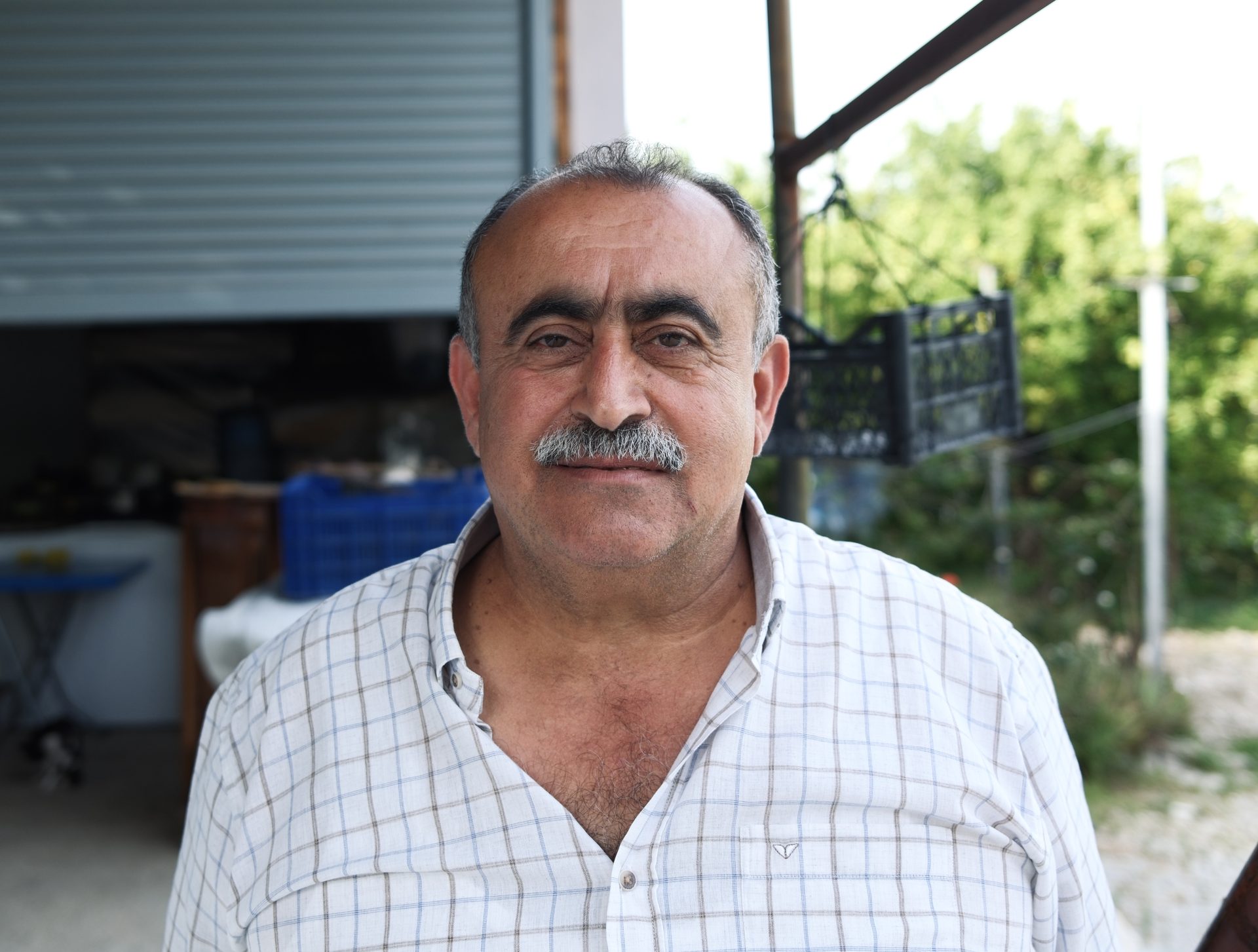
A nation held together by an alphabet
Scattered for centuries, Armenians built institutions that could be carried. A script, a church, a school and a press. Those four things travel, and they do not forget anything.
The alphabet as relic
Mesrop's thirty-six letters were invented in 405 AD to carry scripture; two more joined in the Middle Ages. Translator's Day is a church feast. Diaspora schools exist, above all, to hand the script on.
Four hierarchies, one church
The Apostolic Church runs on a geography of exile. Two catholicosates, meaning senior patriarchal seats, at Etchmiadzin in Armenia and at Antelias in Lebanon, plus patriarchates in Jerusalem and Istanbul. The structure is basically a map of where people ended up.
Khachkars
A khachkar is a cross-stone, an upright slab carved with a cross in dense interlace. No two are the same, they are on the UNESCO intangible heritage list, and they mark Armenian presence from Isfahan to Jerusalem.
April 24
The arrests of Istanbul's Armenian intellectuals in 1915 began on this date. It is the commemoration every community keeps, however small it has become.
1915 — today
After the catastrophe, the communities
The genocide of 1915 to 1923 killed as many as 1.5 million Armenians. Turkey disputes both the figure and the word, which is most of the problem. The Armenian Genocide Museum-Institute in Yerevan and Minority Rights Group set out the evidence in full; both are in the reading list at the bottom of this page. A three-thousand-year presence in Anatolia ended in roughly eight years.
The routes the survivors took are the map of the diaspora today. Death marches ended at Aleppo, so Aleppo became the mother city. French Mandate resettlement built Bourj Hammoud in Beirut. Older communities in Iran, Jerusalem and Istanbul absorbed whoever reached them.
After that each community lived its host country's history rather than its own. The Lebanese civil war, the Iranian revolution, and then Syria after 2011, where the destruction of Aleppo's Armenian quarter cut the region's most historic community to a third inside a decade.
Turkey's remaining Armenians, about 60,000 and nearly all of them in Istanbul, have the hardest position of the lot. They are heirs of the catastrophe living inside the state that denies it. In 2007 the editor Hrant Dink was shot outside his newspaper office, and a hundred thousand Turks walked in his funeral chanting that they were all Armenians. In Jerusalem, fewer than 2,000 people hold a quarter of the Old City against property deals and political pressure. Everywhere the numbers are small and the institutions far larger than the numbers.
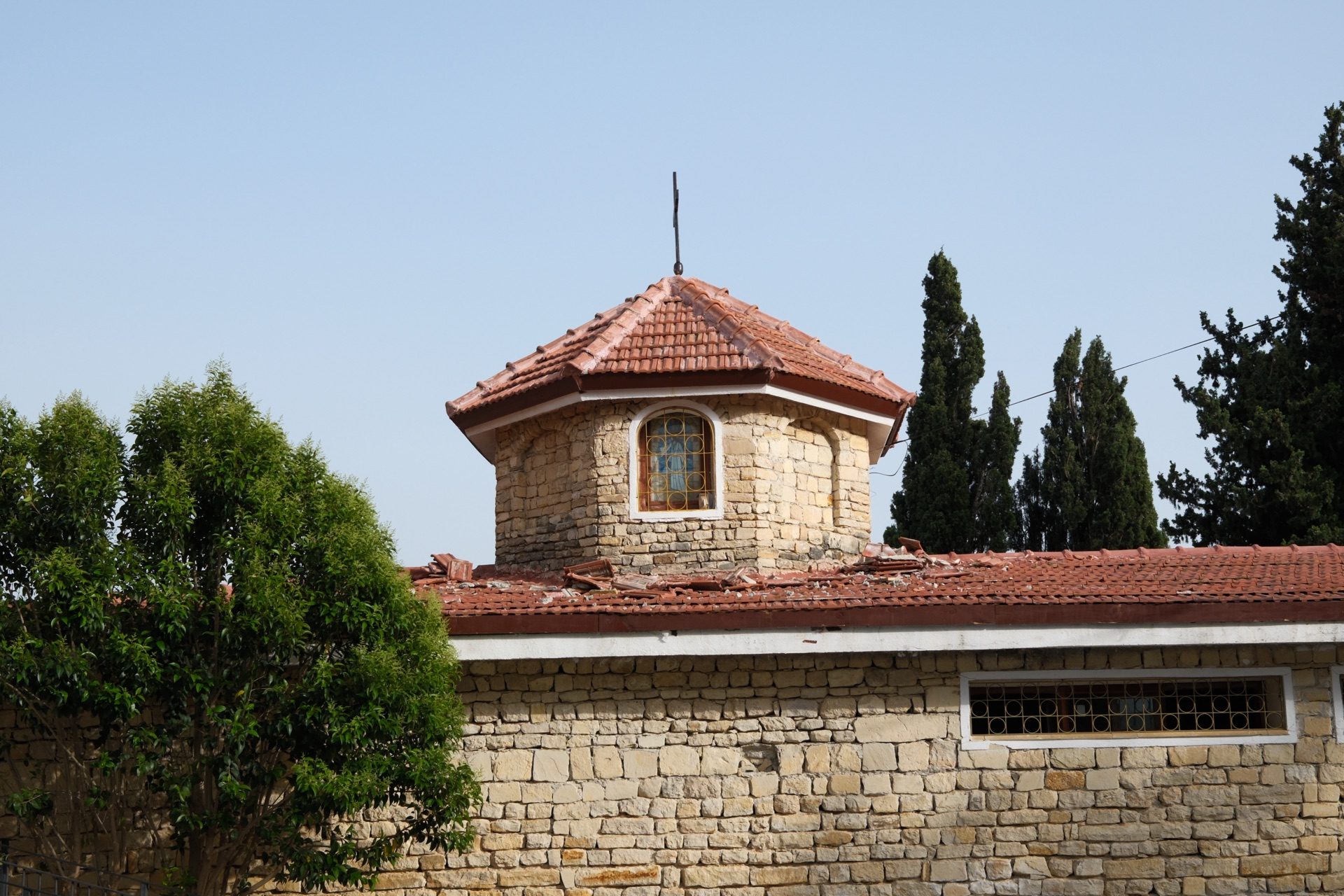
We are all Hrant Dink. We are all Armenians.Chanted by 100,000 mourners, Istanbul, January 2007
Geography
Where they live
Based on work by Dr. M. Izady, Atlas of the Islamic World and Vicinity (New York: Columbia Univ, 2006–present) @ gulf2000.columbia.edu/maps.shtml
Through time
Timeline
- 301 ADThe first Christian nation. Gregory the Illuminator converts King Tiridates III; faith and nation fuse.
- 405The alphabet. Mesrop Mashtots creates the Armenian script; the 'golden age' of translation follows.
- 1604New Julfa. Shah Abbas transplants Julfa's merchants to Isfahan; Armenian trade networks span Amsterdam to Manila.
- 1915The genocide. Up to 1.5 million killed; the Armenian world of Anatolia is annihilated.
- 1920s–40sRebuilding in exile. Aleppo, Beirut, Jerusalem and Tehran absorb the survivors; schools and presses reopen within years.
- 2007Hrant Dink assassinated. The Istanbul editor's murder galvanises Turkish–Armenian reckoning — and its limits.
- 2011–Syria's war. Aleppo's historic community is halved; many flee to Armenia itself — diaspora reversing into homeland.
- TodaySmall numbers, large presence. ≈250,000 across the region sustain churches, schools and quarters far older than the states around them.
The communities that remain
Estimated population
Middle East figures are community estimates after a decade of Syrian war losses. The worldwide nation — Armenia (~3 m) plus the global diaspora — approaches 9–10 million.
What they gave the region
Builders of everyone's cities
The Armenian gift to the region is mostly urban. A lot of imperial Istanbul is Armenian work, and the Balyan dynasty built Dolmabahçe Palace itself. Photography in the region was pioneered by Armenians, with the Abdullah Frères as court photographers to the sultans.
Aleppo's cuisine owes its sujuk and a good deal of its kebab refinement to Armenian kitchens. Iran's first café was Armenian-run, and Beirut's jewellery trade still largely is.
Armenian presses printed the region's first books in half a dozen languages. And the ceramics on some of the most photographed walls in Jerusalem's Old City come from an Armenian workshop whose founders arrived in 1919 to repair the tiles of the Dome of the Rock and then stayed.
Looking forward
Small communities, long leases
Consolidation is probably the word. Lebanon's community shrinks as Lebanon does, but keeps its schools and its catholicosate. Istanbul's institutions hold steady behind Turkey's very slow normalisation politics. Iran's community stays protected and quietly comfortable.
Jerusalem's quarter is fighting property cases that will decide whether a 1,600-year presence keeps its ground, and those cases are still open.
The thing nobody can predict is circulation. Armenia's independence in 1991 gave every diaspora community a second pole to orbit, and the wars there pull money and loyalty homeward. In the meantime the communities keep doing what the catastrophe taught them: build institutions first, worry about the numbers later.
The emblem
The arevakhach
The arevakhach, the sun-cross, is a wheel with curving rays. It turns up on khachkars, church walls and the margins of manuscripts from the Middle Ages onward. Armenians read it as endless return.
Sources11
- Ronald Grigor Suny, They can live in the desert but nowhere else: a history of the Armenian genocide (Princeton University Press), 2015.
- Encyclopaedia Britannica, Armenia – the arts and Christianity. britannica.com
- Sebouh David Aslanian, From the Indian Ocean to the Mediterranean: the global trade networks of Armenian merchants from New Julfa (University of California Press), 2011.
- UNESCO Intangible Cultural Heritage, Armenian cross-stones art: symbolism and craftsmanship of khachkars, 2010.
- Armenian Genocide Museum-Institute, genocide-museum.am. genocide-museum.am
- Minority Rights Group, Armenians – community profiles. minorityrights.org
- Nicola Migliorino, (Re)constructing Armenia in Lebanon and Syria: ethno-cultural diversity and the state in the aftermath of a refugee crisis (Berghahn Books), 2008.
- Committee to Protect Journalists, case records: Hrant Dink, 2007.
- Taner Akcam, A shameful act: the Armenian genocide and the question of Turkish responsibility (Metropolitan Books), 2006.
- Sato Moughalian, Feast of ashes: the life and art of David Ohannessian (Stanford University Press), 2019.
- Human Rights Watch, Driven by fear from Nagorno-Karabakh, 2023. hrw.org