Legend & origins
The secret of the mountain
Alawite tradition starts in ninth-century Iraq with Ibn Nusayr, a companion of the Shia Imams, who taught an inner reading of Islam. God has shown Himself to people in a succession of forms, and the highest of them is Ali.
The doctrine that grew around this is not really public property, so most of what outsiders write about it is second-hand. Souls migrate through bodies towards the light. There is a trinity of Meaning, Name and Gate. The festival calendar keeps Persian Nowruz and Christian saints' days next to the Islamic ones.
All of that was carried from Aleppo into the coastal mountains by the eleventh century or so, and there it was sealed. Religion became the property of initiated sheikhs. Everybody else, including every woman, was taught the outward forms only.
Secrecy was doctrine first and survival second. The fourteenth-century jurist Ibn Taymiyya issued fatwas declaring the Nusayris worse than infidels, which licensed centuries of massacre. Nusayri is the older name for the community, and his rulings are still quoted by people who mean it harm today.
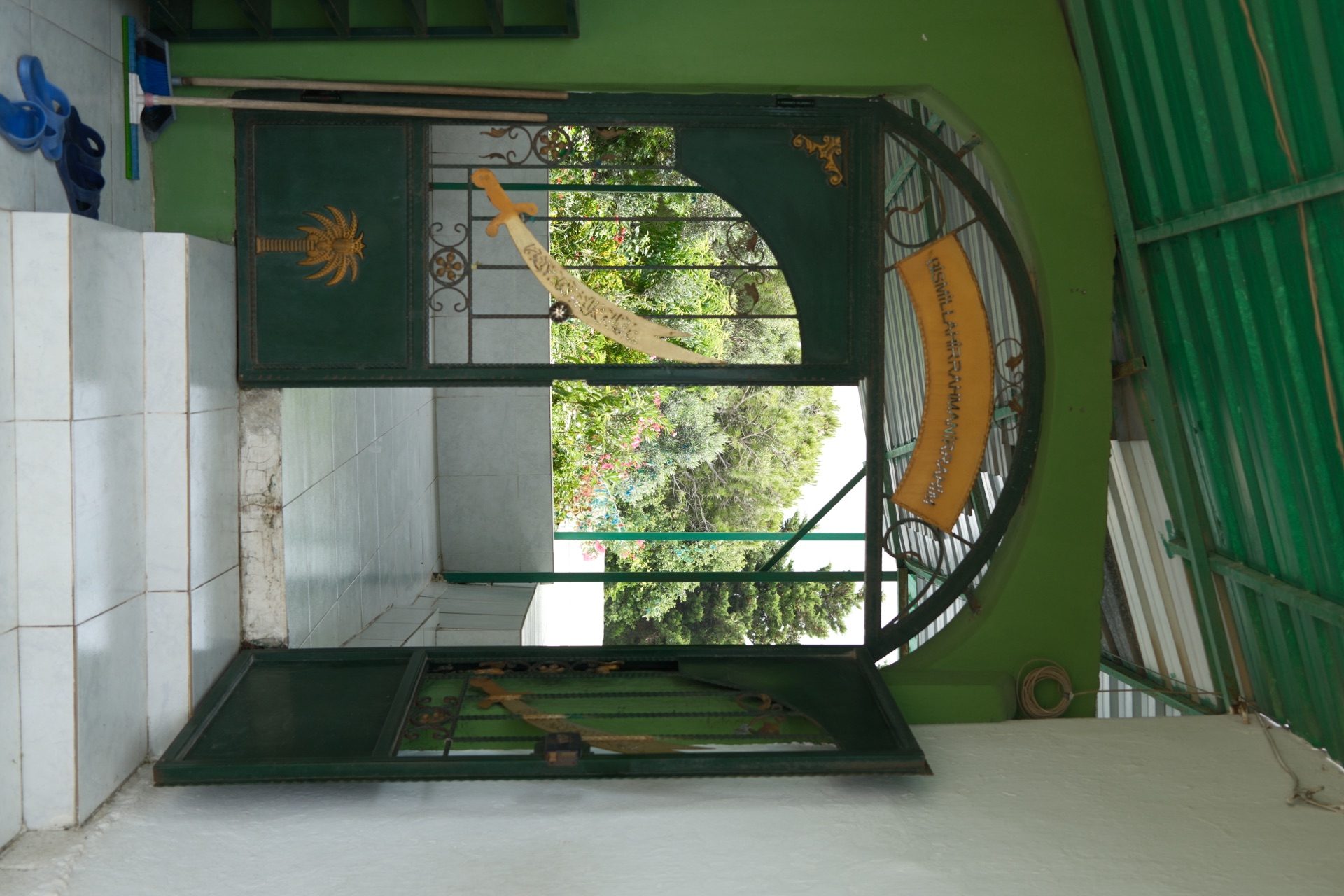
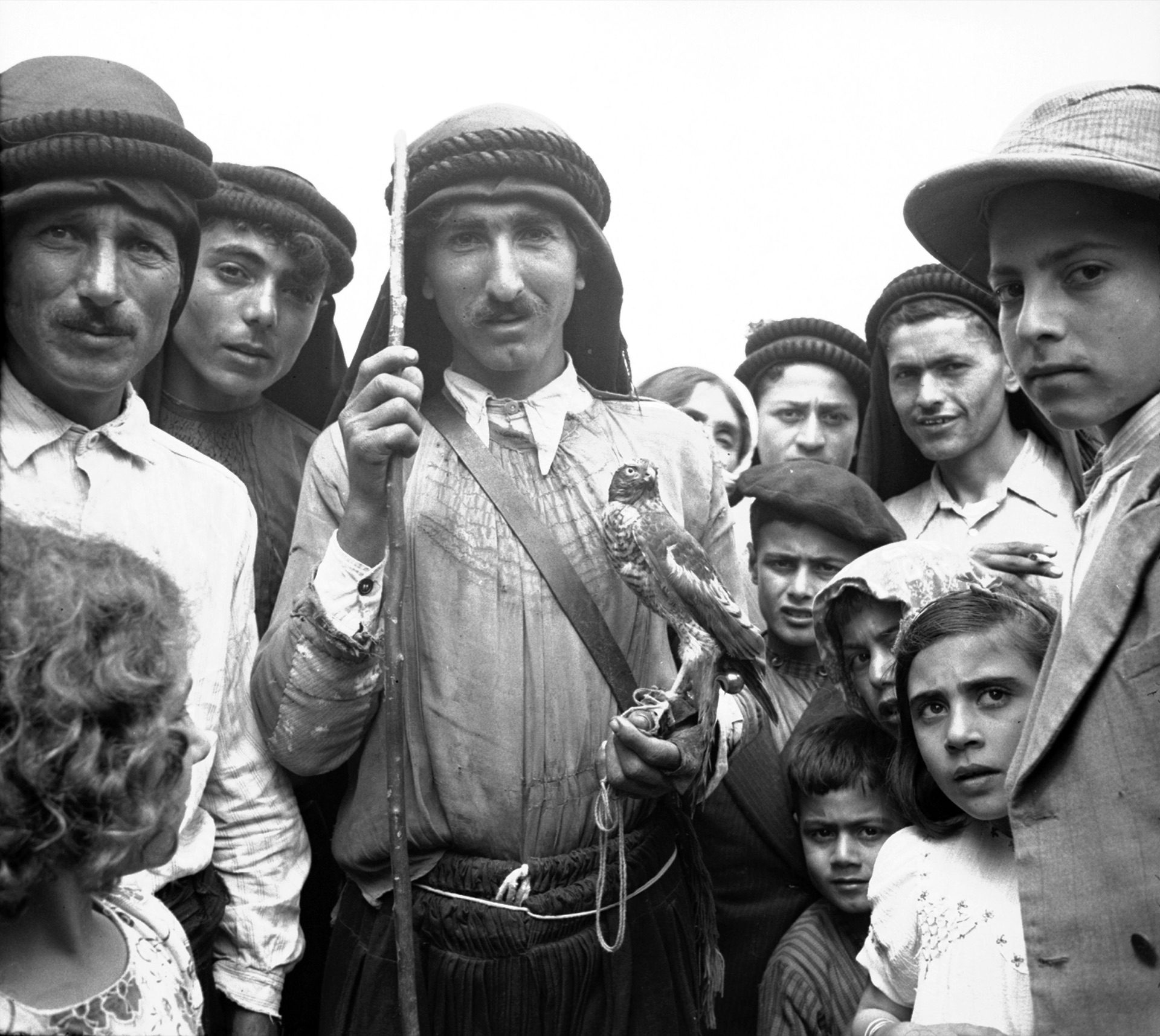
So the Alawites became a mountain people, farming terraced tobacco and keeping shrines to Khidr, a deathless figure said to appear to travellers in trouble. Then the French arrived looking for allies, and gave the community two things with long consequences: a briefly autonomous Alawite State (1920–1936), and open recruitment into the colonial troops. That second one is the road by which, one generation later, Alawite officers came to own the Syrian state.
What sets them apart
A faith kept behind two doors
Alawism divides the world into initiated and uninitiated. The practice reflects a thousand years of concealment. It is a religion whose deepest rooms most of its own people never enter.
Initiation and the sheikhs
Religious knowledge passes only to initiated men — born Alawite, instructed in stages by a sheikh. Everybody else keeps the festivals and the saints. Traditionally there were no mosques in the mountain villages, and there is no obligation of public worship at all.
The ziyara
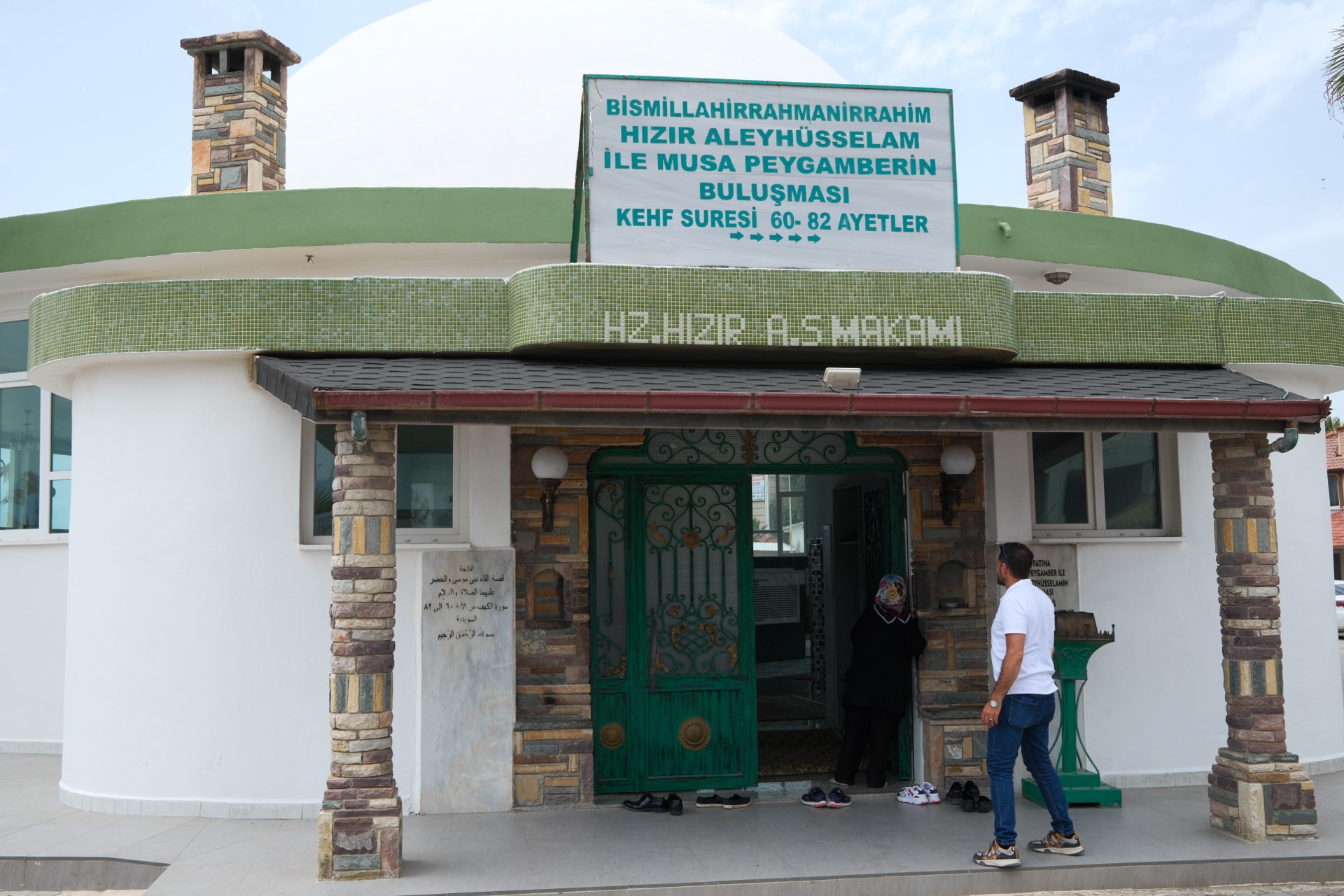
A ziyara is a visit to a shrine, and the hilltop shrines are the real sanctuaries of this community rather than any building in a town. The one to Khidr matters most. Vows, sacrifices, a piece of cloth tied at the window. A sacred geography instead of a liturgy.
A calendar of everyone's feasts
Alawites keep Eid al-Adha and Ghadir, which is the Shia feast of Ali's succession, and also Nowruz, Christmas and Epiphany. These are traces of the idea that the divine light has walked through every tradition.
Taqiyya as inheritance
Taqiyya is the permission, in Shia law, to conceal your faith under threat. Alawites used it for centuries and it shaped the culture. There is a reticence about doctrine even among Alawites themselves, and a deep reflex of closing ranks in front of outsiders.
1970 — today
The state as shield, the state as trap
Hafez al-Assad took power in 1970 and turned a mountain minority into the spine of the regime. The officer corps, the security services, the presidency itself. The Assads are by some distance the most famous Alawites who ever lived, and for fifty years the fate of the family and the fate of the community were deliberately tangled together.
For ordinary Alawites the bargain was always a strange one. Plenty of visibility, not much wealth, and conscription whether you wanted it or not. After 2011 the civil war hardened all of it. Regime service made every Alawite village a recruiting ground and every Alawite son a target, and the community buried a generation.
The Assads fell in December 2024 and the shield went with them overnight. In March 2025 there were massacres of Alawite civilians on the coast, the worst massacre of Alawites in Syria's history, and tens of thousands of people ran for Lebanon or back up into the mountains.
Across the border in Hatay, Adana and Mersin, Turkey's Arab Alawites watch this with the anxiety of relatives. What separated the two halves was a border, not a migration. Hatay was the Sanjak of Alexandretta, a district of French-mandate Syria with a large Alawite population. France wanted Turkish neutrality as another war approached, and the district was the price. A disputed vote in 1938 produced a Turkish-majority assembly, and in 1939 that assembly voted to join Turkey. Syria has never accepted the transfer and still draws Hatay inside its own outline. Families went to bed in one country and woke up in another, and their grandchildren are Turkish citizens. They are usually mislabelled Arab Alevis, which is a different community with a different history, and the confusion turns up even in careful reporting.
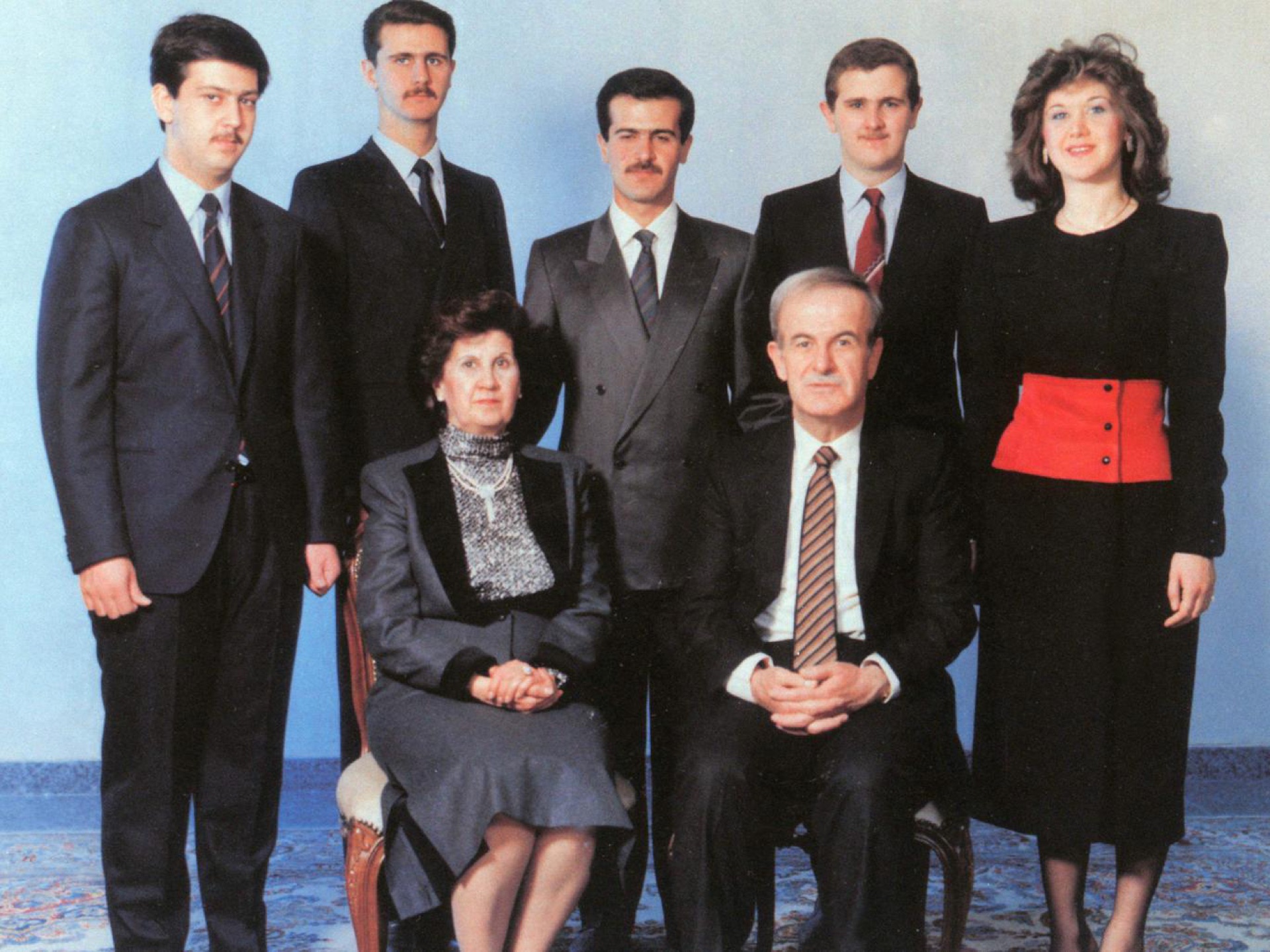
For centuries the mountain protected us from the state. Then we became the state — and lost the mountain's protection.On the Alawite bargain with the Assads
Geography
Where they live
Based on work by Dr. M. Izady, Atlas of the Islamic World and Vicinity (New York: Columbia Univ, 2006–present) @ gulf2000.columbia.edu/maps.shtml
Through time
Timeline
- 9th–10th c.Ibn Nusayr and al-Khasibi. The doctrine forms in Iraq and finds its base in Hamdanid Aleppo.
- 11th–12th c.Into the mountains. Persecution pushes the community into the coastal range that will bear its name.
- 1305Ibn Taymiyya's fatwas. The community is declared beyond the pale; massacres follow for centuries.
- 1920–36The Alawite State. France carves an autonomous territory around Latakia — and recruits the mountain into its levies.
- 1938–39Hatay leaves Syria. A disputed vote hands the Sanjak of Alexandretta to Turkey; its Alawites become Turkish citizens overnight.
- 1970Hafez al-Assad takes power. An Alawite officer becomes president; the community becomes the regime's spine.
- 2011–24The war. Alawite villages empty their sons into the army; the community is bound to the regime's fate.
- Dec 2024The fall. The Assads flee; the shield is gone.
- Mar 2025The coast massacres. Sectarian killings confirm the community's fears; a new era of exposure begins.
One faith, three states
Estimated population
Syria's figure is the standard pre-war estimate (~11% of the population); war losses and 2024–25 flight make the present number genuinely unknown. Turkish figures span 350,000–1 million.
What they gave the region
Poets of the coast
The Alawite mountain has fed Syria's modern imagination out of all proportion to its size. Adonis, whose real name is Ali Ahmad Said and who is usually called the most celebrated living Arab poet, came from one of its villages, as did the modernist Badawi al-JabalBadawi al-Jabal Pen name of Muhammad Sulayman al-Ahmad (1905–1981), a leading Syrian poet of the neoclassical school, from the Alawite mountains.. Whether the habit of layered, hidden meaning in their work comes from the religion is the kind of thing critics enjoy arguing about; the argument cannot be settled, and is probably better not pushed too far.
Otherwise the gifts are the ordinary kind. Tobacco terraces and apple orchards. The shrine festivals for Khidr that Christian neighbours join. And a calendar that is itself a sort of record of every tradition that ever crossed the coastal range.
Looking forward
After the shield
No community in this atlas faces a harder few years. Post-Assad Syria has to build guarantees that make Alawites ordinary citizens: army integration, some accountability for the coast massacres on all sides, and local policing of the mountain. None of it is close to settled.
Hatay's Arab Alawites, who have Turkish citizenship and European networks, may end up being the stable anchor for the whole community. That would be an odd reversal, given they were the periphery for most of the last century.
The mountain has absorbed catastrophe before. That is worth something, though probably less than people in the villages would like.
The emblem
The crescent of the coast
Alawism guards its symbols the way it guards its doctrine, so there is no public heraldry to draw. The crescent stands here for the outward Islamic face of the community. What lies inside it is taught to initiates only.
Sources9
- Minority Rights Group, Alawis in Syria – community profile. minorityrights.org
- Yaron Friedman, The Nuṣayrī-ʿAlawīs (Brill), 2010.
- Stefan Winter, A history of the 'Alawis: from medieval Aleppo to the Turkish Republic (Princeton University Press), 2016.
- Benjamin Thomas White, The emergence of minorities in the Middle East: the politics of community in French Mandate Syria (Edinburgh University Press), 2011.
- Leon Goldsmith, Cycle of Fear: Syria's Alawites in War and Peace (Hurst), 2015.
- Hanna Batatu, Syria's peasantry, the descendants of its lesser rural notables, and their politics (Princeton University Press), 1999.
- Reuters & UN Human Rights Office, reporting and statements on the coastal massacres, 2025.
- United Nations Independent International Commission of Inquiry on the Syrian Arab Republic, Violations against civilians in coastal and western central Syria, January to March 2025, 2025.
- Adonis, An introduction to Arab poetics (Saqi Books), 1990.