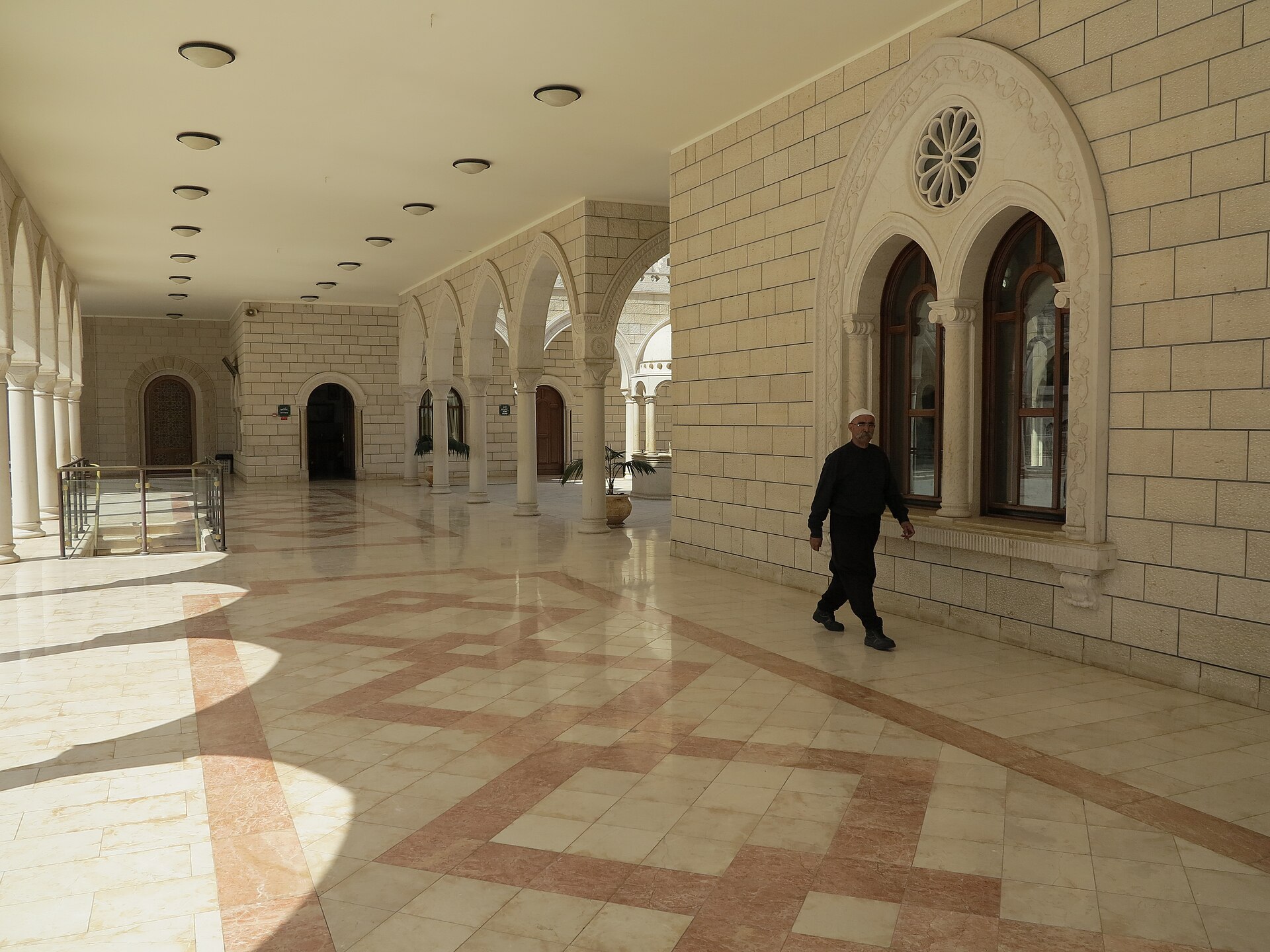
Legend & origins
A door that closed in 1043
The faith was proclaimed in Fatimid Cairo in 1017, in the name of the caliph al-Hakim: an esoteric unitarianism drawn from Ismaili Islam, Greek philosophy and older currents. Within a generation the door closed. Since 1043 there has been no conversion in, and none out.
Every Druze alive descends from the families of that first generation. The faith teaches strict monotheism, which is why they call themselves al-Muwaḥḥidūn, the Unitarians. It also teaches the transmigration of souls: a Druze soul is instantly reborn in a Druze body, so the community can neither shrink through apostasy nor grow through mission. The scripture, the Epistles of Wisdom, is not public. The five cosmic principles are diagrammed in the five-coloured star, the one thing the faith does show the world.
The community is divided in two. The ʿuqqāl, the wise, are the initiated: they study the texts, dress distinctively and give up tobacco and alcohol. The juhhāl, the ignorant, are everybody else — the large majority. The names describe access to the texts, nothing more.
Persecuted early on, the Druze withdrew into terrain that armies regret. The Chouf in Lebanon, the volcanic plateau of southern Syria that took their name, and the hills of Galilee and Carmel. There they earned a reputation as soldiers and as kingmakers, from the emirate of Fakhr al-Din IIFakhr al-Din II Fakhr ad-Din II (1572–1635), the Druze emir whose principality over Mount Lebanon and the coast is treated as the first outline of a Lebanese state.Encyclopaedia Britannica. View source ↗ to Sultan al-Atrash's great revolt against France in 1925.
What sets them apart
A sealed community in an open century
Closed membership, a doctrine kept from most of its own believers, fierce territoriality, and a pragmatic loyalty to whatever state rules the mountain. The combination is unusual even in a region full of closed communities.
Initiated and uninitiated
Religion is the business of the ʿuqqāl, and most Druze never read their own scripture. Piety is measured in conduct instead: honesty, hospitality, and the defence of kin.
Reincarnation and the notq
Souls pass instantly into a new Druze body. Occasionally a small child will describe a previous life in detail — the notq, the speech. Such cases are taken seriously and investigated, and families joined by a remembered life treat each other as relatives.
The five-coloured star
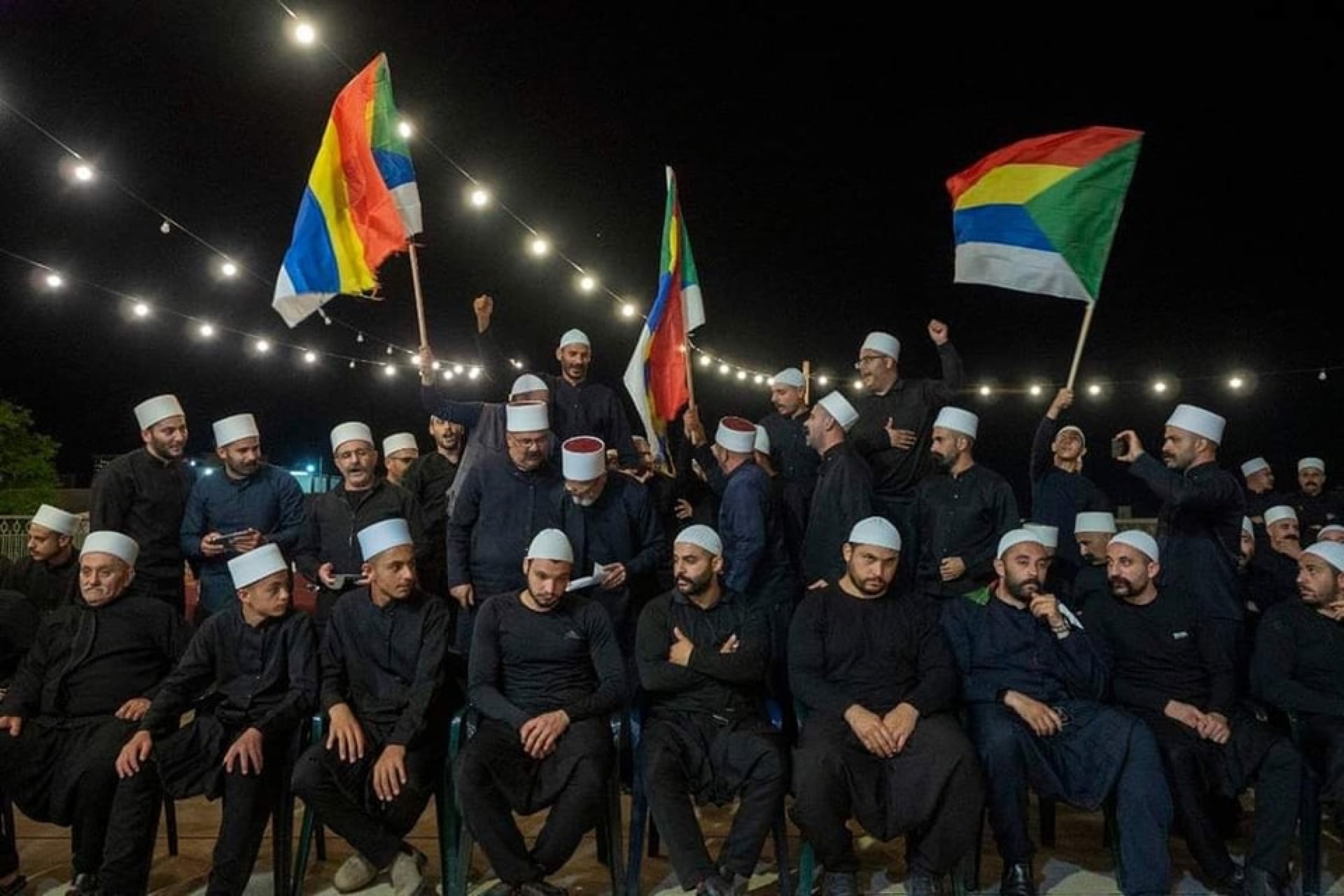
Green for the Universal Mind, red for the Soul, yellow for the Word, blue for the Precedent, white for the Immanent. A whole theology compressed into a flag.
Loyalty to the mountain first
Druze doctrine counsels loyalty to the ruling state, whichever state that happens to be. However, every state has learned where the limit lies. Policies that touch the autonomy of the mountain meet the most cohesive resistance in the region.
2011 — today
Four states, one anxious decade
Syria's war pressed hardest on Suwayda, the Jabal al-Druze. The mountain lost its young men to conscription and its safety to jihadist raids. An ISIS assault in 2018 killed more than 200 people in a single day, the worst loss since 1925.
After the Assads fell in 2024, the factions of Suwayda armed themselves and negotiated by turns. Clashes and massacres in 2025 made the autonomy of the mountain the most open question in southern Syria, with Israel pointedly casting itself as protector of the Druze from across the border.
In Israel, Druze men have served in the army under a community compact since 1956. So the Nation-State Law of 2018, which defined the state as Jewish alone, landed as a betrayal in the community that had given it soldiers and ministers. Druze-led protests filled Tel Aviv.
On the occupied Golan, most of the four villages' 25,000 Druze, centred on Majdal Shams, still refuse Israeli citizenship and tend their apple orchards in sight of Syrian relatives. In Lebanon, Walid Jumblatt has handed his father's chieftainship to a third generation. The faith that closed its doors in 1043 keeps having to answer the same question in every capital at once: whose side is the mountain on?
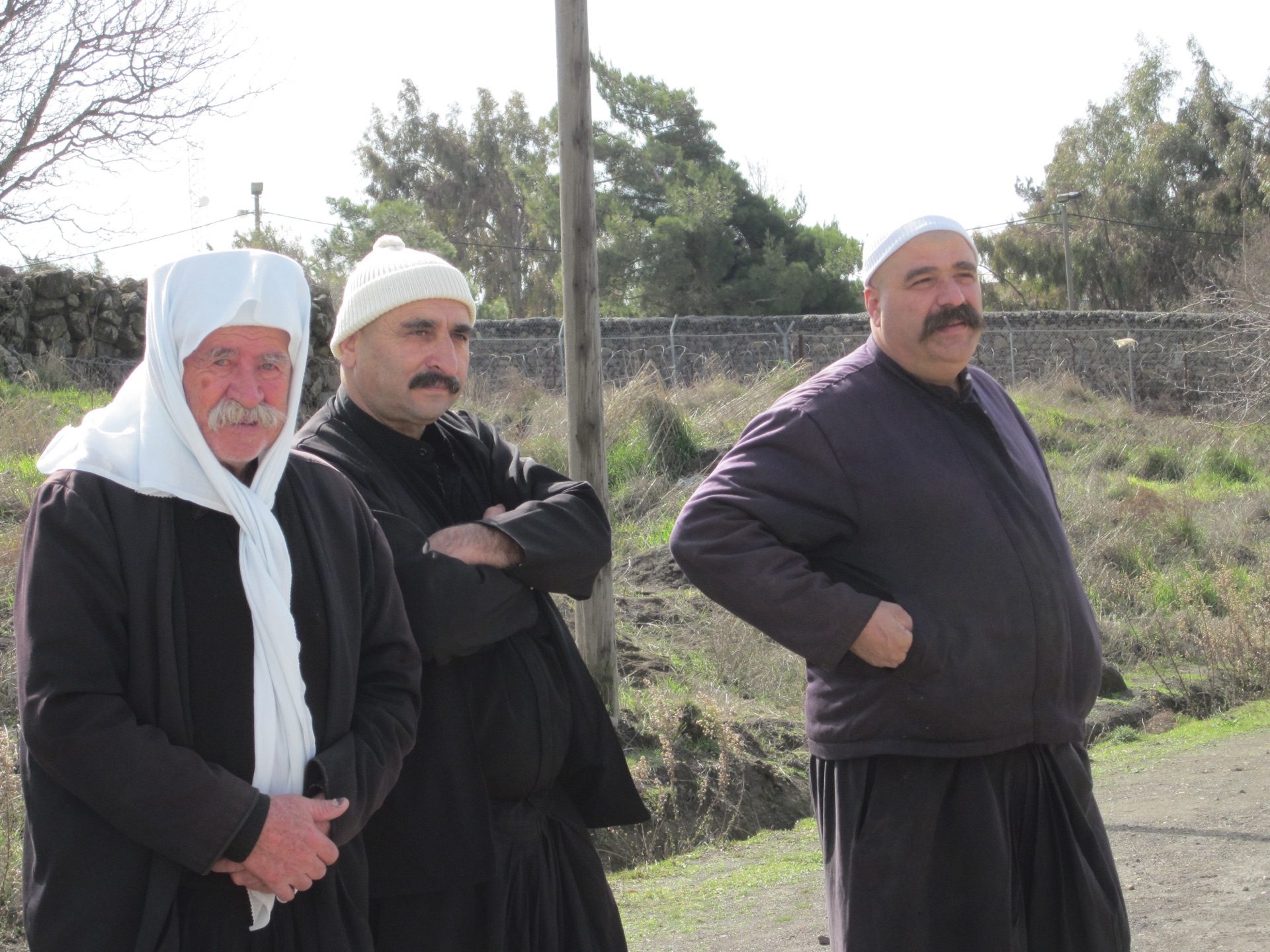
Religion is not taught. It is inherited — like the mountain.On the closed nature of the Druze faith
Geography
Where they live
Based on work by Dr. M. Izady, Atlas of the Islamic World and Vicinity (New York: Columbia Univ, 2006–present) @ gulf2000.columbia.edu/maps.shtml
Through time
Timeline
- 1017The call in Cairo. Preachers under the Fatimid caliph al-Hakim proclaim the unitarian doctrine.
- 1043The door closes. Conversion ends permanently; the community becomes hereditary.
- 1590s–1635Fakhr al-Din II. The Druze emir builds a proto-Lebanon so strong the Ottomans send two armies to unmake it.
- 1860Civil war in the mountain. Druze–Maronite fighting draws European intervention and reshapes Ottoman Lebanon.
- 1925–27The Great Syrian Revolt. Sultan al-Atrash leads the greatest national uprising against France from Jabal al-Druze.
- 1956The Israeli compact. Druze men accept conscription; a minority alliance with permanent tensions is born.
- 2018Suwayda attacked; Nation-State Law. ISIS kills 200+ in Syria; Israel's law estranges its most loyal minority.
- 2024–25After the Assads. Suwayda arms and negotiates; the mountain's autonomy becomes southern Syria's central question.
Where the Druze live
Estimated population
Syria's figure predates full wartime displacement. Venezuela hosts the largest emigrant community — a legacy of Ottoman-era migration.
What they gave the region
Statesmen of the mountain
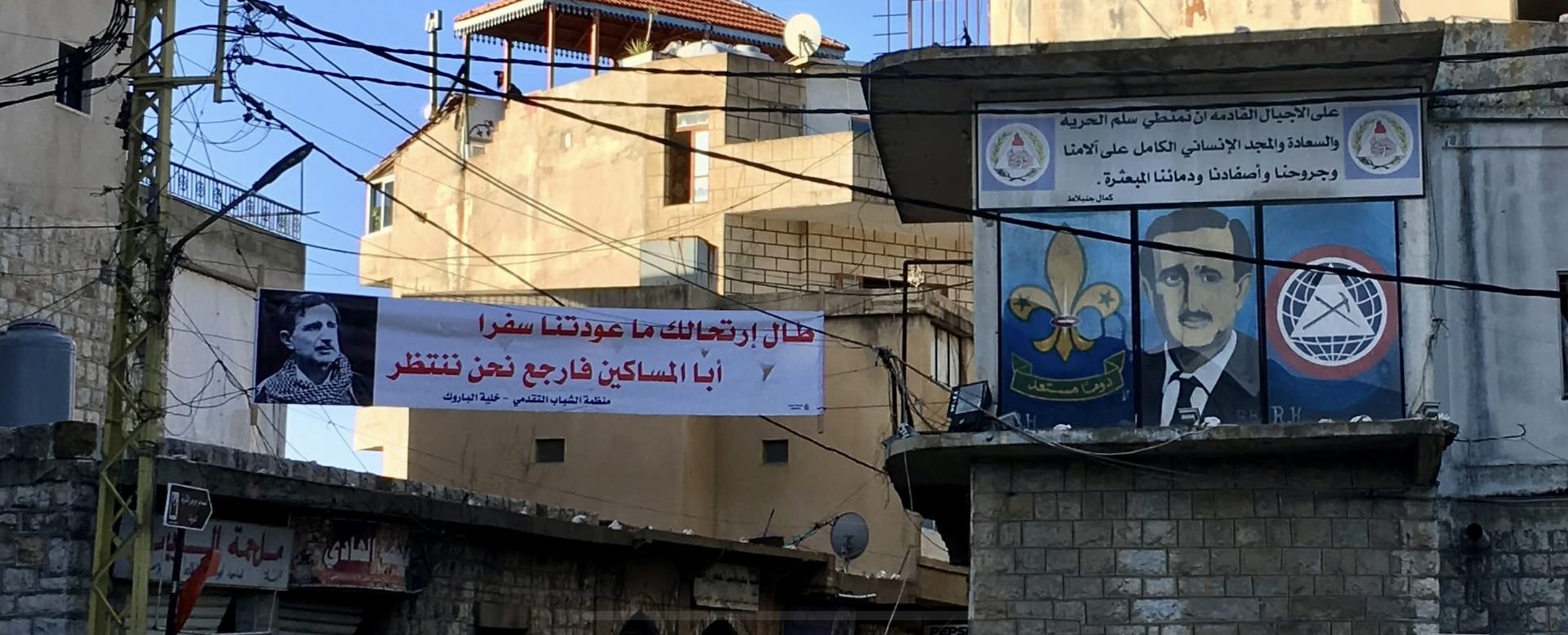
The Druze contribution to the Levant is political, and out of all proportion to their numbers. Fakhr al-Din II sketched the very idea of Lebanon. Sultan al-Atrash gave Syria its founding national epic. The Jumblatts supplied Lebanon with a dynasty of kingmakers and, in Kamal Jumblatt, one of its most original political thinkers.
Druze hospitality set a regional standard, with the open majlis, which is the reception room where any visitor may come and sit, and the sacred obligation owed to a guest. Their mountain farming made the apples, grapes and olive oil of the Levant famous.
Beyond the five-coloured star, the community's other export is a working method: how to be useful to several states at once without dissolving into any of them.
Looking forward
The mountain votes last
Post-Assad Syria makes Suwayda the pivotal arena. Its factions negotiate autonomy, security and reconciliation with Damascus, while Israel courts the community from across the Golan. Most Druze regard that courtship warily, because survival has always meant keeping credibility with all sides.
In Israel the wound of the Nation-State Law still shapes Druze politics. In Lebanon a third-generation Jumblatt is testing whether a chieftainship survives modernity.
Demography is stable and emigration is low by regional standards. The closed structure of the faith is a liability for growth and an advantage in chaos. Whether it remains one through the next few years in southern Syria, nobody in Suwayda would care to predict.
The emblem
The five-pointed star
Each point of the Druze star carries a colour and a cosmic principle. Green for the Universal Mind, red for the Soul, yellow for the Word, blue for the Precedent, white for the Immanent. It is the one public symbol the faith has, and it is a diagram of a theology that is otherwise kept private.
Sources10
- Encyclopaedia Britannica, Druze. britannica.com
- Nejla M. Abu-Izzeddin, The Druzes: a new study of their history, faith and society (Brill), 1984.
- Kais Firro, A History of the Druzes (Brill), 1992.
- Kamal Salibi, A house of many mansions: the history of Lebanon reconsidered (University of California Press), 1988.
- BBC News & Reuters, reporting on the Suwayda attacks, 2018.
- Minority Rights Group, Druze in Israel – community profile. minorityrights.org
- Kais Firro, The Druzes in the Jewish state: a brief history (Brill), 1999.
- Yusri Hazran, The Druze community and the Lebanese state: between confrontation and reconciliation (Routledge), 2014.
- Michael Provence, The Great Syrian Revolt and the rise of Arab nationalism (University of Texas Press), 2005.
- Robert Brenton Betts, The Druze (Yale University Press), 1988.