Legend & origins
The pearl, again — and a God who visits
Like the Yazidis, the Yarsan begin the world with a pearl, the divine essence hidden in the sea before time. God, they hold, is not remote. He has clothed Himself in human form seven times, and will do so once more.
The community goes by three names. Yarsan is the one it mostly uses of itself. In Iran it is often called Ahl-e Haqq, the People of Truth; in Iraq, Kaka'i. The names carry politics: each implies a different answer to whether this is a branch of Islam.
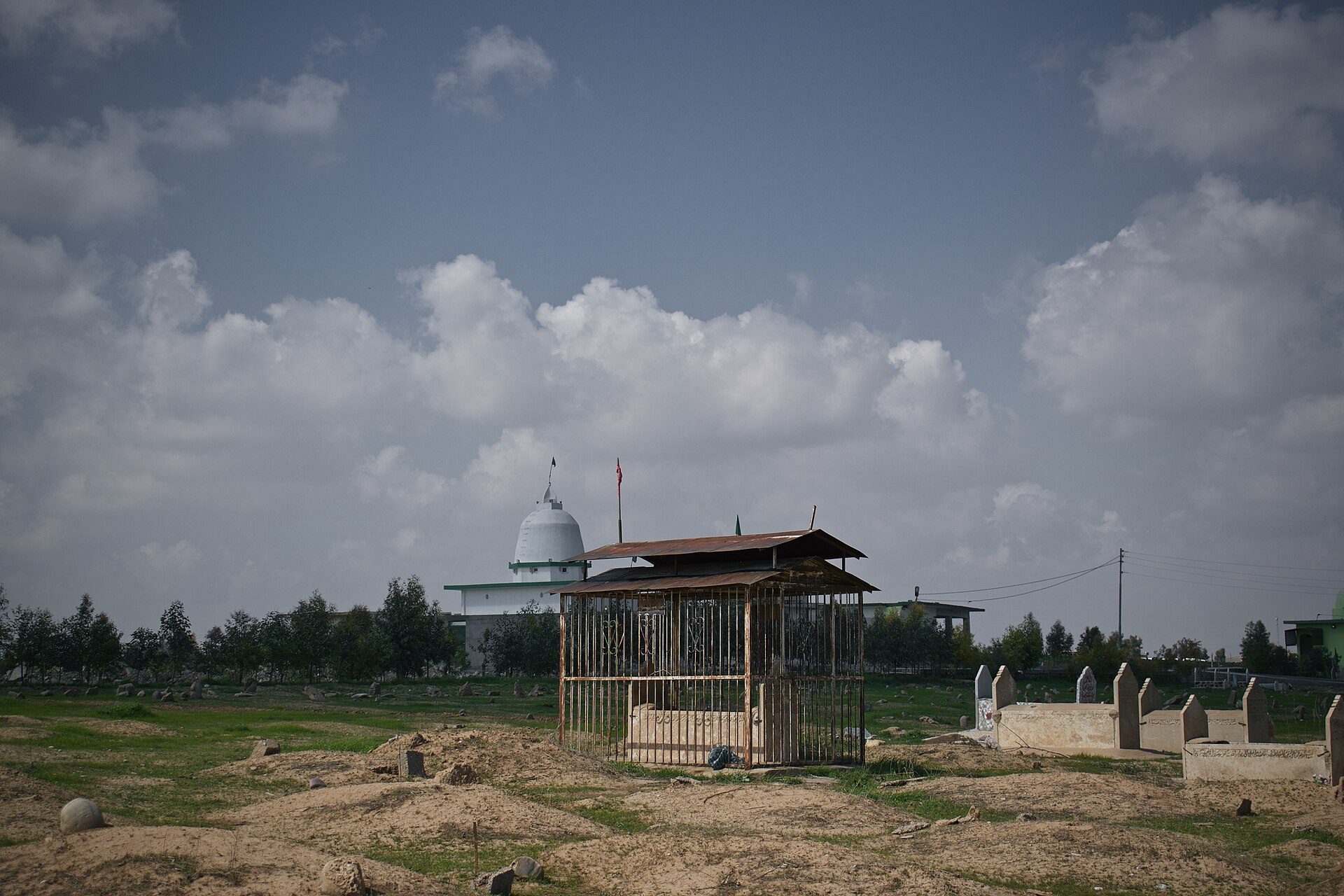
The decisive appearance came in the fourteenth century, when Sultan Sahak founded the order at Perdiwar on the Sirwan river, high in the Zagros mountains. Around him gathered seven companions, the Haft Tan, meaning the Seven Bodies. Every Yarsani lineage descends from that gathering.
The soul, they teach, migrates through a thousand and one bodies on its way to purity. The world is a garment that God puts on and takes off.
Theology lives in the Kalâm-e Saranjâm, the Discourse of Conclusion, composed in Gorani verse. Gorani is a western Iranian language related to Kurdish. The text is sung rather than read. Doctrine passes at evening gatherings called jam, where a lute called the tanbur accompanies hymns that the uninitiated will never have explained to them.
Like the Druze and the Alevis, the Yarsan learned that survival favours the discreet. Their first rule is sirr-e mgo, which means do not tell the secret.
What sets them apart
A theology you can only hear
Everything distinctive about the Yarsan follows from one choice. Music, rather than text, is the vessel of revelation, and secrecy, rather than mission, is the shield of the community.
The jam and the tanbur
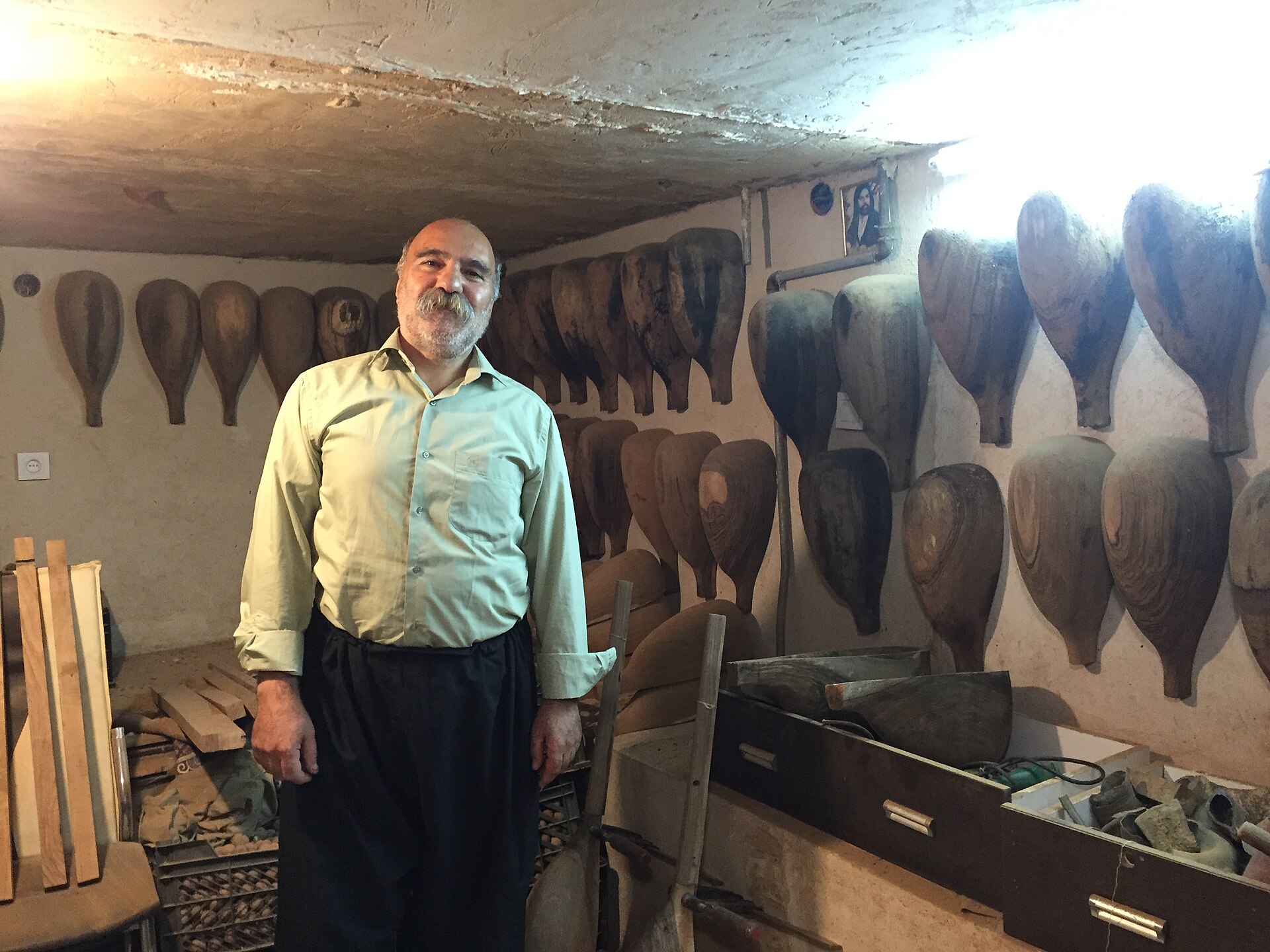
The weekly gathering combines sung scripture, the sharing of consecrated food and the tanbur, a long-necked lute with three strings that is treated as a sacred object rather than an instrument. Master players like Ostad Elahi became figures in world music without most of their audience knowing there was a religion behind it.
The moustache
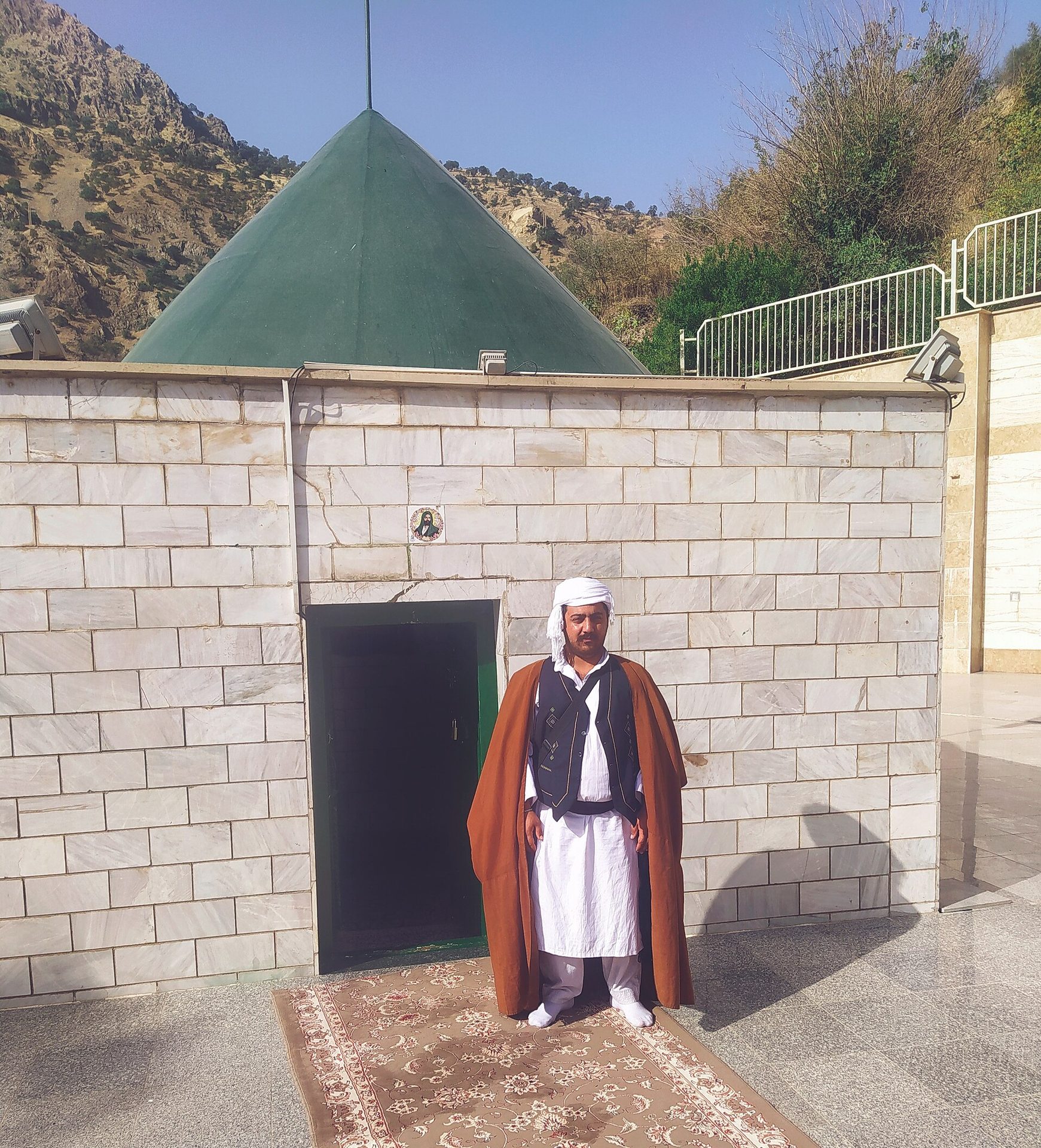
Traditional Yarsani men do not trim the moustache. It is a marker distinctive enough that the community appears in both Ottoman and Ba'athist files as the moustached ones.
Dun-a-dun, the migrating soul
Dun-a-dun means garment to garment. The soul passes through 1,001 lives on its way towards the divine. Hell is not a place in this system. It is a journey that failed.
Born, not converted
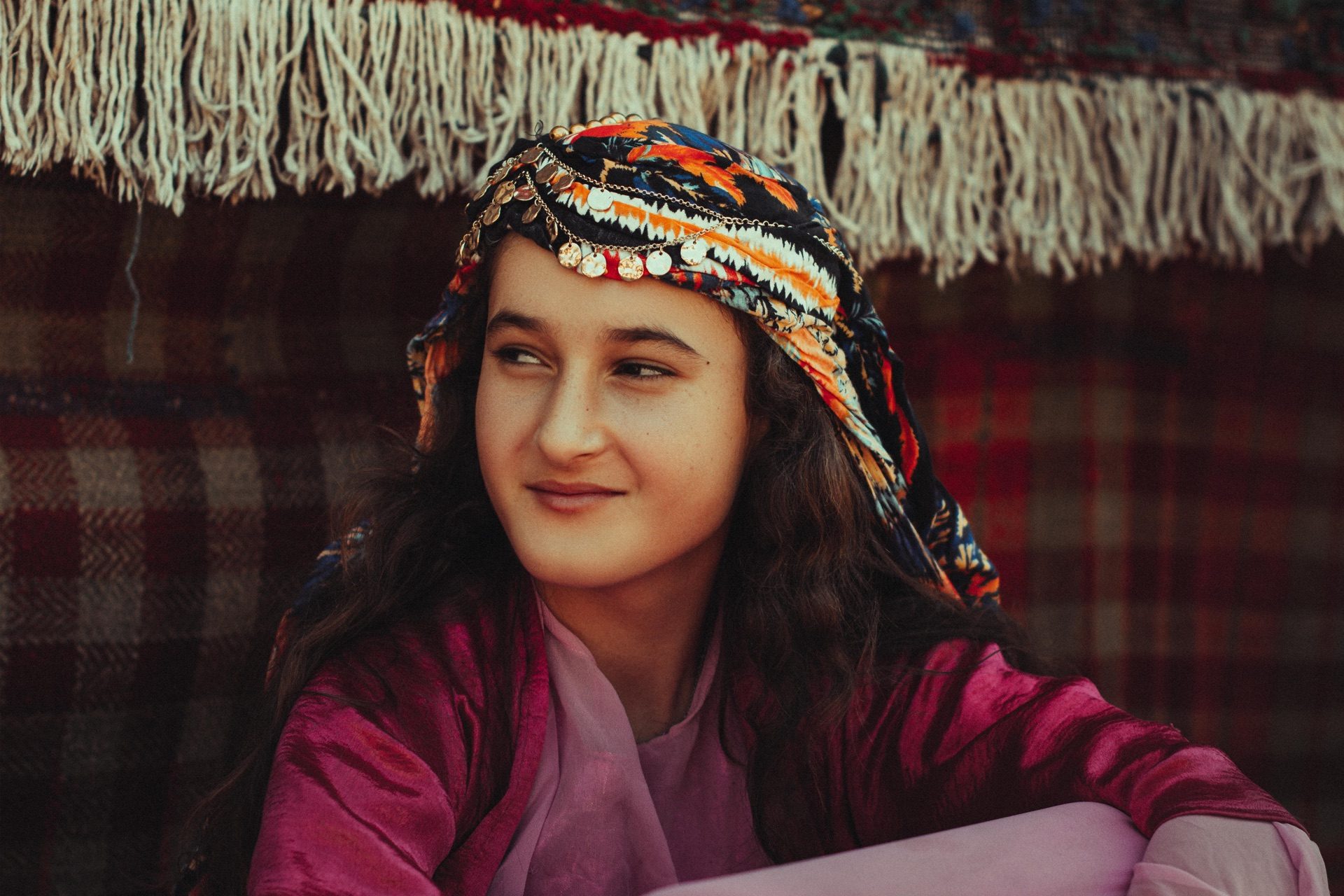
Like the Druze and the Yazidis, the Yarsan accept no converts. A person is born into a spiritual lineage tied to one of the founding families of Perdiwar, and there is no other way in.
Iran & Iraq today
Between erasure and the census
Iran's constitution recognises Christians, Jews and Zoroastrians as protected minorities. The Yarsan are not on that list. Officially most are counted as Shia Muslims — convenient for the state, and not what the community believes.
In practice that means surveillance, occasional desecration of shrines, and periodic protest. In 2013, several Yarsani men in Hamadan set themselves on fire in protest after a jailed believer's moustache was forcibly shaved. It briefly forced the community into the national news, and then it went quiet again.
In Iraq, where they are called Kaka'i, the pressure has been physical. Their villages south-east of Mosul and around Kirkuk sat directly on the path ISIS took in 2014. Shrines were mined, families were displaced, and Kaka'i units fought within the Peshmerga.
Some Kaka'i now press for recognition as a distinct religion in Iraqi law. Others prefer the old shield of being counted as Muslims, and quiet. That disagreement runs inside families, not just between organisations.
Do not tell the secret — sing it.On sirr-e mgo and the sung scripture of the Yarsan
Geography
Where they live
Based on work by Dr. M. Izady, Atlas of the Islamic World and Vicinity (New York: Columbia Univ, 2006–present) @ gulf2000.columbia.edu/maps.shtml
Through time
Timeline
- 14th centurySultan Sahak at Perdiwar. The faith's constitutive incarnation; the Haft Tan gather and the lineages are founded.
- 16th–19th c.The quiet centuries. Yarsan communities survive between Ottoman and Persian empires by discretion, paying the price of periodic persecution as “extremist Shia.”
- 20th centuryPartial emergence. Ostad Elahi carries the tanbur repertoire toward the concert hall; urban migration loosens village secrecy.
- 2013The moustache protests. Self-immolations in Iran after prison humiliations force rare public attention.
- 2014–17ISIS and the Kaka'i. Iraqi Kaka'i villages are occupied and shrines destroyed; community units fight with the Peshmerga.
- TodayRecognition unresolved. Uncounted in Iran, newly assertive in Iraq — the largest faith in this atlas without any legal existence.
A faith the census cannot see
Estimated adherents
No state counts the Yarsan; scholarly estimates for Iran alone range from one to over three million. Figures shown are mid-range.
What they gave the region
Masters of the sacred string
The Yarsan gave the region one of its great musical traditions. The tanbur repertoire is a body of sacred maqams, meaning modal pieces, passed from master to disciple since the middle ages. It entered the world's concert halls through Ostad Elahi and Kurdish masters like Ali Akbar Moradi, and it now shapes the sound of Iranian and Kurdish art music far beyond the faith itself.
Kermanshah's workshops still build the instrument to medieval patterns.
Yarsani verse, the kalâm corpus in Gorani, is also one of the oldest bodies of poetry in Kurdish literature. It is studied now as a way into the region's pre-Islamic religious undergrowth, which is otherwise mostly gone.
Looking forward
Out of the shadow of secrecy
A generation of Yarsani activists is testing whether sirr-e mgo, the rule about not telling the secret, still serves the community or now costs more than it protects. In Iraq, Kaka'i leaders press for recognition as a distinct religion with protected villages. In Iran, where the constitution offers no box for them at all, the community weighs visibility against reprisal after each round of protest. Migration to Europe has created, for the first time, Yarsani institutions beyond the reach of any state that dislikes them.
The tanbur may turn out to be the faith's best ambassador. It is easier to love than to persecute, and it carries the theology across borders one recording at a time.
The emblem
The tanbur
No symbol could be more Yarsani than the instrument itself. The pear-bodied, long-necked tanbur, whose sound the community calls the voice of the unseen. Scripture is sung to it, saints played it, and masters are buried with it.
Sources10
- Encyclopaedia Iranica, Ahl-e Ḥaqq. iranicaonline.org
- Ziba Mir-Hosseini, Inner truth and outer history: the two worlds of the Ahl-i Haqq of Kurdistan (International Journal of Middle East Studies), 1994.
- Vladimir Minorsky, Notes sur la secte des Ahle-Haqq (Revue du monde musulman), 1920.
- Mohammad Reza Hamzeh'ee, The Yaresan: a sociological, historical and religio-historical study of a Kurdish community (Klaus Schwarz Verlag), 1990.
- Philip G. Kreyenbroek and Yiannis Kanakis, God first and last: religious traditions and music of the Yaresan of Guran (Harrassowitz), 2020.
- Amnesty International & BBC Persian, reporting on the Hamadan self-immolations, 2013.
- Minority Rights Group, Kaka'i in Iraq – community profile. minorityrights.org
- Amnesty International, Iran: human rights abuses against the Kurdish minority, 2008. amnesty.org
- Jean During, Musique et mystique dans les traditions de l'Iran (IFRI), 1989.
- Partow Hooshmandrad, Performing the belief: sacred musical practice of the Kurdish Ahl-i Haqq of Guran (University of California, Berkeley), 2004.