Legend & origins
The free people and the woman who led them
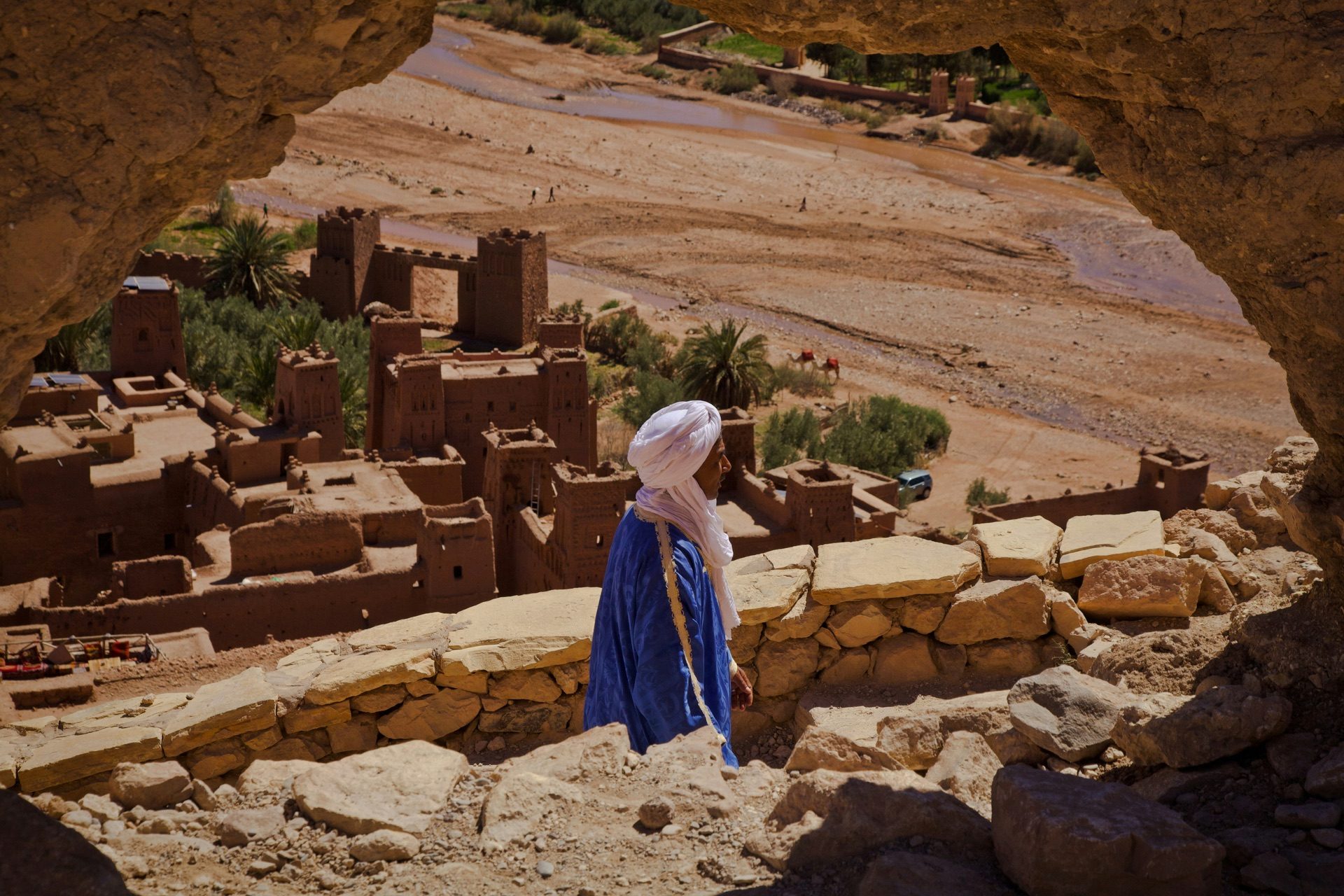
Outsiders called them Berbers, from the Greek word for barbarian, and the Amazigh never accepted it. Their own name means the free people (singular Amazigh, plural Imazighen; the language is Tamazight). Their founding memory is of a woman: the Kahina, the seventh-century warrior queen of the Aurès who led the last resistance to the Arab conquest.
Amazigh history refuses to fit a simple story of conquest. The indigenous people of North Africa gave Rome emperors and gave Christianity some of its fiercest African minds. Augustine of HippoAugustine of Hippo Augustine (354–430), bishop in what is now Algeria and the most influential Latin theologian of the early church.Encyclopaedia Britannica. View source ↗ was of Amazigh stock.
Then Islam arrived, and they promptly produced dynasties of their own. The Almoravids and Almohads ruled from Senegal to Spain and built Marrakesh into an imperial capital. Arabisation came less by the sword than by centuries of slow prestige. The cities took Arabic and the mountains kept Tamazight.
So the language map today is a map of refuges. The High and Middle Atlas, the Rif, Kabylia and the Aurès in Algeria, the Nafusa mountains of Libya, Djerba in Tunisia, and the eastern outpost at Siwa in Egypt, where some 20,000 people still speak Siwi beside the temple where Alexander was crowned son of Amun.
Arab nationalism after independence suppressed all of it. The word Amazigh itself was subversive in 1970s Algeria. The Berber Spring of 1980, sparked by the banning of a poetry lecture in Kabylia, became the founding date of the movement.
What sets them apart
An identity written in geometry
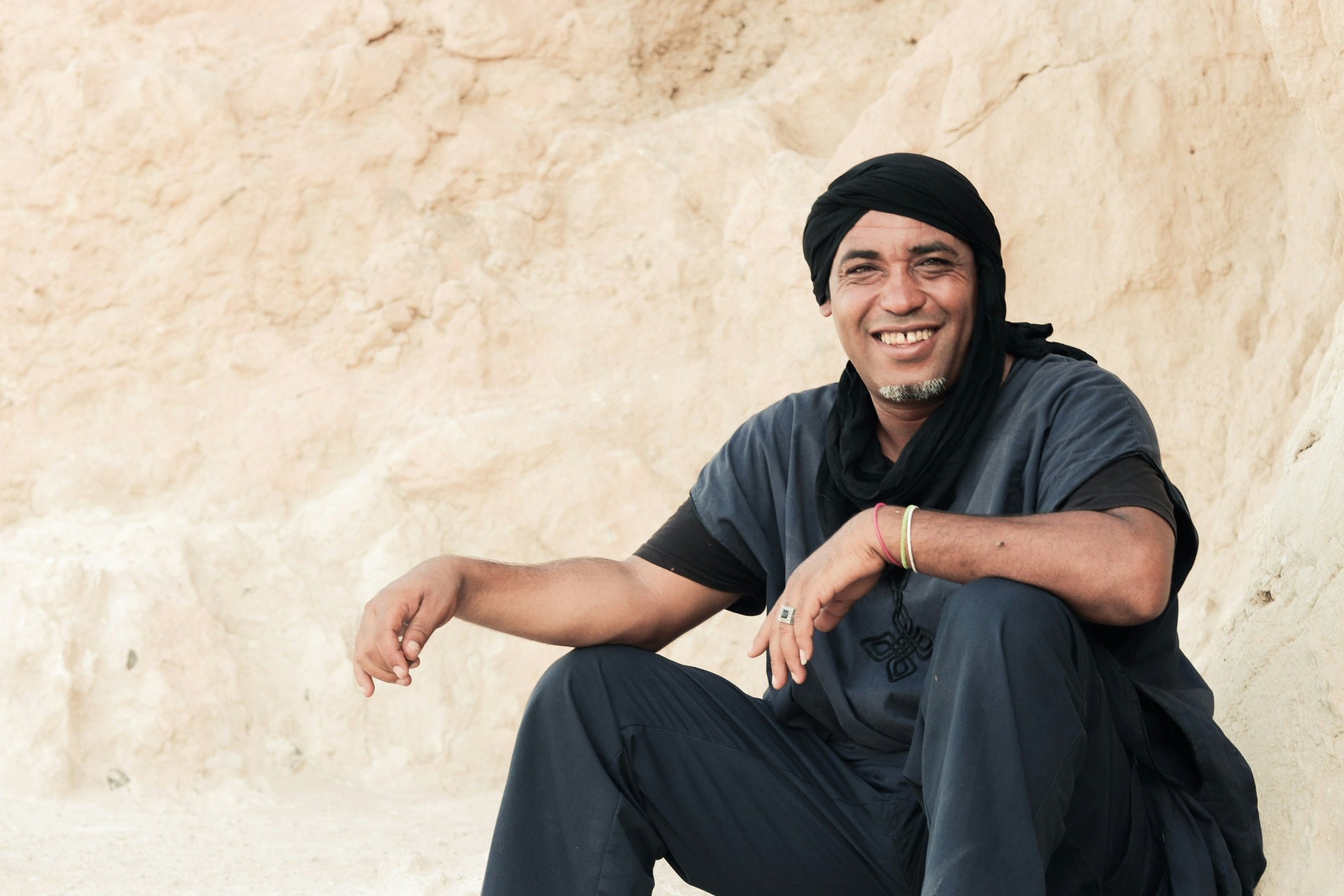
Amazigh culture encodes itself in pattern. An ancient script, symbols tattooed and woven, and a calendar that starts with a pharaoh.
Tifinagh, the revived letters
Tifinagh is the angular Amazigh alphabet. It comes from Libyco-Berber inscriptions 2,500 years old, kept alive for most of that time only by Tuareg women teaching children to write it in the sand. It now heads Moroccan schoolbooks and street signs. The letter ⵣ, called yaz, is the flag of the movement.
Yennayer, year 2976
The Amazigh new year falls on 12 to 14 January. It counts from 950 BC, when the Libyan chief Shoshenq took the throne of Egypt — a starting point chosen retroactively for a very old festival. It has been a public holiday in Algeria since 2018.
The woven archive
Atlas carpets, Kabyle pottery and the facial tattoos of the old women all share one geometric vocabulary. Diamonds, chevrons and the yaz. It is a symbolic system older than any surviving Amazigh text, and it was carried almost entirely by women.
The islands of Tamazgha
Tamazgha is the name for the whole Amazigh world. From the Rif to Siwa, communities separated by two thousand kilometres of Arabic still recognise each other's words. One language continuum, and now a standardised school form in two states.
1980 — today
From forbidden word to official language
The turn has been dramatic. Morocco's constitution made Tamazight an official language in 2011, and Algeria followed in 2016. Tifinagh now marks the ministries that once denied the people existed.
Kabylia's long confrontation with Algiers made language rights a matter of martyrs. The Berber Spring of 1980, then the Black Spring of 2001, when security forces killed over a hundred protesters. It keeps autonomy politics alive to this day. In Libya after 2011, the Nafusa Amazigh reopened language schools banned under Qaddafi within weeks of his fall.
The counting stays political everywhere. Censuses avoid the question. Speaker estimates run to perhaps 25 million, while identity estimates are far higher, because much of North Africa is Amazigh by descent. Neither figure is solid, and both get used as arguments.
The Middle East frame of this atlas catches only the eastern edge of a world that reaches to the ghosts of the Canary Islands and the Tuareg Sahara. The direction, however, is not in doubt. Two states have made it official, a generation of urban youth is relearning its grandmothers' words, and the yaz is sprayed on walls from Nador to Tripoli.
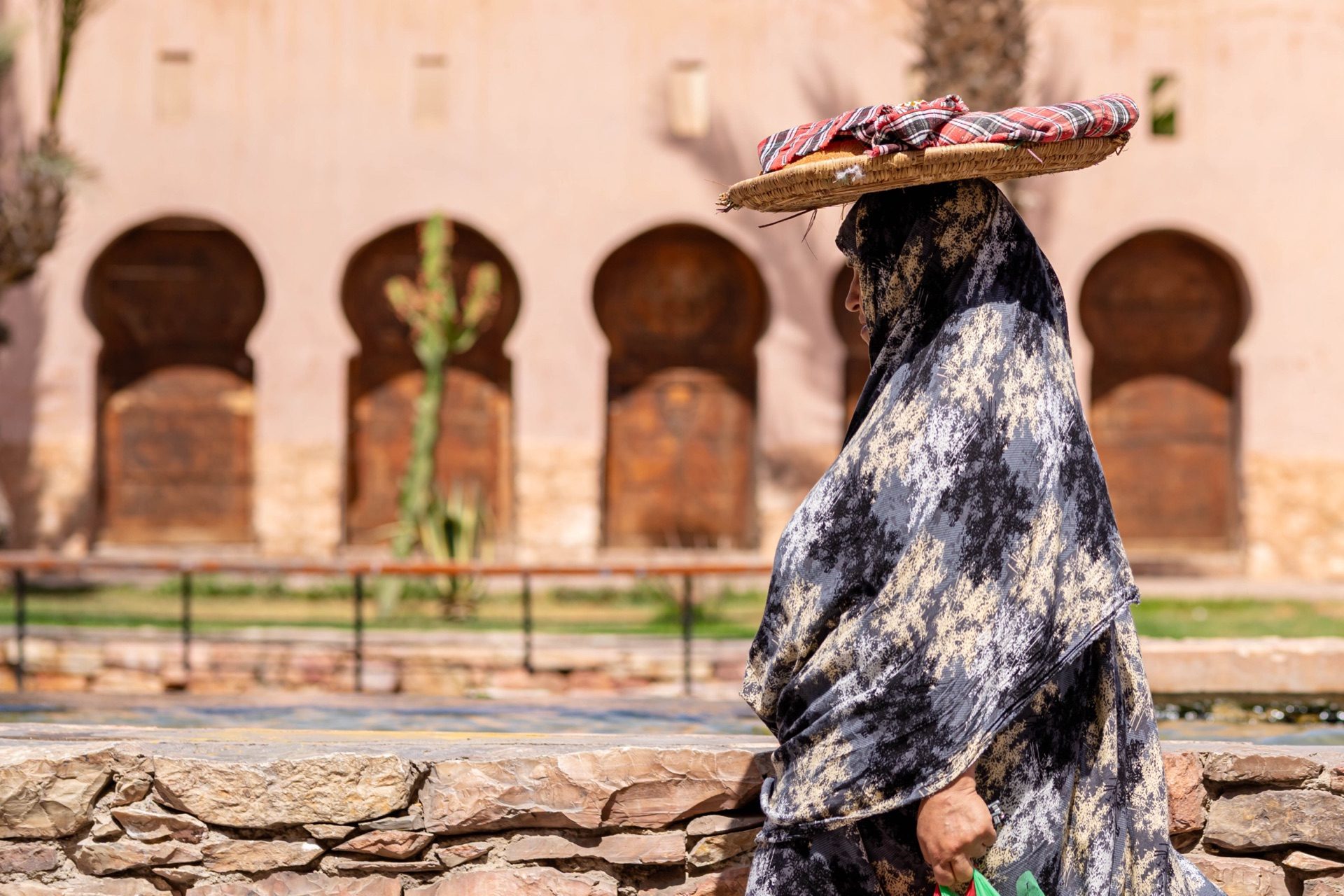
Awal d awal — a word is a bond. Ours was never broken, only silenced.Amazigh proverb, claimed by the language movement
Geography
Where they live
Based on work by Dr. M. Izady, Atlas of the Islamic World and Vicinity (New York: Columbia Univ, 2006–present) @ gulf2000.columbia.edu/maps.shtml
Through time
Timeline
- 950 BCYear one of Yennayer. The Libyan chief Shoshenq takes Egypt's throne — the Amazigh calendar's chosen epoch.
- 690s ADThe Kahina's war. The queen of the Aurès leads the last grand resistance to the Arab conquest.
- 1062–1269Amazigh empires. Almoravids and Almohads rule from the Sahara to Spain; Marrakesh is founded.
- 1980The Berber Spring. A banned poetry lecture in Kabylia ignites the modern identity movement.
- 2001The Black Spring. Over a hundred protesters killed in Kabylia; language rights become a cause with martyrs.
- 2011Official in Morocco. The new constitution recognises Tamazight; Algeria follows in 2016; Libya's Nafusa reopens its schools.
- TodayYear 2976. Yennayer is a public holiday, Tifinagh is on the schoolhouse — and the census still doesn't ask.
The speakers, counted cautiously
Estimated Tamazight speakers
Speaker estimates — Morocco's 2024 census counted ≈9 million by daily use, linguists more; identity and descent figures run far higher (much of North Africa is Amazigh by origin). France hosts the largest diaspora, led by Kabyles.
What they gave the region
North Africa's deep grammar
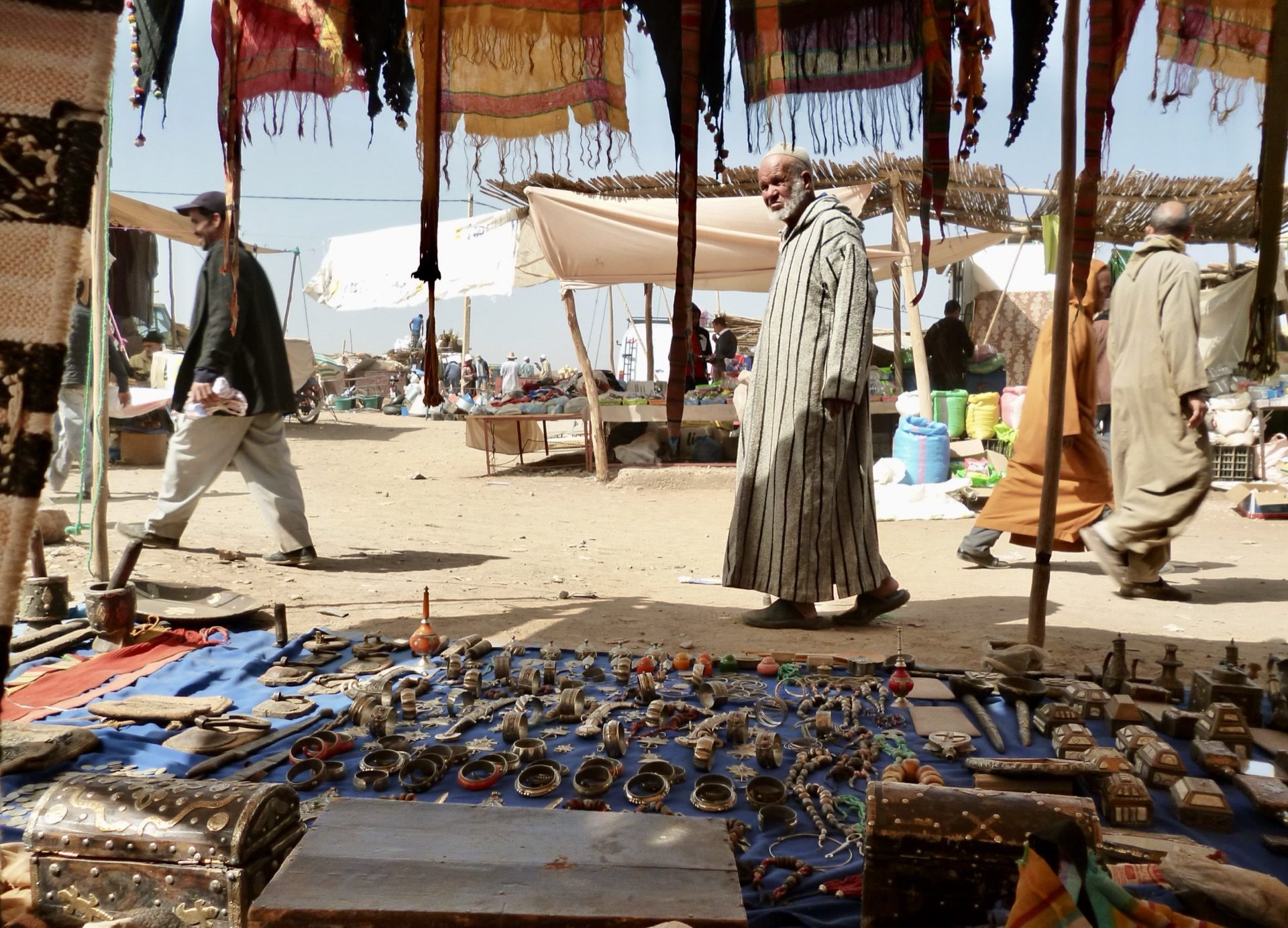
Amazigh gifts hide in plain sight. Couscous, both the word and the dish. The tagine. Argan oil. The mountain hospitality of the mint tea ceremony. The daily culture of the Maghreb is Amazigh to the bone.
Fashion and design raid Amazigh geometry endlessly, from the carpets of the Atlas to the enamel and coral of Kabyle jewellery and the tattoo motifs now on every runway. Ibn Battuta, usually described as the greatest traveller in history, was from a Tangier family of Amazigh descent, and Augustine was a son of the same people.
Music may be the largest export of all. Kabyle song carried North African protest to the world, and Idir's A Vava Inouva was the first Algerian song to become a global hit. Tuareg blues, meaning Tinariwen and everyone who came after them, grew into a world genre built on Amazigh scales.
Looking forward
Year 2976 and counting
The institutional battle is being won: official status in Morocco and Algeria, Tifinagh on schoolhouse walls, Yennayer a public holiday, and Libya's Nafusa running its own language schools since 2011. The demographic battle is harder. Cities assimilate faster than academies can standardise, and speaker numbers fall even as identity claims rise. Siwa, the eastern outpost, holds at some 30,000 speakers.
The bet the movement is making is that dignity comes before revival: a generation raised with the yaz on public buildings may relearn what its parents were beaten for speaking. Whether that works, the language activists themselves call an open question.
The emblem
Yaz — the free man
The Tifinagh letter ⵣ, yaz, is a standing figure with raised arms. It is the central letter of the word Amazigh and the sign of the movement, on the flag, on walls and in tattoos. It stands for the claim in the name itself, which is that these are the free people.
Sources10
- Encyclopaedia Britannica, Berber (Amazigh). britannica.com
- Michael Brett and Elizabeth Fentress, The Berbers (Blackwell), 1996.
- Minority Rights Group, Amazigh in Morocco – community profile. minorityrights.org
- Amira K. Bennison, The Almoravid and Almohad empires (Edinburgh University Press), 2016.
- Bruce Maddy-Weitzman, The Berber identity movement and the challenge to North African states (University of Texas Press), 2011.
- Constitute Project, Morocco's Constitution of 2011, Article 5. constituteproject.org
- Ethnologue, Languages of the World – Berber language family.
- James McDougall, A history of Algeria (Cambridge University Press), 2017.
- Ross E. Dunn, The adventures of Ibn Battuta: a Muslim traveler of the fourteenth century (University of California Press), 1986.
- Jane E. Goodman, Berber culture on the world stage: from village to video (Indiana University Press), 2005.