The barrack
How on earth did I end up here?
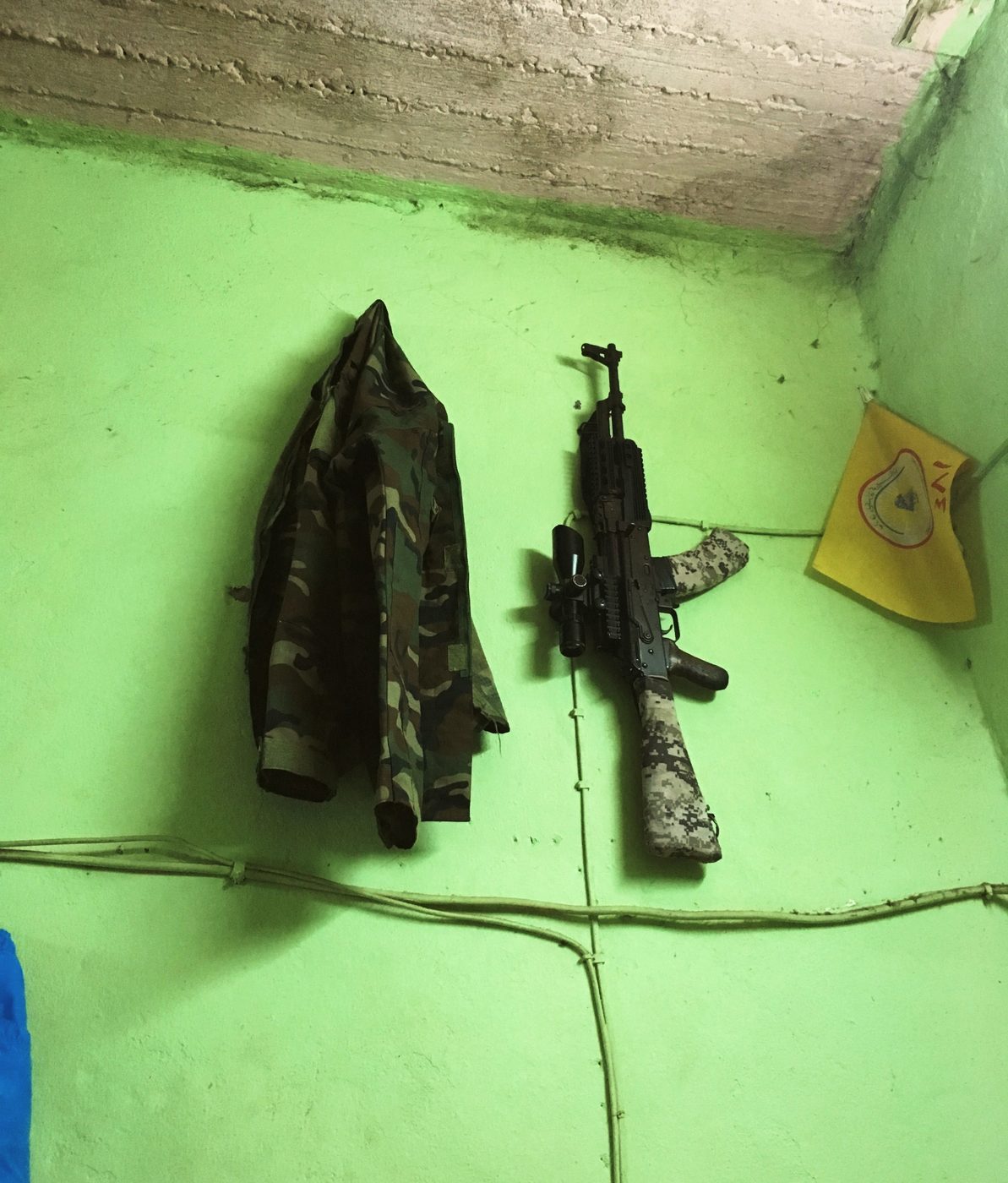
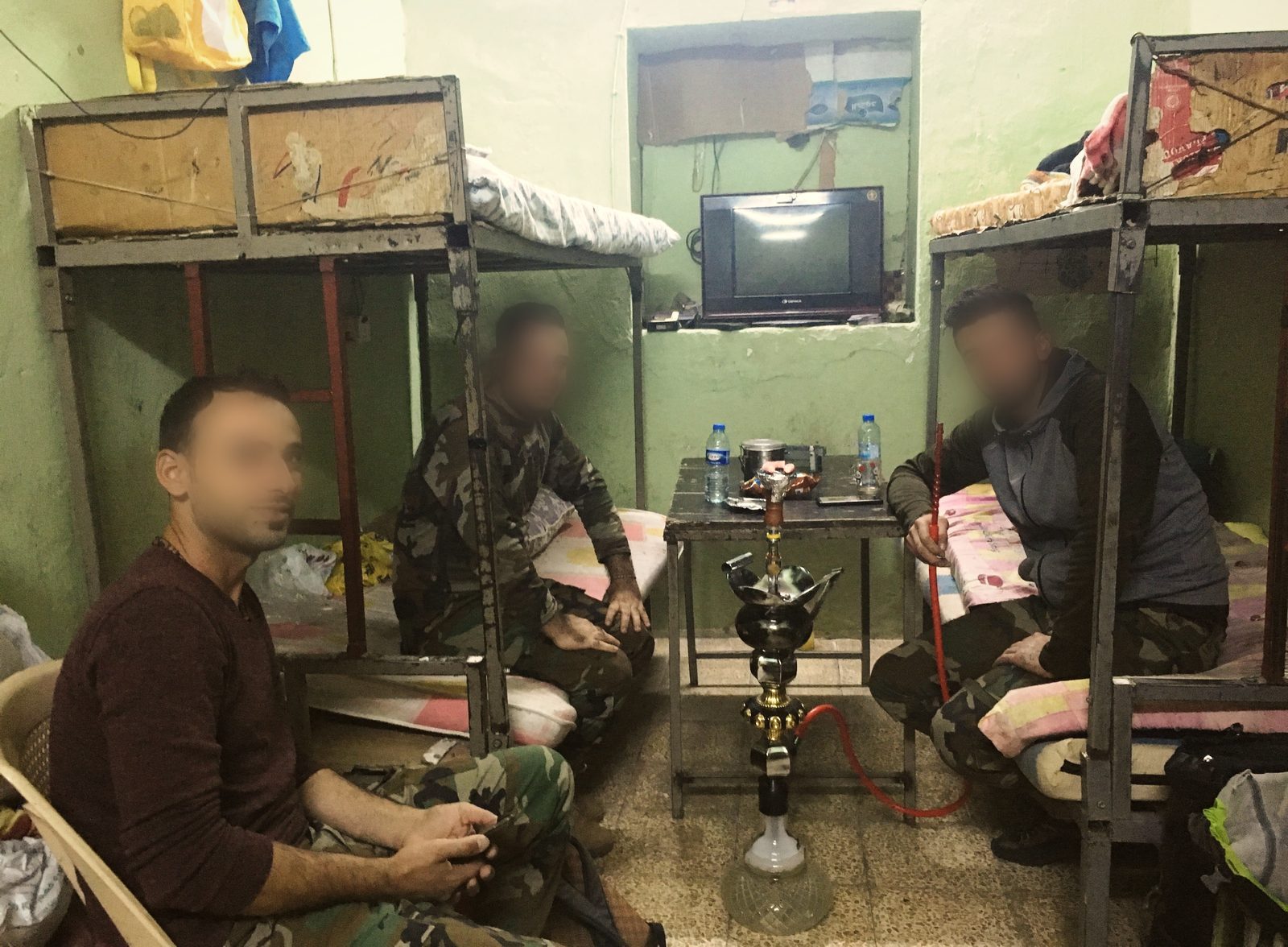
A small barrack next to an old monastery, in a small Chaldean-Assyrian town in northern Iraq. Four soldiers, three bunk beds, and a number of Kalashnikovs on the wall and under the mattresses. This was where I would be sleeping tonight.
The story starts in Dohuk, in Iraqi Kurdistan. My plan for the day: visit one of Iraq's small Assyrian communities. On the map I had found a whole cluster of them, a little north of Mosul. Public transport barely exists in Iraq, so hitchhiking it would be — which, with people this hospitable, is usually the fastest option anyway.
Living history
Older than the borders, older than the faith
The Assyrians are a Christian minority, descendants of the original inhabitants of Mesopotamia. To this day they speak a modern form of Aramaic — the language of Jesus. In their church services, they often still use the ancient version.
They were not always the underdog, by the way. For the better part of fourteen centuries Assyria was a power in Mesopotamia — and at its peak, a superpower with a terrifying reputation. By 612 BC the neighbours had had enough: friends and enemies teamed up to finish the empire off, and they did such a thorough job that it vanished from memory altogether. When a Greek army marched past two centuries later, the soldiers stared up at the colossal ruins of Nineveh without the faintest idea whose they had been.
Today's Assyrians still live right next to that old stronghold — Nineveh is now Mosul. Their modern history, though, reads as one long chain of catastrophes: the Sayfo massacres of 1915, in the same years as the Armenian genocide; Simele in 1933; and most recently ISIS, which set off the latest big exodus. By now, more Assyrians live abroad than in the region their ancestors have inhabited for thousands of years. In the endless quarrels between Iraq's Kurds, Sunnis and Shia, it is small minorities like these who end up paying the bill.
The road
A businessman, a refugee, four soldiers
Getting out of Dohuk is an art in itself. The main challenge: not accepting every invitation for tea, or you get stuck every ten metres. Once out of town, the rides come easily. First a local businessman in a fat SUV. Then a Syrian refugee in a battered old car. And finally four quiet men who turn out to be Iraqi soldiers, on their way to Mosul — where ISIS was beaten two years ago, but where sleeper cells still make the city far from safe.
I watch Google Maps closely and get out just before the checkpoint separating the semi-autonomous Kurdish region from Federal Iraq. Foreigners are not allowed near Mosul, and I had been warned more than once about certain pro-Iranian militias that roam this area with little regard for the law. Two of the soldiers stare dead ahead for the entire ride. You could cut the tension with a knife. If the driver had not seemed so relaxed, I would have skipped this ride altogether.
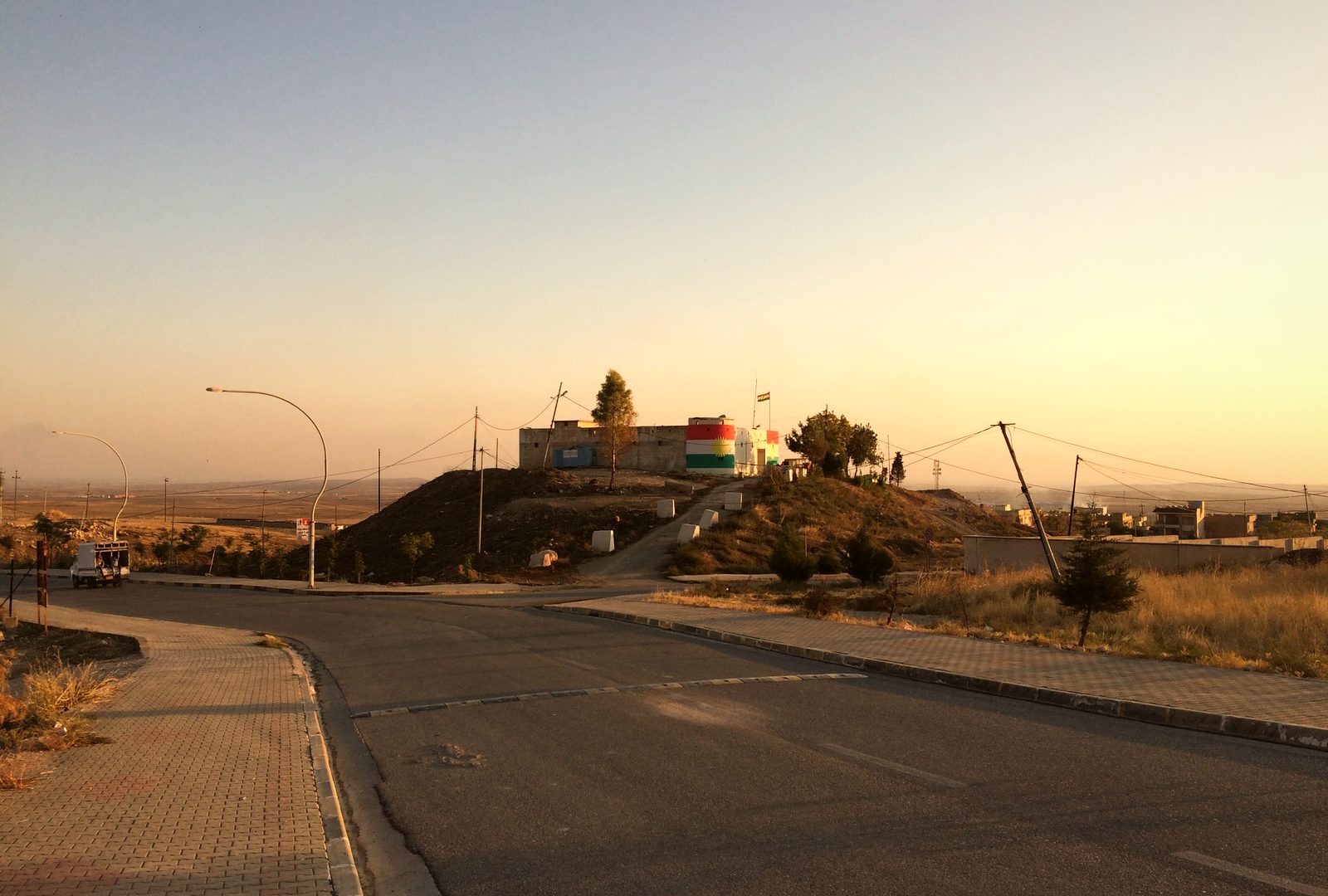
Foreigners are not allowed near Mosul. I watch Google Maps closely, and get out one checkpoint early.On the last lift into the Nineveh plain
Arrival
A town of one faith
Alqosh is a Chaldean-Assyrian community. The Chaldeans make up roughly half of all Assyrians. Ethnically they are the same people; the difference is theological — the Chaldeans are in communion with Rome, while other Assyrians belong to the Church of the East, the result of a schism that goes back some fifteen hundred years, to Byzantine times.
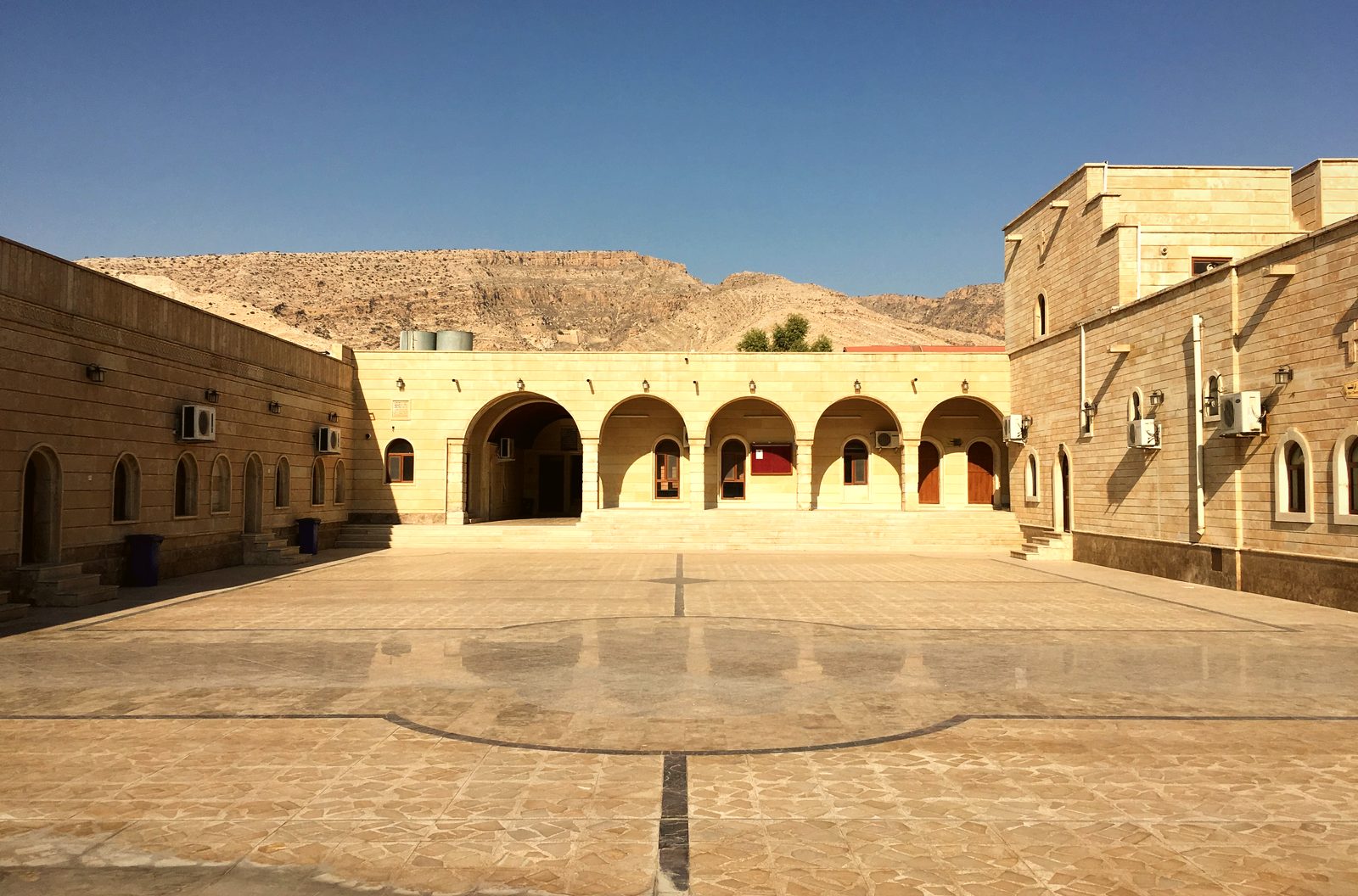
So there I stand, in the middle of little Alqosh, next to a monastery. Finding a bed is going to be tricky, I realise. Tourism simply does not exist here. Who visits a small town in the middle of Iraq, where until recently ISIS was around the corner? Ah well — the bed would sort itself out. First: exploring. The monastery in the centre turns out to be the 'new' one, about 150 years old, built when the old monastery up in the mountains could no longer offer enough protection.
The old monastery
Twelve centuries of footsteps
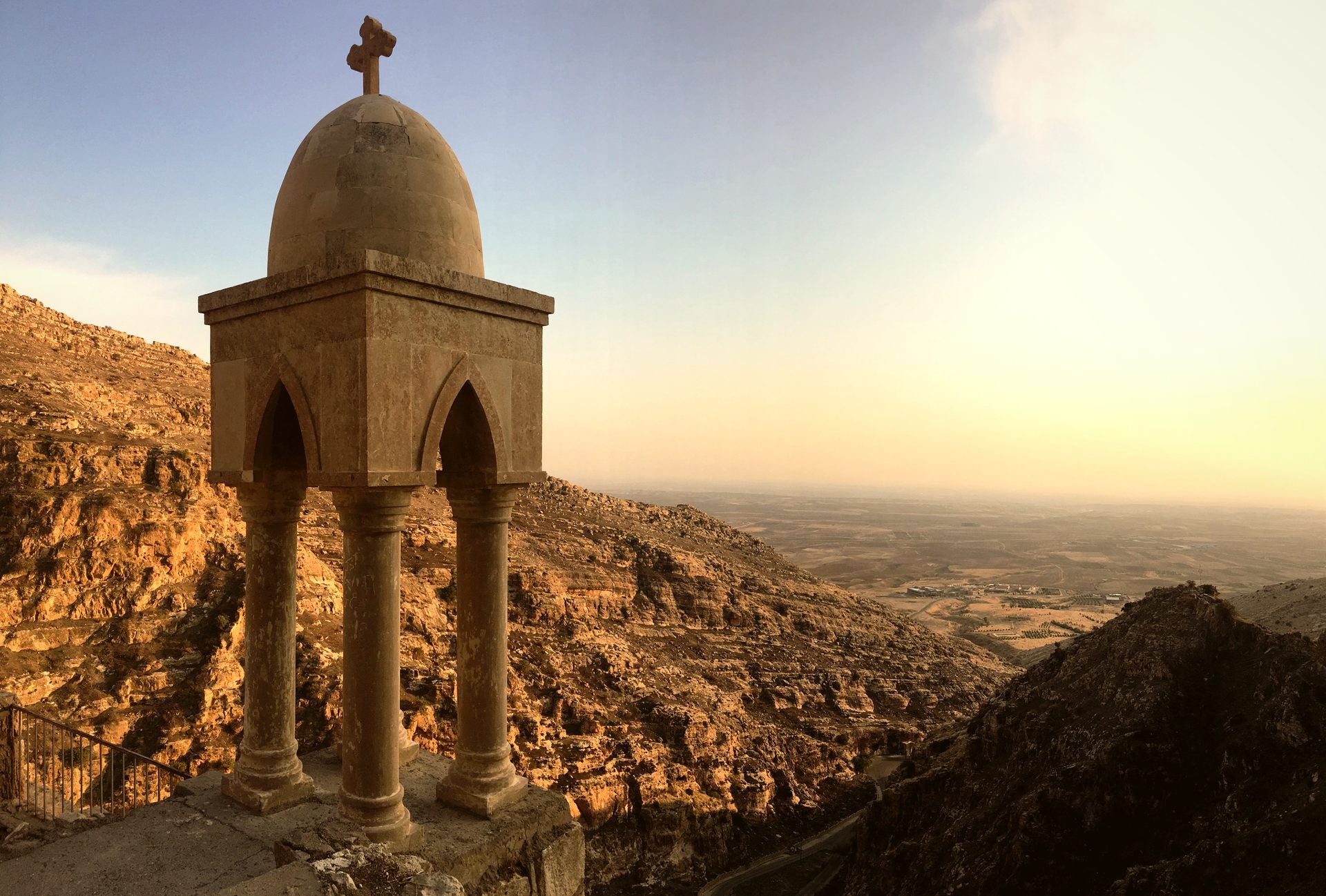
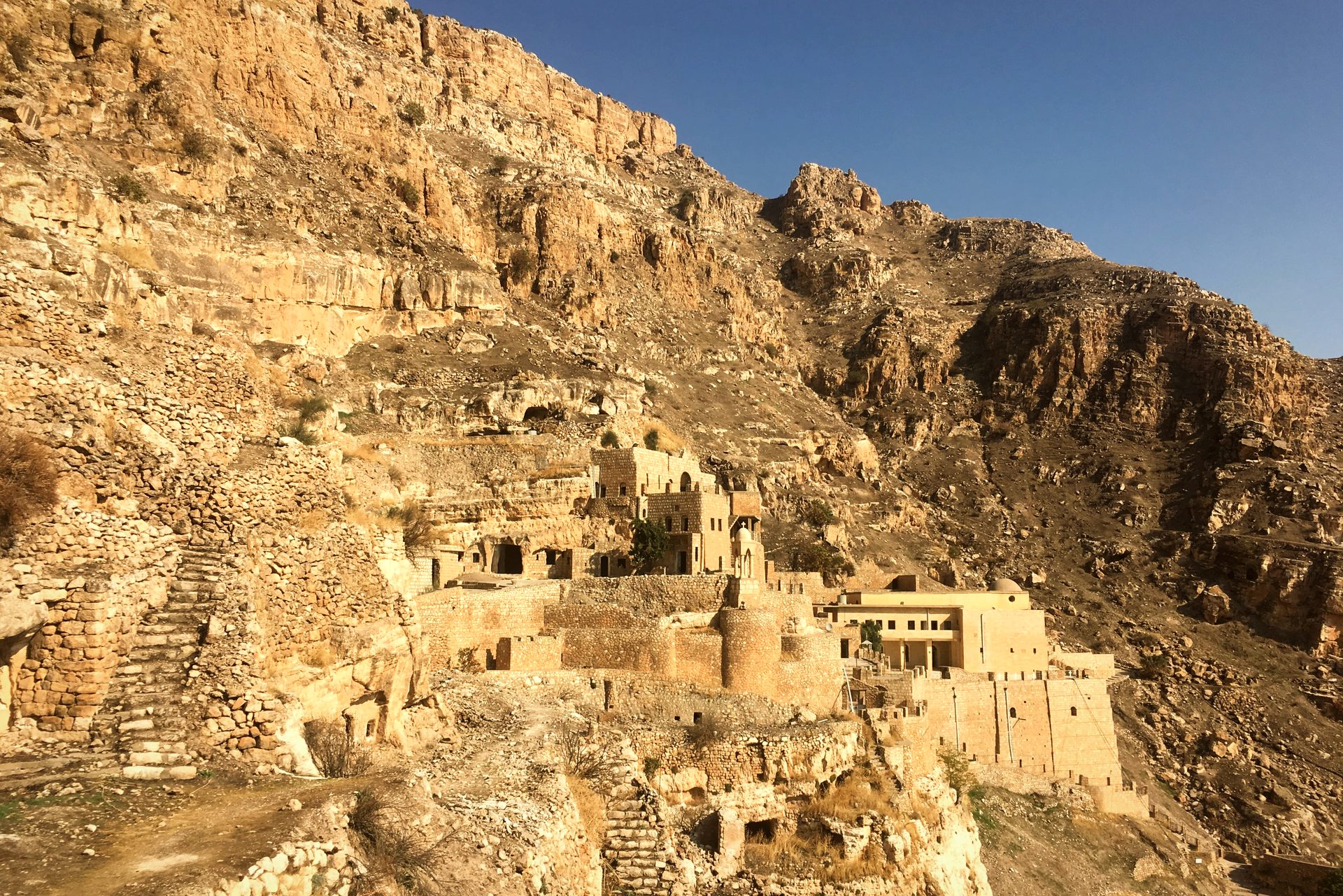
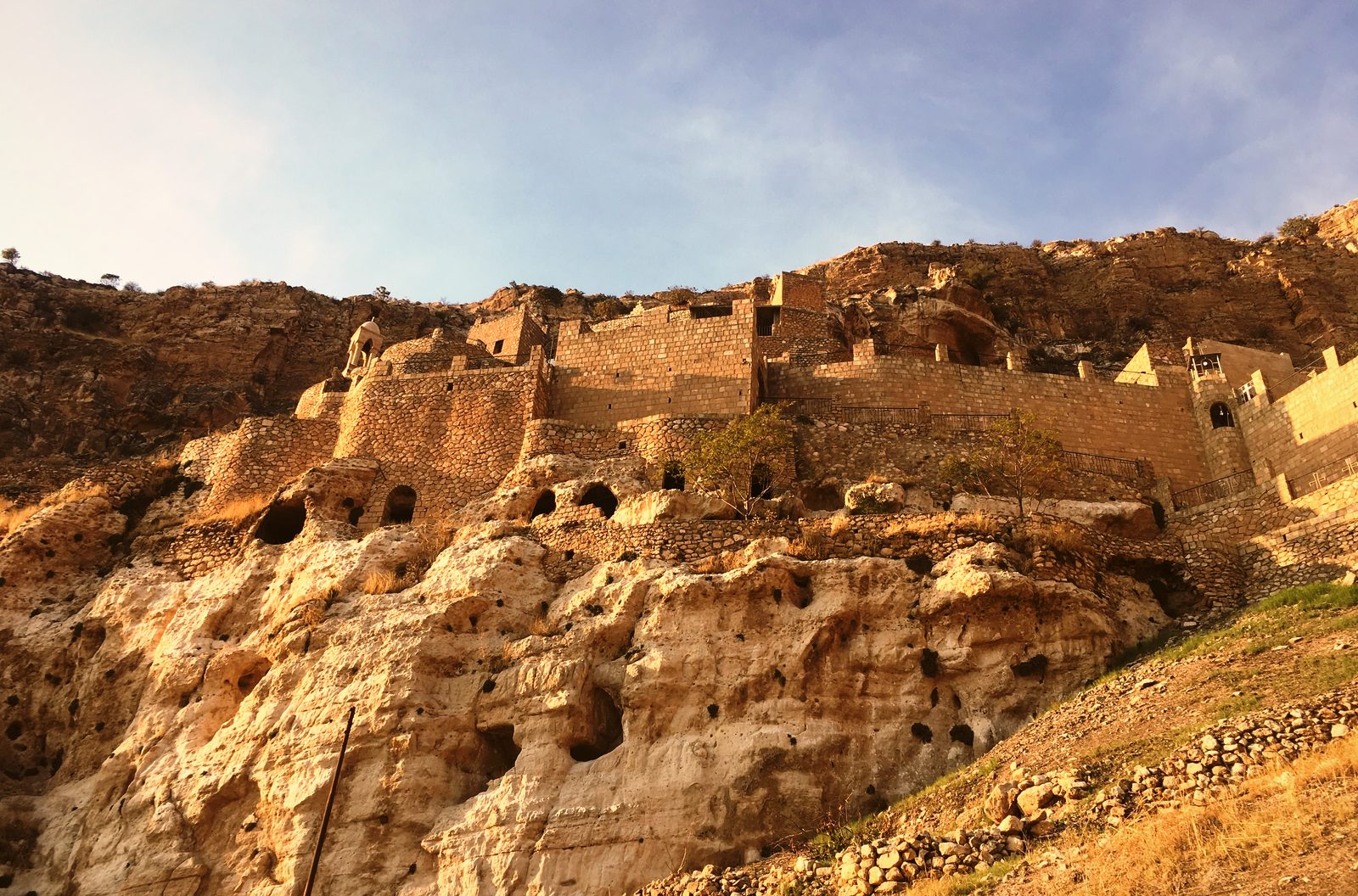
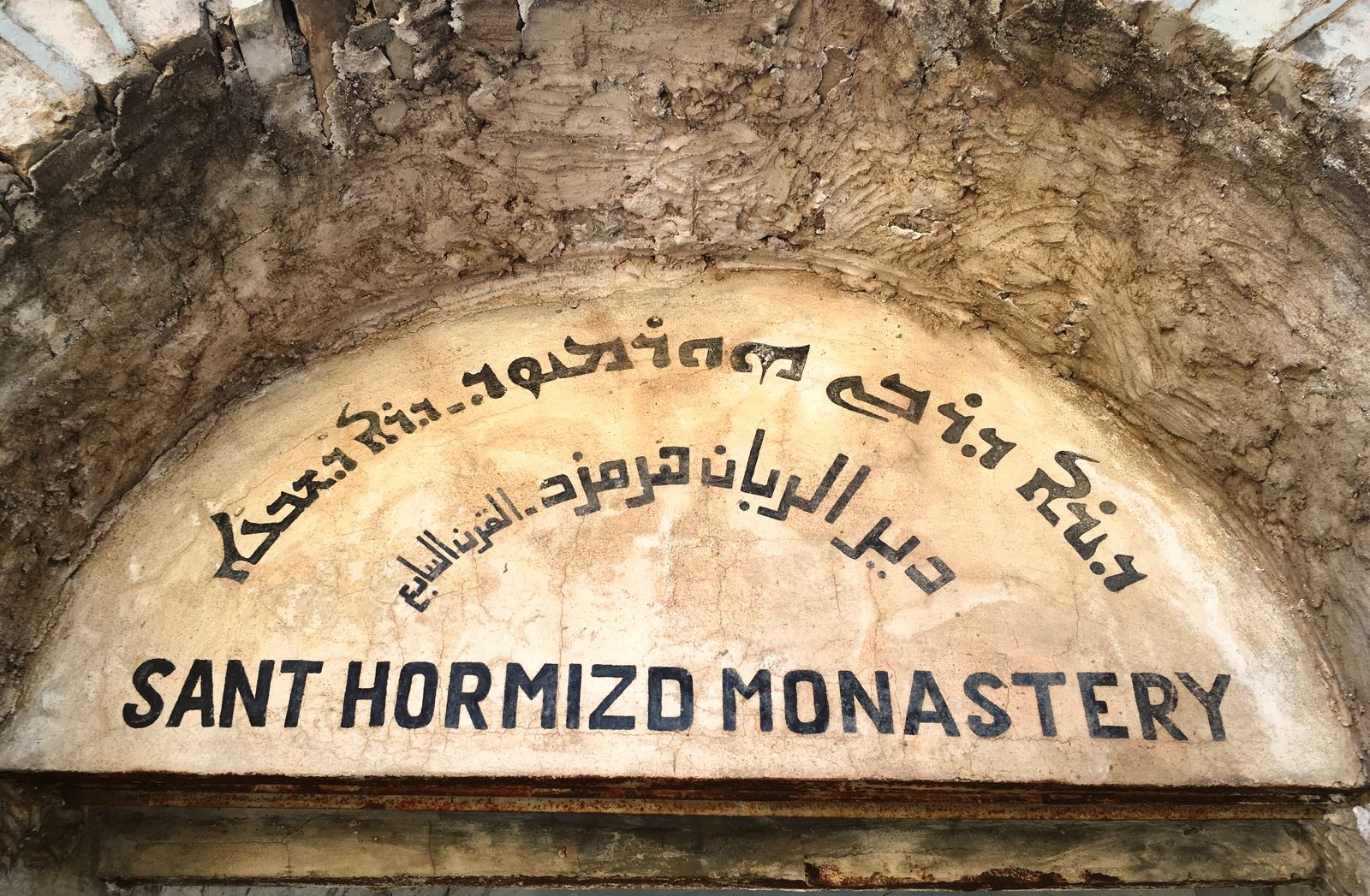
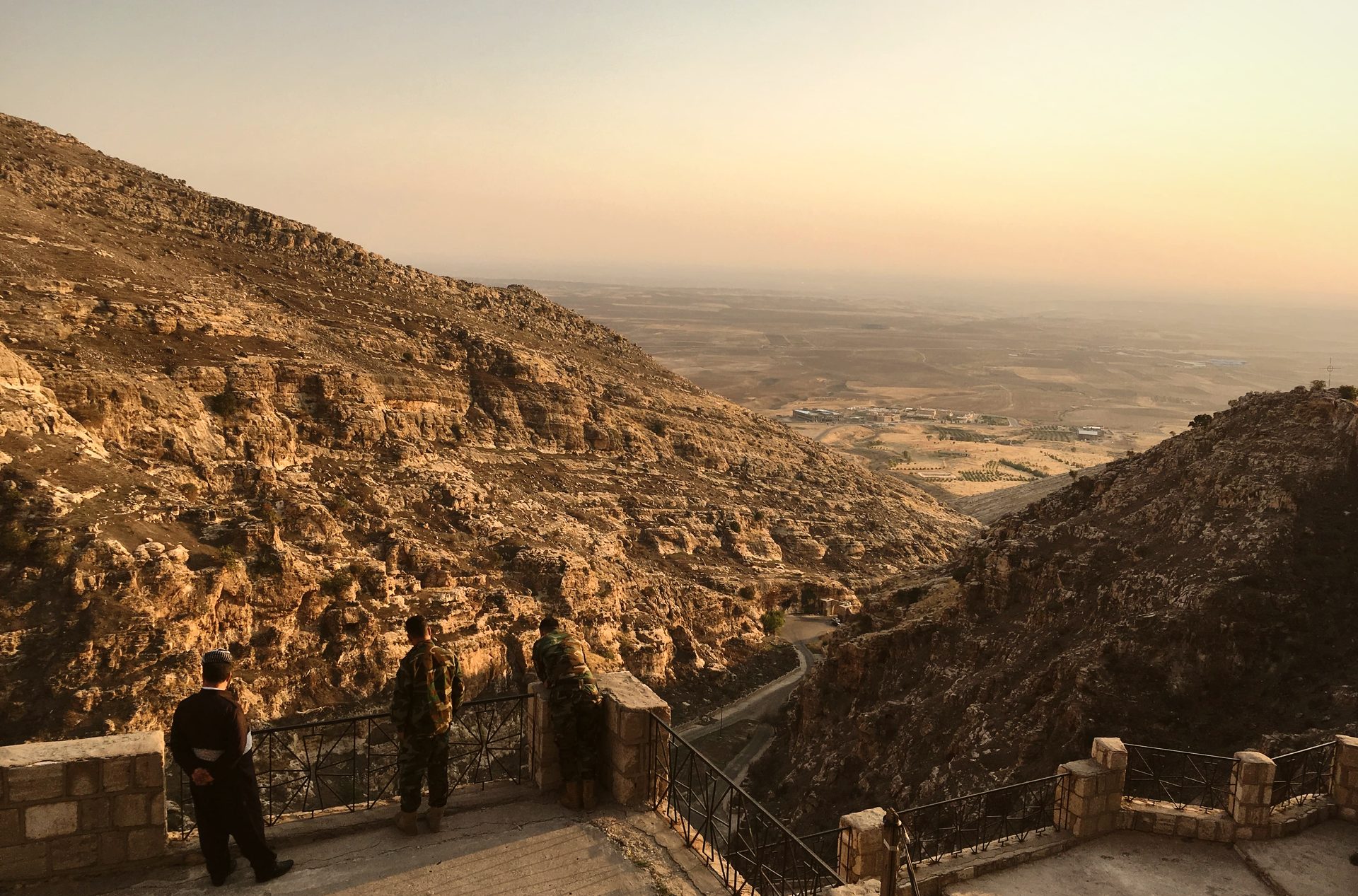
I set out on foot, and soon the old monastery looms up in the distance, carved high into the rock face. Once up there, I wander through corridors where monks have been walking for over 1,200 years. People were quite a bit shorter back then; at 1.90 metres, I shuffle through the passages hunched over like Quasimodo.
The monastery is no longer in use. Through the centuries its monks fell victim, again and again, to violent radicals and local tyrants. After one massacre too many, the community built the new monastery down in Alqosh, where it could be better defended. A shame, but who can blame them? I linger a while, taking in the view and the late-afternoon sun. Then I head back down. I still need a place to sleep.
The fixers
Two guys and a pickup
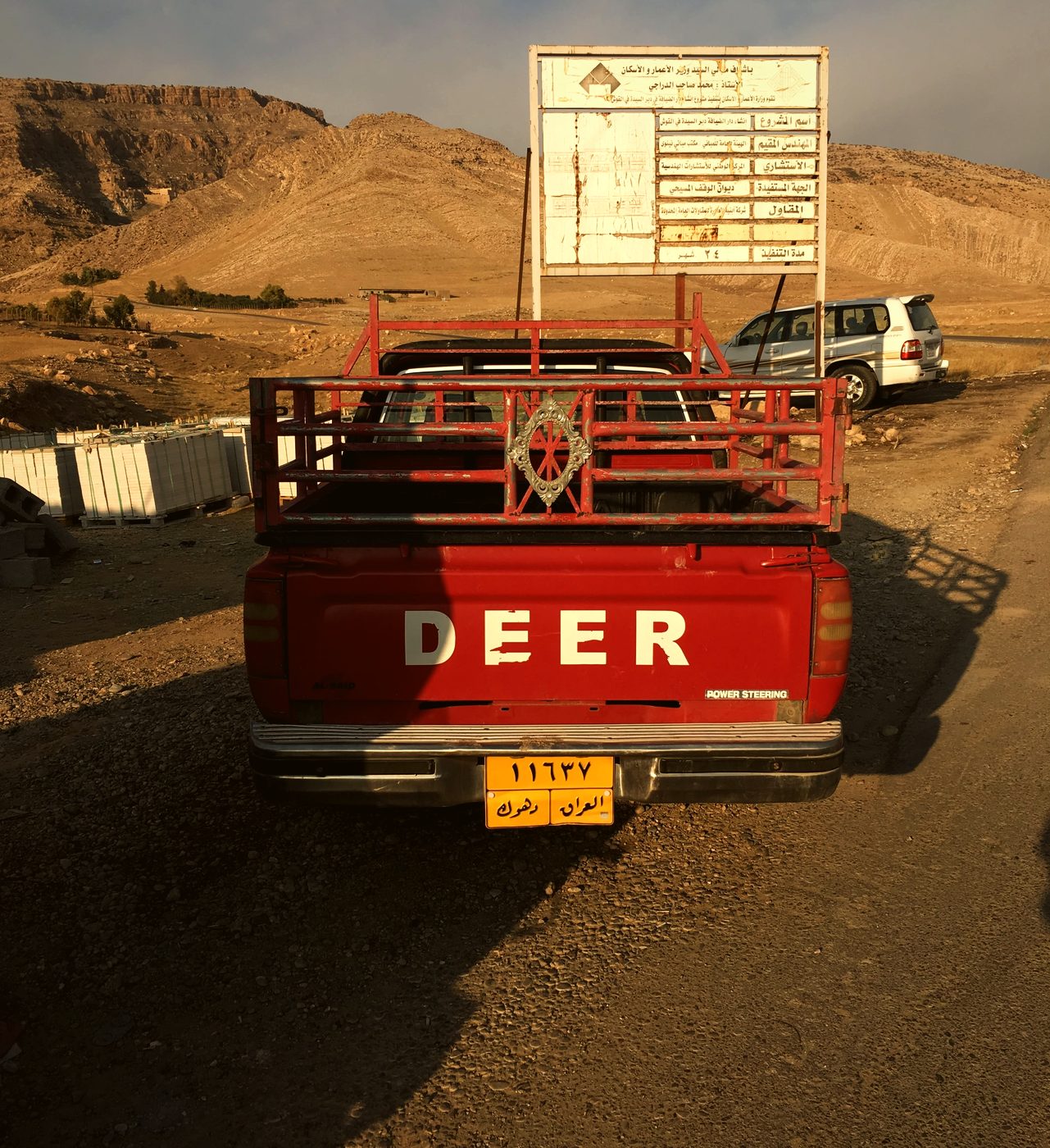
Just outside the monastery I run into two young guys in a pickup truck. They speak good English and explain, in an exaggerated American accent, that they picked it up mostly from movies and series. Within minutes I have a ride — with a mini-tour of Alqosh thrown in for free.
We visit the tomb of the Jewish prophet Nahum, who — a century after Jonah — finally put the doom of Nineveh down in writing, where his predecessor had only threatened it. Alqosh was, in all likelihood, his home town. History is never far away in Iraq. After a while I ask the guys if they know a place to sleep. They apologise: they have nothing to offer themselves. But they do have an idea. Surely I could stay with the soldiers?
The offer
Soldiers?!
For a moment I am startled. Then I smell a good adventure. The guys drive me to the new monastery, where a small barrack stands at the gate. From here, a handful of soldiers guards the complex. My two fixers introduce me in Aramaic, and the men seem to find it completely normal that I have come to stay the night.
Inside, my eye immediately falls on a Kalashnikov hanging from the wall. This is not a joke. Before I know it, I am sitting with the soldiers around the waterpipe, talking about everything and nothing in half-English.
Introductions
'Are you also a terrorist?'
The soldiers' humour kicks in shortly after the introductions. “Are you also a terrorist?” they ask, grinning from ear to ear. The soldier with the Arabic-sounding name and looks — Yousif — takes the most punishment, and is promptly appointed the group's honorary ISIS fighter. “Watch your back!” they joke, while Yousif smiles sourly.
“Don't expect any help from Sargon,” Yousif fires back about his well-groomed colleague. “Sargon would be halfway into Turkey before ISIS even got close!” “Believe nothing this man says,” Sargon retorts. “You cannot trust ISIS.” And so the jokes and laughs continue, round after round.
Sargon would be halfway into Turkey before ISIS even got close!Yousif, opening another round of barrack diplomacy
On paper, in practice
Every group for itself
On paper, this little unit is part of the Peshmerga, the army of Iraqi Kurdistan. In practice, they are all Chaldean-Assyrian men from Alqosh itself, guarding their own community. You could just as well call it a militia — but Iraq has plenty of those already.
In Iraq, it seems to be every group for itself. And perhaps the Assyrians should not expect much protection from the Kurds or from Baghdad anyway. When ISIS advanced on this area, the Kurdish forces left the Assyrians to their fate. History has taught this minority the hard way that trusting the central government is a luxury they cannot afford: under Saddam Hussein the Assyrians were 'Arabised' and many of their villages destroyed. A curious footnote: one of the most famous faces of that regime — Tariq Aziz, the spokesman who kept announcing that everything was under control while American bombs fell behind him — was an Assyrian, born thirty kilometres from Alqosh.
The long view
Twenty-six centuries of outliving
- 911–612 BCAssyria at its height. From its heartland on the Tigris the Neo-Assyrian Empire grows into the largest state the world has yet seen — from Egypt to the Persian Gulf, ruled from Nineveh, and remembered as much for its aqueducts and its libraries as for its cruelty.
- 7th c. BCNahum foretells the fall. A Judean prophet writes that Nineveh, “the bloody city”, will be laid waste and no one will mourn it. Alqosh claims him as its own: his tomb still stands in the middle of town — a Jewish shrine kept, long after the last Jews left, by Christian neighbours.
- 612 BCNineveh falls. A coalition of Babylonians and Medes erases the Assyrian superpower so completely that, two centuries later, a Greek army marches past its colossal ruins with no idea whose they were.
- 1st–3rd c. ADChristianity arrives. The Assyrians become one of the world's first Christian peoples — and keep praying in Aramaic to this day.
- c. 640Rabban Hormizd is founded. Monks carve their cells into the mountain above Alqosh; the monastery will later serve as the seat of patriarchs.
- 431 → 1552One people, two churches. An ancient schism separates the Church of the East from the imperial church; centuries later, part of the community enters communion with Rome — the Chaldeans.
- 1915The Sayfo. Ottoman-era massacres kill perhaps a quarter of a million Assyrians, in the same years as the Armenian genocide.
- 1933Simele. The young Iraqi state massacres some 3,000 Assyrian villagers — the crime that set Raphael Lemkin on the road to coining the word 'genocide'.
- Aug 2014ISIS is stopped at Tesqopa. The jihadists take the next Assyrian town south — barely ten kilometres away. Alqosh empties, but the line holds.
What they guard
Not the people — the roots
It turns out ISIS came very close indeed. They reached Tesqopa, the next Assyrian town, barely ten kilometres south — and were stopped right there. Funnily enough, it was Yousif, the group's 'honorary ISIS fighter', who was the only one of them present at that battle. He tells the story with quiet pride and shows me a photo of himself walking through a captured position.
The militia was not just defending people, most of whom had already fled before the jihadists arrived anyway. They were just as much fighting for their heritage: the churches, the monasteries, the holy symbols. The proof that they belong here. Their numbers in Iraq are falling fast, but the stones record how deep the roots go — and in Mosul, ISIS erased every Christian and ancient Assyrian trace it could get its hands on. People can flee and come back. Heritage, once destroyed, does not return.
The Rabban Hormizd monastery would have met a similar fate if ISIS had pushed on just a little further. Had they reached Alqosh, they would have run into Yousif and the others, who told me how their machine guns were trained on the valley leading up to Rabban Hormizd. Fortunately — for my new friends, or maybe for ISIS (!) — it never came to that.
More Assyrians abroad than at home
Estimated population
“Elsewhere in the region” is Syria, Türkiye, Iran and Lebanon. Post-war community estimates; the worldwide diaspora estimate spans 2–4 million, led by the United States, Sweden and Germany. The exodus has accelerated with every catastrophe since 1915 — most recently ISIS.
The geography
The last ridge before Nineveh
Alqosh sits on the last ridge before the Nineveh plain — Mosul is under an hour south. The arrow traces the hitchhike down from Dohuk; Tesqopa, the next town south, is where ISIS's advance was halted in 2014.
The bubble
Power out, candles lit
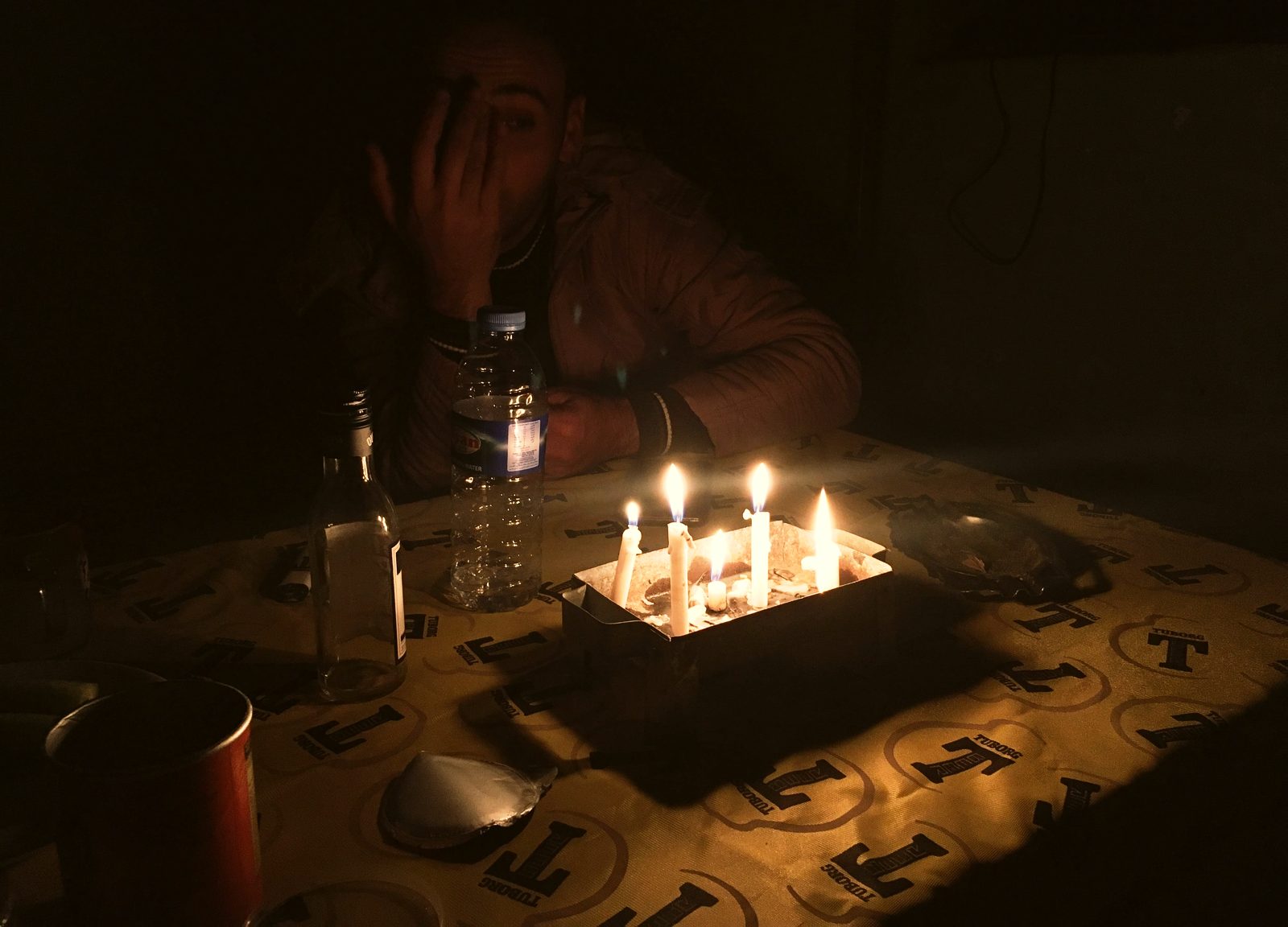
In the barrack, the electricity fails constantly. Sometimes for minutes, sometimes for hours. The soldiers are not remotely surprised: candles on, card game resumed, shisha passed along. Power back: candles out. This pattern repeats itself all evening and all night. The men blame the Iraqi authorities, who they say give less power to Assyrian towns — communities wedged, literally and figuratively, between Kurdish and Arab majorities. To be fair, I had power cuts elsewhere in northern Iraq too. But never this long, and never this often.
A third soldier, Odisho, tells me how hard it is for an Assyrian to find work outside the community; many people here depend on relatives in the diaspora — who, by all accounts, are doing rather well, and are generous to the family members who stayed behind. On paper, Alqosh answers to the federal government — in practice, the town stands alone. Inside the bubble it is relatively safe, but the bubble also deepens the divides. Though as we say in Dutch: the soup is never eaten as hot as it is served. Plenty of Muslims work in Alqosh every day.
Lights out
The guards don't sleep
As the hours pass, it slowly dawns on me that the soldiers themselves are not going to bed at all — they guard the monastery through the night. The war has left its marks on these men: some of the videos they laugh hardest at are too gory and violent for me. While the card game continues by candlelight, I put in a pair of earplugs and try, with mixed success, to catch some sleep.
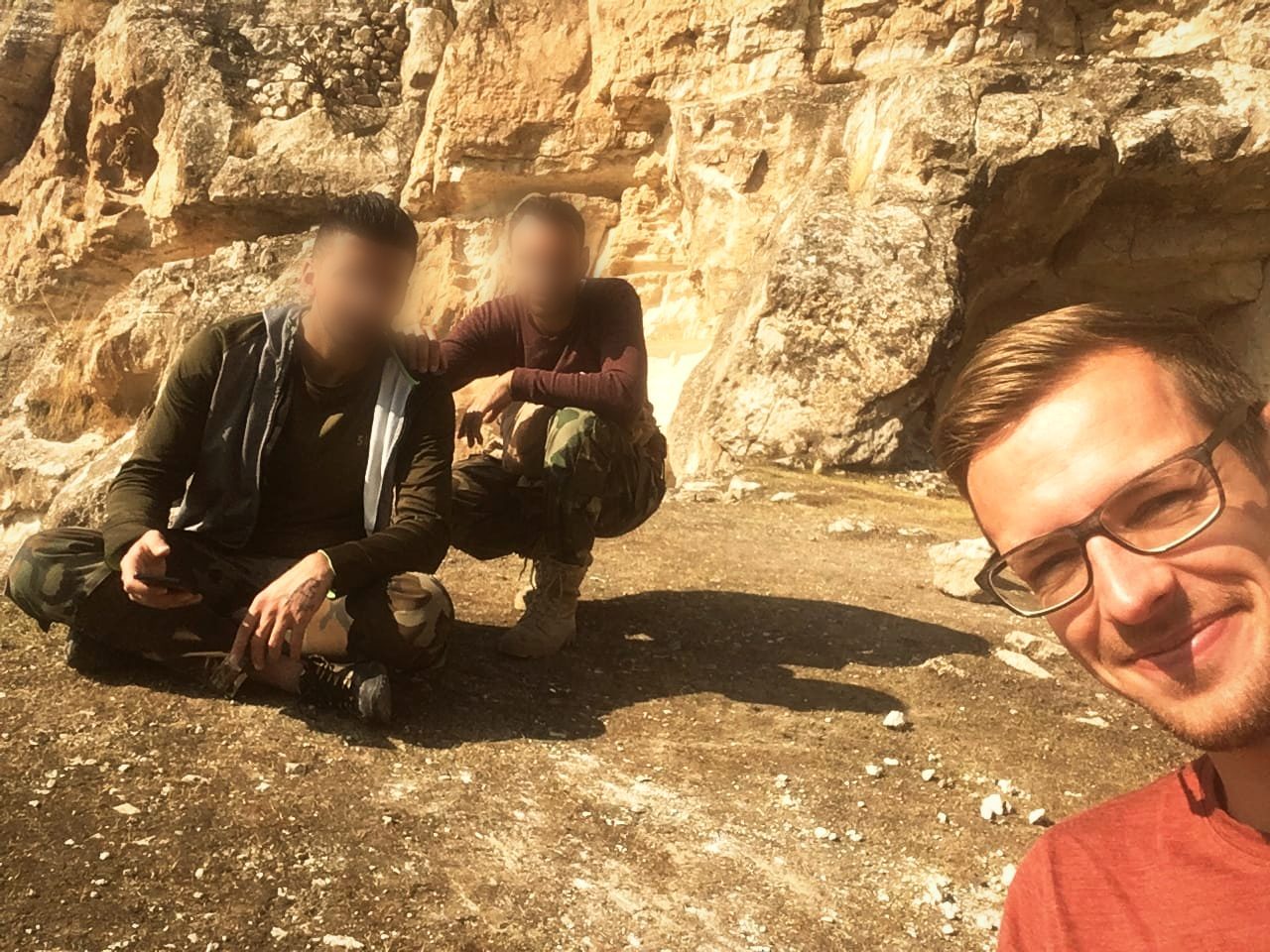
The next morning, Sargon and Odisho propose one more visit to Rabban Hormizd — this time with the two of them as my personal guides. That is an offer I cannot refuse.
The second visit
Spartan cells and a camera crew
Back at the monastery I get the full tour. The monks lived Spartan lives here, in open chambers exposed to the elements — and Iraq does both heat and cold with conviction. Odisho shows me the spot where one monk had himself walled in for years. All to live closer to God.
Afterwards, the three of us sit in a row in the morning sun, taking in the view over the valley — until three SUVs come crawling up the switchbacks. Out steps an enormous Western camera crew, hauling mountains of equipment up the monastery stairs. Their caps read CBS News. Halfway up, a few of them glance over at us in visible confusion. “What on earth is that tall white dude doing up there between two soldiers in uniform?”, I can practically hear them think. We decide not to disturb them, and drive back down to Alqosh.
The last evening
Ninety minutes of one Iraq
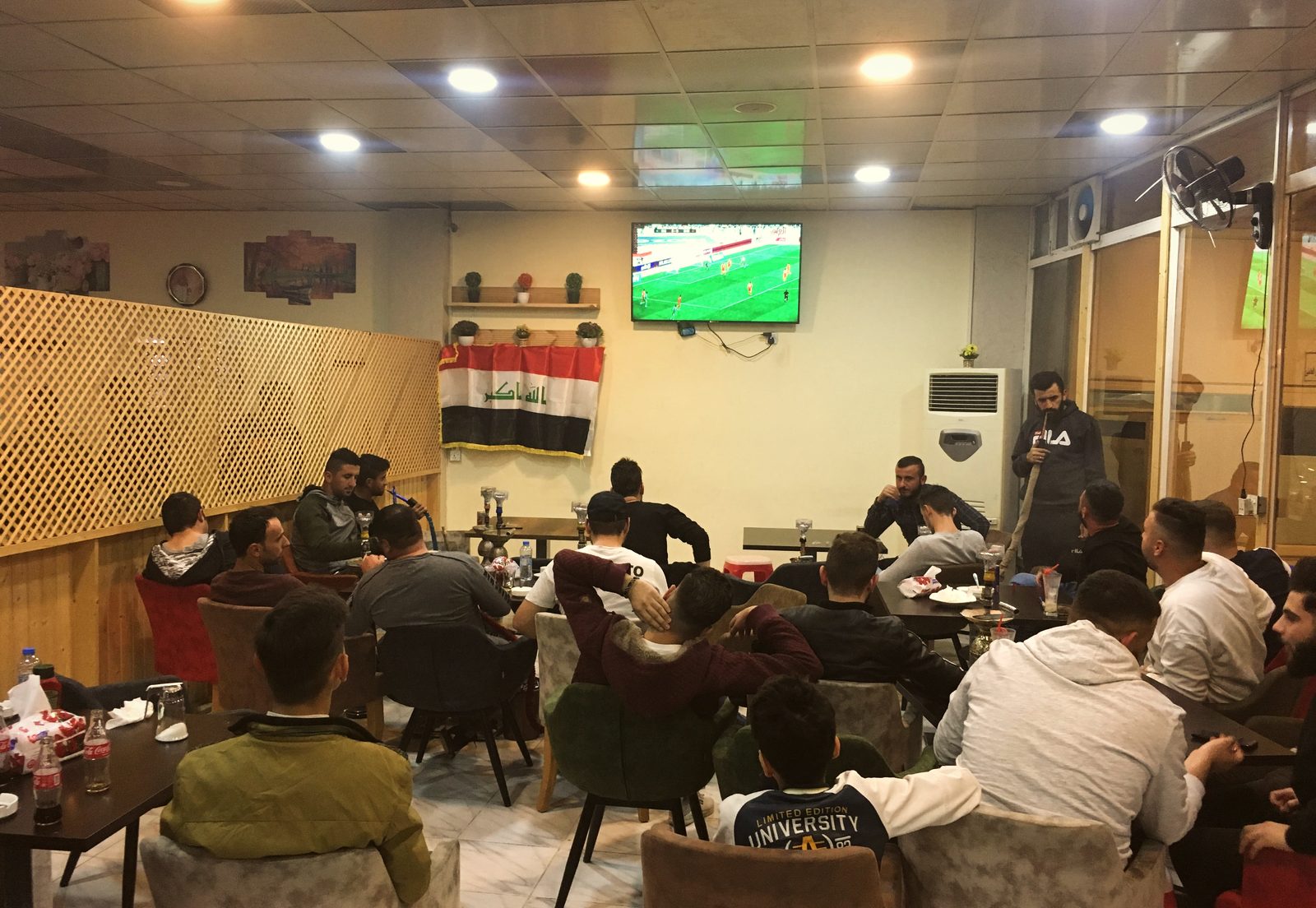
The soldiers convince me to stay one more day. I wander around Alqosh and chat with people in the street — men and women alike, which is refreshing; in many other parts of Iraq that is a more delicate matter. In the evening I end up in a local café with a few of the soldiers and the Americanised guys from the pickup, watching Iraq's national team play Oman.
It is ironic, and rather wonderful, to watch the Assyrians cheer this fanatically for a team consisting entirely of Shia Arabs. Football unites like little else does — even if only for ninety minutes.
Leaving the bubble
Inshallah, we meet again
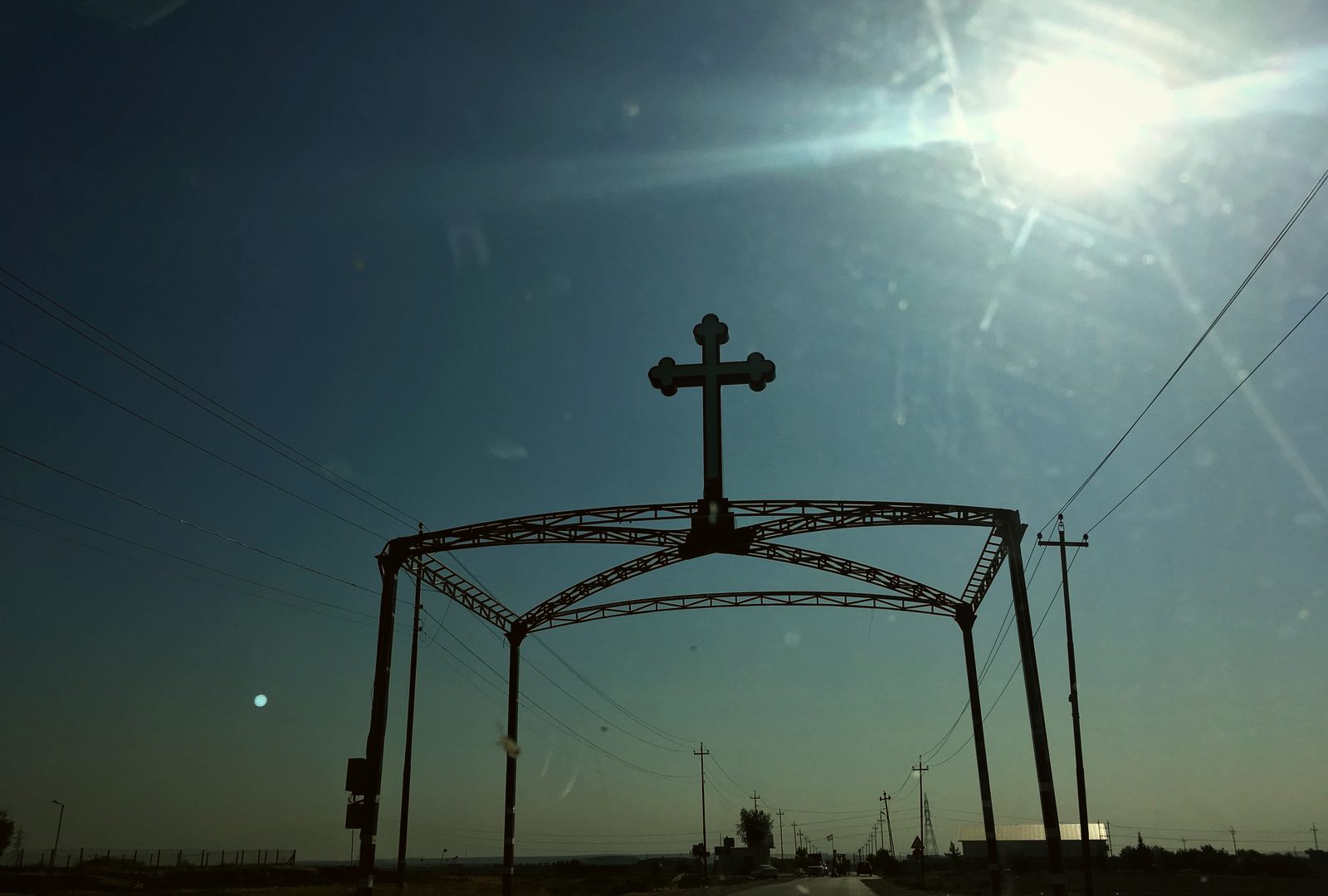
The next morning I say goodbye to my new friends, hoping to see them again someday. Shortly after, I pass the edge of town: a gate with a big cross on top. Out of the bubble, back into Iraq.
A few months later, Sargon sends me photos of Rabban Hormizd covered in snow. I would love to see that in person, I write back. Sargon replies: “If God wills it, you will come next winter!” Inshallah indeed — or perhaps a little later.
If the monastery has survived centuries of brutal weather and the armies of the Mongols, the Ottomans and ISIS, I am confident it will still be standing in a few years. Or at least I hope so. For now, Rabban Hormizd still stands. And so do the Assyrians. Inshallah, we will meet again.